


.jpg)
Historically, Baptists have been Baptist not out of blind denominational loyalty but because of their commitment to what they saw as biblical teaching on the doctrine of the church. That doctrine has been central to Baptist distinctives.
– John Hammett
John Hammett rightly points out that Baptist distinctives involve the doctrine of the church, because we otherwise share much in common with other Protestants. For this reason, both General and Particular Baptists in the 17th century positioned themselves as Baptist Protestants who aimed to reform worship through a believer’s church.
The General Baptist Thomas Monck, for example, published the Orthodox Creed in 1679 which explicitly calls itself a “Protestant Confession.” He saw General Baptist congregations as Protestants who aimed to reform the church according to Baptist principles.
Thomas Grantham, possibly the greatest General Baptist theologian of the 17th century, wrote in his Christianismus Primitivus (Primitive Christianity) that Baptists affirmed the mainstay of Protestant thought, even affirming the Apostles’ Creed alongside the Nicene Creed as evidence (Thomas Monck’s Orthodox Creed likewise appends all three ecumenical creeds: the Apostles’, Nicene, and Athanasian).
Today, the Free Will Baptist Handbook calls Grantham “the most outstanding leader of the English General Baptists during the middle and later 1600s,” and notes that he delivered the 1660 Standard Confession of General Baptists to King Charles II in July of that same year. This confession would be the most popular General Baptist Confession and “was used by the Free Will Baptists in the American South until 1812.”[1] And even then, it remains in revised form a central confessional document for Free Will Baptists called the 1812 Former Articles.
The Particular Baptists likewise demonstrated deep continuity with Protestantism. Both the First and Second London Baptist Confessions (1644/46 and 1677/89) position Baptists as virtually the same in theology and practice as other Protestants except on the key issue of a believer’s church, which entails both congregationalism and church discipline.[2]
So when asking the question about what Baptists believe, we might say they believe just about everything other Protestants do. But doing so would be to bypass what makes Baptist thought distinctive. So let me try to define what Baptists believe in common with Protestants, and then point out our distinctives which we can summarize as the doctrines of (1) a believer’s church, (2) believer’s baptism, and, because of the prior two points, (3) a congregation of visible saints in association with one another.
What Baptists Believe (And Practice)
In the twentieth century, one popular way to explain what Baptists believe and practice was the acronym B.A.P.T.I.S.T.[3]
Believer’s baptism
Autonomy of the local congregation within the associational network
Primacy of Scripture
True believers only in the church
Individual competency and believer priesthood
Separation of church and state
Two ordinances
This simple acronym beautifully summarizes key beliefs we hold dear. But there are two liabilities with this definition. First, some of its points overlap with other Protestants who are not Baptists such as the Primacy of Scripture, two ordinances, and the separation of church and state. I affirm these, and they are good and right. But because of this overlap, the acronym may make it sound like all these beliefs are Baptist alone, which is not accurate.
Second, if this definition includes Baptist distinctives and key Protestant distinctives to show the kind of Protestants Baptists are, then we should add a few more key doctrines: the substitutionary atonement of Christ, justification by faith alone, affirmation of the Apostles’ Creed, and so on. This is the kind of thing General Baptist Thomas Monck does in his 1679 Orthodox Creed, which explicitly defines itself as defining what kind of Protestants Baptists are in the preface.
Given these two liabilities, the B.A.P.T.I.S.T. acronym represents an incredibly useful shorthand for what we believe, but like any teaching tool, it can potentially oversimplify matters. For that reason, I want to talk briefly about how Baptists viewed themselves as Protestants before talking about their unique contribution to Protestant thought and practice, so that we can better appreciate the unique contribution of Baptist thought to Protestantism.
Baptist Protestants
First and most fundamental to Baptist identity is the conviction that God inspired the Bible to direct our life and practice. As Paul wrote in 2 Timothy 3:16–17: “All scripture is inspired by God and profitable for teaching, for reproof, for correction, and for training in righteousness, that the man of God may be complete, equipped for every good work.”
Baptists affirmed this Scriptural principle, and it meant they sought to order the church according to the Bible’s teaching. This led them to ask how does the Bible speak of baptism? What does it mean to believe in Christ? How should the church be organized?
Second, in Scripture, they affirmed with other Protestants that faith unites us to Christ, and through that union, God justifies us and regenerates us. They saw such teachings in passages like Galatians 3:25–27 and Colossians 2:12:
“But now that faith has come, we are no longer under a custodian; for in Christ Jesus you are all sons of God, through faith. For as many of you as were baptized into Christ have put on Christ”
And:
“you were buried with him in baptism, in which you were also raised with him through faith in the working of God, who raised him from the dead.”
In both places, faith and baptism seem very closely connected. Faith makes us sons of God; and baptism occurs “into Christ” in Galatians 3:27, while burial in baptism and being raised through faith connect to each other in Colossians 2:12.
These kinds of passages made many Baptists realize that faith and baptism have a vital connection, since they unite us to Christ and make us children of God. And this realization called into question the whole idea of infant baptism, baptism apart from faith, which seemed to mean that one only belonged to the visible Church of England, not the invisible body of Christ.
Third, these biblical convictions about faith and baptism into Christ made early Baptists reconsider how the Church of England baptized infants into the church apart from pre-existing faith and how the Church ordered its life. To many early Baptists, it was unbiblical and did not live up to the New Testament pattern of the church.
With all that said, these independent-minded Protestants who became Baptists felt an affinity with 95% of Protestant thought, but through their scriptural convictions about conversion and baptism and the church, they began to push for reform, for a more biblical way of worship. And that leads us to the special contributions of Baptists to Protestant thought.
Baptist Protestants
John Hammett explains, “Historically, Baptists have been Baptist not out of blind denominational loyalty but because of their commitment to what they saw as biblical teaching on the doctrine of the church. That doctrine has been central to Baptist distinctives.” (Foundations, 12).
I agree. Fundamental to being Baptist is our view of the church as a congregation of visible saints, who are baptized into the church at conversion. In prior talks, I have shown how this conviction arose in 17th century England. But for the moment, I here want to give a simple presentation of Baptist ecclesiology (doctrine of the church).
I have three major points: Baptists hold to believer’s baptism, a believer’s church, and maintain that they are visible saints through their congregational polity and discipline.
First, Believer’s Church (Regenerate Church Membership)
Baptists first and foremost believe that everybody in the church has been saved by faith. Harry Renfree, a former executive minister of the BUWC (now CBCW), wrote a statement of faith in the late 1960s for the BUWC. In it, he stated, “The Church is made up of those who have been regenerated through the Holy Spirit after repentance and the conscious acceptance by faith of Jesus Christ as Saviour and Lord.”
This basic conviction goes back to the early Baptists who realized that the New Testament describes the church as made up of only believers. They traced the accounts in Acts, for example, and noted a pattern that showed “that conversion is before identification with the church.”[4]
This pattern meant that a church should not have members in it who are baptized apart from faith (i.e., infants). Consider how the first Baptist Confession, which Thomas Helwys wrote in 1611, defines the church:
“The church of Christ is a company of faithful people (1 Cor 1:2; Eph 1:1) separated from the world by the word and Spirit of God (2 Cor 6:17), being knit together unto the Lord and one another by Baptism (1 Cor 12:13) upon their own confession of faith (Acts 8:37) and sin (Matt 3:6)” (Art. 10; I modernized the English).
The many hundreds of Baptist confessions that followed Helwys all recount some similar principle: the church is comprised of believers.
For example, article 15 of the Free Will Baptist Treatise affirms regenerate church membership for both local congregations and the whole Church:
“A Christian Church is an organized body of believers in Christ who statedly assemble to worship God, and who sustain the ordinances of the Gospel according to the Scriptures. Believers in Christ are admitted to this church on giving evidence of faith in Christ, obtaining consent of the body, being baptized, and receiving the right hand of fellowship.
The Church of God, or members of the body of Christ, is the whole body of Christians throughout the whole world, and none but the regenerate are its members.”[5]
Again, note the emphases on believers in Christ and regenerate church membership.
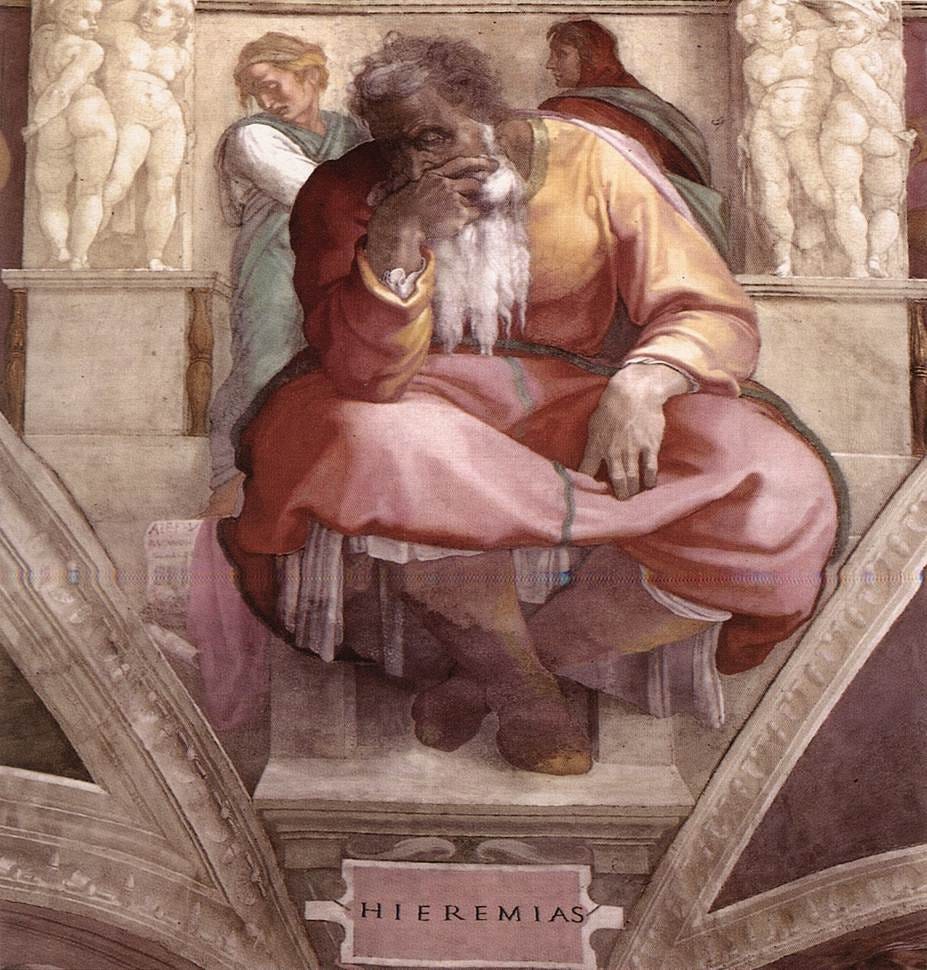
Baptists today also point to Jesus inaugurating the New Covenant in his blood. According to Jeremiah 31:31–34, part of what makes the new covenant new is that everyone will know the Lord: “no longer shall each man teach his neighbor and each his brother, saying, ‘Know the Lord,’ for they shall all know me, from the least of them to the greatest, says the Lord; for I will forgive their iniquity, and I will remember their sin no more” (Jer 31:34).

That seems to be the exact pattern we see in the New Testament and the New Covenant church described in it. The apostolic writings show over and over that people first convert and then are identified as part of the church. So Peter says in Acts 2:38, “Repent, and be baptized every one of you in the name of Jesus Christ for the forgiveness of your sins.” Repentance comes first, then follows baptism. Everyone in the church has repented, converted.
Regenerate church membership and church covenants
In order to promote or support a regenerate church membership, Baptists have used two instruments.
First, Baptists formed church covenants that each congregation agrees to; they mostly centred on the moral life or how Christians ought to love one another. Second, Baptist churches practiced church discipline. Both of these are important implications of a regenerate church membership or a believer’s church.
According to the authors of The Baptist Story, “Until the early twentieth century, to join a Baptist church meant to voluntarily embrace the church’s covenant as a general guide for life and godliness. Individually, each member covenanted with the wider body. Corporately, the whole body covenanted with Christ.”[6] By covenanting together, congregations could hold each other accountable to a Christian way of life, thus promoting Christian virtue and protecting the congregation.
One of the most popular American Baptist covenants first appeared in J. Newton Brown’s The Baptist Church Manual (1853):
Having been led, as we believe, by the Spirit of God to receive the Lord Jesus Christ as our Saviour; and, on the profession of our faith, having been baptized in the name of the Father, and of the Son, and of the Holy Ghost, we do now, in the presence of God, angels, and this assembly, most solemnly and joyfully enter into covenant with one another, as one body in Christ.
We engage, therefore, by the aid of the Holy Spirit, to walk together in Christian love; to strive for the advancement of this church, in knowledge, holiness, and comfort; to promote its prosperity and spirituality; to sustain its worship, ordinances, discipline, and doctrines; to contribute cheerfully and regularly to the support of the ministry, the expenses of the church, the relief of the poor, and the spread of the gospel through all nations.
We also engage to maintain family and secret devotion; to religiously educate our children; to seek the salvation of our kindred and acquaintances; to walk circumspectly in the world; to be just in our dealings, faithful in our engagements, and exemplary in our deportment; to avoid all tattling, backbiting, and excessive anger; to abstain from the sale and use of intoxicating drinks as a beverage, and to be zealous in our efforts to advance the kingdom of our Saviour.
We further engage to watch over one another in brotherly love; to remember each other in prayer; to aid each other in sickness and distress; to cultivate Christian sympathy in feeling and courtesy in speech; to be slow to take offense, but always ready for reconciliation, and mindful of the rules of our Saviour, to secure it without delay.
We moreover engage, that when we remove from this place, we will as soon as possible unite with some other church, where we can carry out the spirit of this covenant, and the principles of God’s Word.
These covenants were voluntary but had some teeth to them. If someone did not fulfill the covenant, members could ask them why. And eventually, if someone simply refused, then church discipline could occur.
Regenerate church membership and church discipline
That is the second implication of a regenerate church membership: church discipline. According to the authors of The Baptist Story:
“Church discipline safeguards regenerate church membership by protecting sound doctrine and promoting godly living. Church discipline is intended to bring about one of two results in the disciplined individual: conviction and repentance in the case of a rebellious but authentic believer or awakening to the gospel in the case of a false professor of Christianity. Church discipline is intended to be redemptive, not punitive. For the wider church, discipline protects the purity of the congregation.”[7]
Baptists saw Jesus’s word in Matthew 18:15–20 or Paul’s in 1 Corinthians 5:1–13 and 2 Corinthians 2:5–11 as commanding that congregations practice church discipline. Language like “tell it to the church” or “expel him from your midst” strongly implied that congregations must do the heavy lifting of church discipline. At one level this may sound harsh, but do remember whenever we see in the news a Christian in power or otherwise who assaults, harms, or defrauds people how angry we are. Well, God commands us in the Bible to deal with sin in our midst to protect his little ones from harm.
In short, Baptists maintain that the church is for believers only, who are regenerate. The logical question then is: how do Baptists understand believer’s baptism then?
Second, Believer’s Baptism
The reason why Baptists baptize believers (not infants) is because the Bible teaches that through faith, baptism incorporates us into the body of Christ, the church. And so faith and baptism are a pair; baptism and faith comprise one reality—that we have been united to Christ.
And this explains why Baptists do not baptize infants. The New Testament never commands infant baptism or shows an infant being baptized. And New Testament baptisms involve someone converting first, then being baptized.
Acts
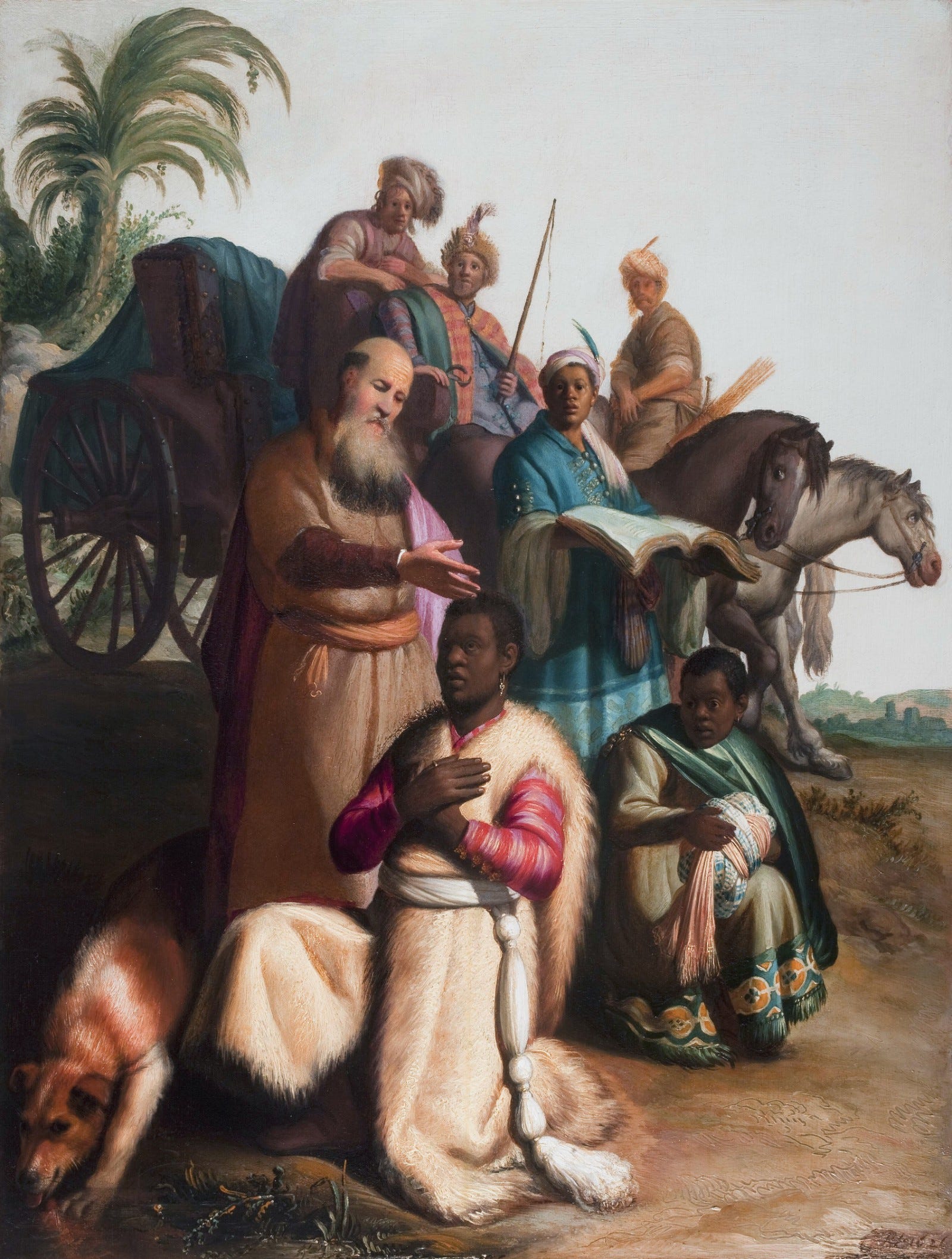

The Book of Acts illustrates this principle well. For example, Acts 8:12 records, “when they believed Philip as he preached the good news of the kingdom of God and the name of Jesus Christ, they were baptized, both men and women.” The order here begins with hearing the Gospel, then receiving baptism.
Just a little later in the same chapter, Philip explains the Gospel of Jesus to the Ethiopian Eunuch (Acts 8:35). Then the Ethiopian asked, “Why shouldn’t I be baptized?” (Acts 8:36). And nothing prevented it; so he was. The Gospel preached to the Ethiopian precedes his baptism.
Interestingly, some English versions skip verse 37 because they believe it may not be original to the text, although it may very well be. In any case, it shows Philip answering in this way, “And Philip said, If thou believest with all thine heart, thou mayest. And he answered and said, I believe that Jesus Christ is the Son of God.” That faith in the Gospel precedes baptism. No matter how we think of verse 37, this is just one of many examples that show the priority of faith in the Gospel for baptism.
Jesus
Another key passage has to do with Jesus in his Great Commission to the apostles. The Lord speaks of making disciples by baptizing them. And the implication here is that becoming a disciple includes baptism. Jesus says, “Therefore go and make disciples of all nations, baptizing them in the name of the Father and of the Son and of the Holy Spirit, and teaching them to obey everything I have commanded you” (Matt 28:19–20).
Paul
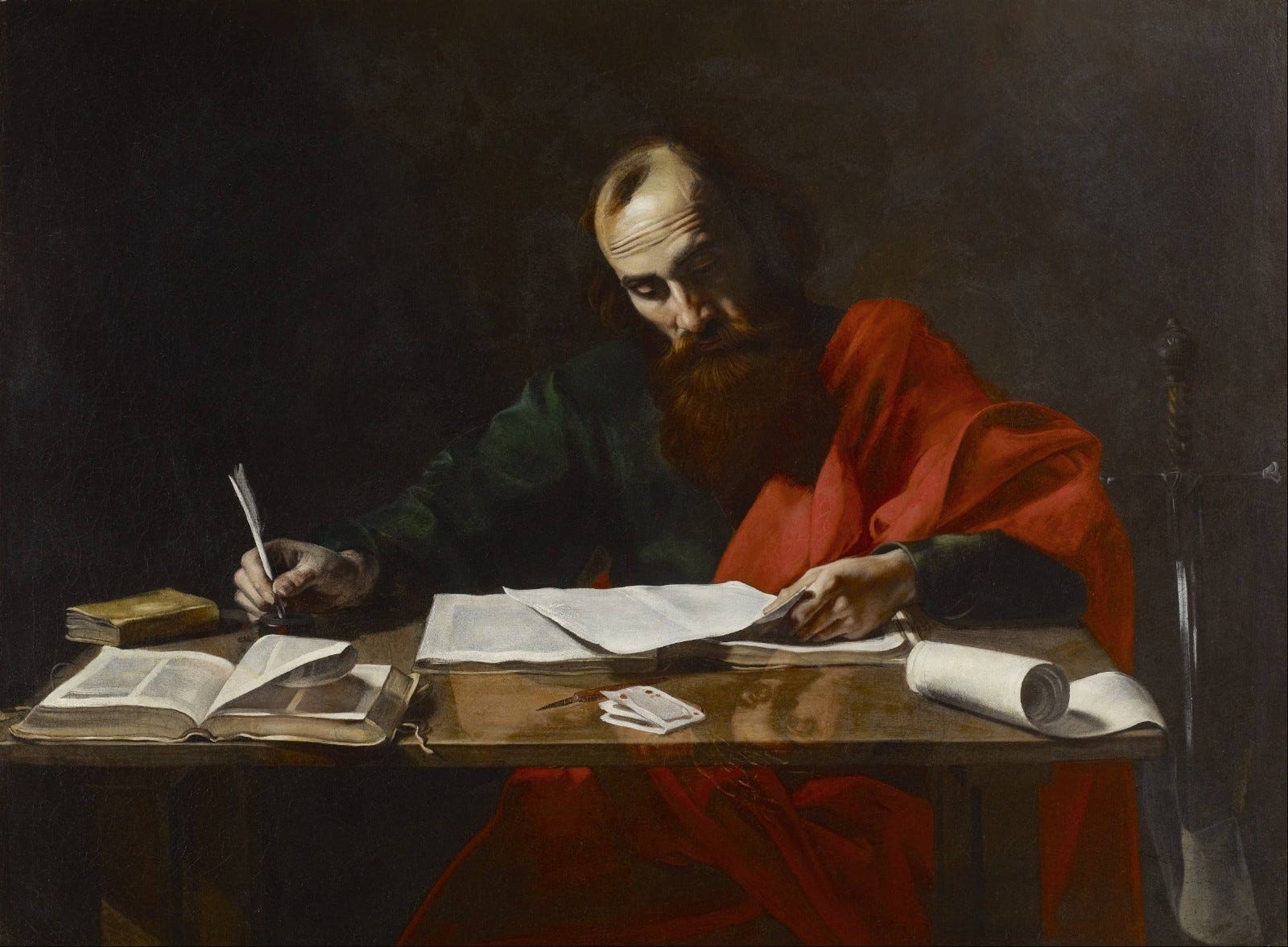

Paul’s theology of baptism similarly shows both faith and baptism as uniting us to Christ, which has led Baptists to maintain an important distinction: faith describes the inward reality that water baptism visualizes.
Of water baptism, Paul speaks of, “all of us who were baptized into Christ Jesus” (Rom 6:3). In Galatians 3:27, Paul can say, “all of you who were baptized into Christ have clothed yourselves with Christ.” Note the language of being baptized into Christ.
That makes us ask the next question: How can one be baptized into Christ and clothed with him, unless one had already been united to Christ by faith?
Well, Paul says in various places that faith too unites us to Christ:
Galatians 3:26–28: “For in Christ Jesus you are all sons of God, through faith.”
Ephesians 3:17: “So that Christ may dwell in your hearts through faith.”
Philippians 3:8–9: Paul desires to “gain Christ and be found in him,” possessing righteousness “through faith in Christ.”
Colossians 2:12: Believers have been buried with Christ in baptism and “raised with him through faith in the powerful working of God.”
Putting these together, both faith and baptism are said to unite us to Christ. Baptists maintain that faith is obviously an internal act of union with Christ while water baptism is external. Using the language of Augustine, we maintain that baptism signifies the reality that we have died with Christ and will rise with him by faith.
We could go on for some time. But suffice it to say, the testimony of the New Testament is that after disciples trust in Christ, they are baptized into Christ.
Common objections
Some object by saying that the New Covenant is like the Old Covenant in which everyone in Israel was circumcised. So why not have everyone baptized? Because the New Covenant is a better covenant, and Jeremiah 31:34 describes it as being better partly because everyone in it knows the Lord. Besides, the New Covenant is New, and it thus does not require an exact parallel to the Old Covenant.
Others point out that in Acts whole households were baptized. The implication is that infants were. Perhaps, but the texts do not explicitly tell us that; and every other passage illustrates a believer being baptized. So it seems that we should not let the silence of household passages speak louder than the shouts of believer’s baptism in Scripture.
Still others think that infants should be baptized, because Paul calls children of believing parents holy in 1 Corinthians 7:14. They take this to mean the child should be baptized. But in the very same verse, Paul calls unbelieving spouses “holy” because of the believing spouse. But nobody thinks the unbelieving spouse is a baptized person!
They are holy because someone holy lives in the household. The same is true for children of believing parents. Hence, Baptists should think that their children are holy, dedicated to God, even if they have not yet been baptized. They have a great advantage![8]
I do not want to get bogged down on the details, but suffice it to say, Baptists are Baptists because they believe the Bible plainly speaks in this way.
Third, Baptists Maintain a Congregationalism of Visible Saints
Baptists are congregational partly because they believed the Established Church in England did not have the authority to impose forms of worship on parish churches. So negatively, the origins of Baptist thought start with rejecting unbiblical patterns of church government; in this case, a national church that legally required patterns of worship. Positively, this led many early Baptists to ask, what does the Bible then say about the church?
So regularly, Baptist authors will speak about the New Testament teaching of the church. They noticed that the Letters and Acts of the Apostles showed churches as congregations with local responsibility to mind their own affairs. Yes, the New Testament also speaks about congregations being obliged to support each other (e.g., Rom 15:27; cf. Acts 15). And that would be reflected in congregations associating together around statements of faith which identify their common beliefs and practices in conscious imitation of the Jerusalem Council in Acts 15.
Among passages in the Bible, Matthew 18:15–20 played an important role in this congregational polity, because Jesus here speaks of church discipline as a congregational activity:
15 “If your brother sins against you, go and show him his fault, just between the two of you. If he listens to you, you have won your brother over. 16 But if he will not listen, take one or two others along, so that ‘every matter may be established by the testimony of two or three witnesses.’ 17 If he refuses to listen to them, tell it to the church; and if he refuses to listen even to the church, treat him as you would a pagan or a tax collector. 18 “I tell you the truth, whatever you bind on earth will be bound in heaven, and whatever you loose on earth will be loosed in heaven. 19 “Again, I tell you that if two of you on earth agree about anything you ask for, it will be done for you by my Father in heaven. 20 For where two or three come together in my name, there am I with them.”
Jesus does not say take the matter to a presbytery or a bishop, but rather to speak to the church. And this implied to many that congregations have a role in maintaining the holiness of a congregation. In other words, it is not a pastor or bishop’s job—but everyone’s.
Paul likewise points to the role of the congregation in 1 Corinthians 5 when it comes to another case of church discipline. A man was sleeping with his step-mother, and Paul says:
“When you are assembled in the name of our Lord Jesus and I am with you in spirit, and the power of our Lord Jesus is present, hand this man over to Satan, so that the sinful nature may be destroyed and his spirit saved on the day of the Lord” (1 Cor 5:4–5).
Notice here that the word “you” is plural in Greek, meaning, that he is addressing the Corinthian church. We know this as well since Paul specifies, “When you are assembled” as the church. And here, the expectation is that the assembly will hand this man over to Satan. When speaking about another discipline case, Paul in 2 Corinthians 2:6 mentions, “this punishment by the majority.” Well again, it is the majority, that is, the assembled congregation that carries out church discipline.
One last note. Without ignoring all the metaphors in Scripture about the church, Baptists also looked particularly at the word church, which translates the Greek word ekklesia, and noticed that it often describes two realities: first, the universal church, the body of Christ, that comprises all believers across space and time; and second, a particular congregation in one place. So even the biblical word church pointed to a congregational identity.
When it comes to appointing leaders, the New Testament is less clear. Paul or his associates (Barnabas, Titus) often appoint elders. At the same time, we have passages like Acts 6:3 which narrates how the Jerusalem church picked leaders from among themselves. Evidence also shows that elders seem involved in appointments (1 Tim 4:14). Since Paul was an apostle with unique authority, we probably need to be cautious about using him as an example for how most congregations should practically appoint elders and deacons.
Here, Baptists have allowed some flexibility in the role of the congregation and the appointing of pastors. Some advocate for laying on of hands of leaders; others emphasize how elders nominate pastors whom congregations affirm. And much more besides. Congregationalists do not see biblical evidence that a bishop alone can appoint pastors for congregations. So they believed that congregations had a role.
Next, Baptists held that congregations were a covenanted community, bound together by voluntary agreement around a common faith and practice. So churches wrote up constitutions with a covenant within them. These covenants reinforced the whole church as a company of visible saints, a holy priesthood.
Lastly, Baptists used Statements of Faith or associational confessions of faith to define the boundaries of association with other congregations. And they modelled these associations after the Jerusalem Council in Acts 15 or Paul’s statements about congregations being duty-bound to each other in Romans 15 and really everywhere in the New Testament (e.g., “love one another,” “bear each other’s burdens,” etc.).
Fourth, numerous implications: religious liberty, soul liberty, associationism and so on.
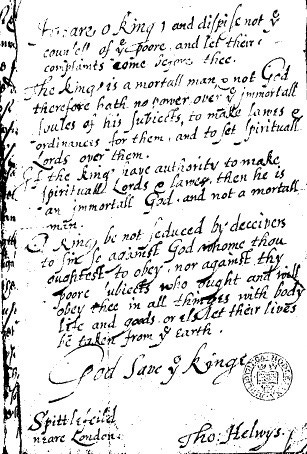

Based on the above three principles: a believer’s church, believer’s baptism, and congregational polity in associations, Baptists have inferred that churches should have the liberty or freedom to worship according to New Testament principles. For this reason, they generally advocate for religious freedom.
Second, that conversion precedes church membership means individuals have the freedom and competency to believe for themselves. In other words, soul competency or soul liberty mattered for Baptists. Generally, we might call this a species of the Protestant teaching of the universal priesthood of believers.
Third, Baptist polity placed authority in congregations and their officers, but it did not mean that each church was fully autonomous. Baptists read the various biblical verses on church unity and knew that they had to live together, especially Acts 15. So they developed the doctrine of voluntary associations of congregations.
Beginning in 1644 with the London Baptist Confession, Baptists across England began associating together through Statements of Faith. For example, General Baptists formed an association around 1654 and produced the Standard Confession in 1660, which became the most common confession for General Baptists and Free Will Baptists in America.
Conclusion
In short, Baptists are Protestants who believe in a regenerate church membership, believer’s Baptism, and congregationalism in association with other congregations. They hold these beliefs because the New Testament does. That is, Baptists hold out these beliefs to other Protestant friends as a resource to renew the worship of the church.
[1] J. Matthew Pinson, A Free Will Baptist Handbook: Heritage, Beliefs, and Ministries (Nashville, TN: Randall House Publications, 1998), 5.
[2] I make this argument more fully in Wyatt Graham, “You Can Be Deep in History and Remain Baptist,” September 4, 2025, https://www.wyattgraham.com/p/you-can-be-deep-in-history-and-remain. In short, however, the 2LBF is basically the Westminster Confession of Faith, edited to include believer’s baptism. The 1LBF models itself after the True Confession.
[3] My predecessor at Carey Theological College, Stanley Grenz, uses it in his popular The Baptist Congregation, 82.
[4] Anthony L. Chute, Nathan A. Finn, and Michael A.G. Haykin, The Baptist Story, 2nd ed. (B&H Academic, 2025), 20.
[5] Pinson, Free Will Baptist Handbook, 158.
[6] The Baptist Story, 22.
[7] The Baptist Story, 22.
[8] I develop this argument in Wyatt Graham, “Should We Treat Our Children like Unbelievers?,” October 17, 2020, https://www.wyattgraham.com/p/should-we-treat-our-children-like-unbelievers.
Listening/will read more in depth later but so glad more Baptist works are being published on Substack! Thanks dude!
Thanks for this Wyatt. I referenced your piece on "Where Do Baptists Come From?" in my latest Substack article. I appreciate your good work.