


During the 2010s, minimalism was everywhere. People recognized that Amazon and quick fashion filled up their homes. And it made them feel unsettled. Among the various theories offered as to why, many simply paralleled a messy house with a messy life. Others used scientific studies to demonstrate that minimalism may reduce stress, and that maximalism (hoarding) increases stress.
And while I am sure some minimalist thinkers had theories about why this was the case, the overwhelming message of influencers was simply to state: be happier by having less. However, unbeknownst to many, minimalists touched on something important, vital to life, but they did not always know how to explain themselves. The same is true for a whole host of movements that aim to heal us from our modern woes (e.g., deep work).
So in this article, I want to point out why these movements worked. And the answer is that space and time, the two realities through which all people must live, stabilize life when rightly ordered. What minimalists, deep work advocates, and habit-influencers point to underscores the basic way in which all humans live and find stability in life.
Time
We structure our days by hours, our weeks by days, our years by weeks, and more besides. Every day, we ideally wake up at the same time, and we go to bed at the same time. We usually have meals such as breakfast, lunch, and dinner. The weekend marks the end of the work week. Holidays like Easter or Christmas break up the year. New Year celebrates the end of a year, and the beginning of a new one. We mark time as human beings; it is built into what it means to be human.
During the COVID years, people found themselves out of step with time. Being ordered to stay at home or to avoid regular work patterns created something called COVID-time. It was unmarked time. We lived through a temporal fog, where days flowed by or elongated. Our experience of time felt different.
By contrast, when we live in ordinary time, we create patterns that stabilize our day. We begin work at a time, share meals at midday, and tell our children bedtime stories at night. All of these structures shape the flow of time and make it feel like a day has begun and ended. It creates memories, patterns, and habits.
In fact, virtually all habit formation or deep work strategies (think Cal Newport) centre on organizing time. We create time blocks for deep work. We schedule meetings during other blocks of time. We sometimes even plan vacations to take breaks from our ordinary time.
The alternative might feel like chaos. We would never know when food would come, when work would come for us, and life would lack its patterns. Everyone knows that living this way leads to negative results. We come late to work, children do not know what to expect in life, and we do not know when the next paycheque is coming in.
Religious observances also order time toward the sacred. On Sunday, Christians go to church. They remember the past when God saves them; they look to the future when Christ will return. They enjoy the present as they worship in Spirit and truth. As a fundamental aspect of being human, Christianity orders our time toward the past, present, and future so that we might see God as the Lord of Time, he who came for us and for our salvation and who will return in the same way he left.
Once stated, it becomes obvious that time stabilizes life. Yet we often fail to realize that space, like time, orders our lives and brings stability to them.
Space
Byung-Chul Han points to things as stabilizing forces in our lives. Things in space, like shoes, gloves, and stuffed animals, become ours. In years gone by, we had less stuff. We had a few pans, toys, and clothes that nevertheless lasted for years (with modification). They were part of us; ours.
Mass society changed all that.
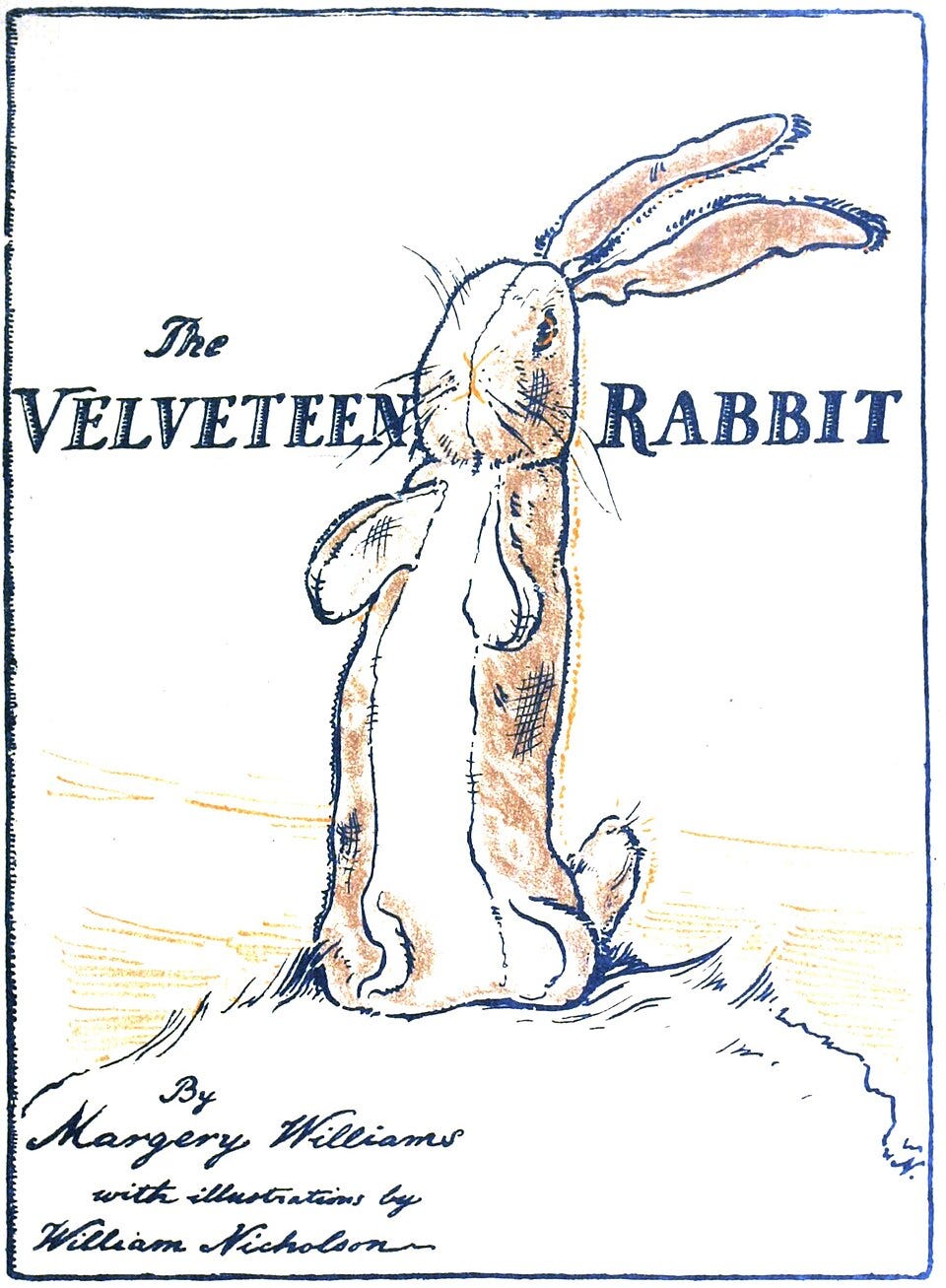
We now see kitchen utensils, toys, and clothes as items to be purchased on Amazon, as a resource to be stored, counted, and used when needed. Few children get their velveteen rabbit, whom they carry with them for sixteen years. Instead, each birthday and Christmas, children receive plastic-mass-products. It accumulates and stuffs into storage bins. It thereby becomes less a thing but a resource, a toy box. This is the kind of world Martin Heidegger hinted at in his writing on technology.
But it is not just that mass production and storage have changed our relationship to things. Digital technology has done so as well. Information is not a thing. Endless data flows into our phones and computers. Emails ding. Messages appear. TikToks animate. They are here and gone again. Snapchat, where messages disappear after viewing, best illustrates the non-thingness of information.
We may keep a handwritten letter from a loved one, but what about a DM? This difference between things and information changes how we relate to things.
But what matters here, for us, is that things stabilize our life because the longer they are there, the more they feel real and sturdy. A child’s blanket and stuffy, if it is their special one, remains a force that calms and helps. A hundred stuffies lose that special relationship. They become a box of stuffies, not a beloved bunny.
Minimalists picked up on something of this. The more we have, the less stable we feel. But the reason why centres on reality itself: we must move through space and time. Time is obvious; space not always.
We no longer live in one place, one house for our whole life. We move from place to place. We rent, not own. Even if we live in a city for twenty years, industry ensures it will look nothing like our childhood once we grow to adulthood. Everything changes. Nothing is the same. Few things can stabilize us.
That is why having fewer but more important things can restore something of that ancient stability that things used to bring. Heidegger speaks of the shoes of the farmer in his analysis of Van Gogh’s painting. They are leather, multi-year things. They are sturdy, ours, and get fixed when broken. They create a relationship with us that, along with many other things in life, create the conditions for stability: we expect the same thing daily.
By seeing everything as standing-reserve, as counted resources to purchase and use, we change our relationship and experience of things. They are just like information: here and gone again. Rented for a day, gone the next. Perhaps this could work for us if cities and places remained the same for years. But the rental bike gets upgraded every year, so do the stops and buildings around it. Nothing is the same. Mass Society won’t allow it to remain. All is flux. We cannot step into the same street twice.
Conclusion
Minimalists, habit theorists, and deep work advocates have each touched something true. The answer to why their strategies work lies in the basic structure of human existence: we are creatures who move through time and space, and we need to structure both to flourish.
Ordered time—structured by rhythms of work and rest, meals and sleep, seasons and sacred days—gives shape to what would otherwise be formless. Ordered space—inhabited by things that are truly ours, sturdy and few—grounds us in a world of constant flux.
The digital world erodes both. Digital technology fragments time into endless notifications. Mass production turns things into disposable resources. Urban development ensures no place stays recognizable for long.
While not usually stated in this way, minimalists advocate for the conditions for human stability. Deep work advocates order time toward meaningful rhythms and to cultivate things that endure. Habit-maxxers organize both space and time for successful results. They all touch on something deeply human: namely, what it means to live well in time and space.
After all, God ordered creation to pass through time and space. So to live well within that order is to participate in what he has made and preserves. This is the ultimate reason why ordering space and time matters.