


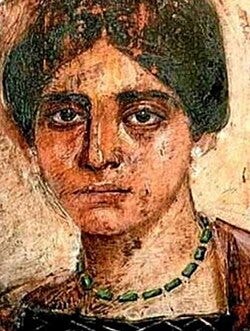
What did worship and Baptism in Jerusalem look like in the fourth century? Egeria, a woman likely from Spain, gives us a detailed record of what happened.
Egeria came to Jerusalem in the early 380s. For a bit of context, it’s worth noting that Christianity had become legal as of 313. Some years later, it would become the privileged religion in the Roman World. And Constantine and his mother, Helena, sponsored church building projects in Jerusalem. Jerusalem increasingly became therefore a centre of Christianity, although it of course always was.
The church in the city had a few unique traditions. For example, Lent in Jerusalem lasted 8 weeks because they only fasted for five days (excluding Saturday and Sunday).[1] Thus, 40 days occurred in 8 weeks. And the season of Lent played a special role for those entering Christianity. These 8 weeks would prepare them for Baptism on Easter (called Pascha), where they would enter into the Church publicly.
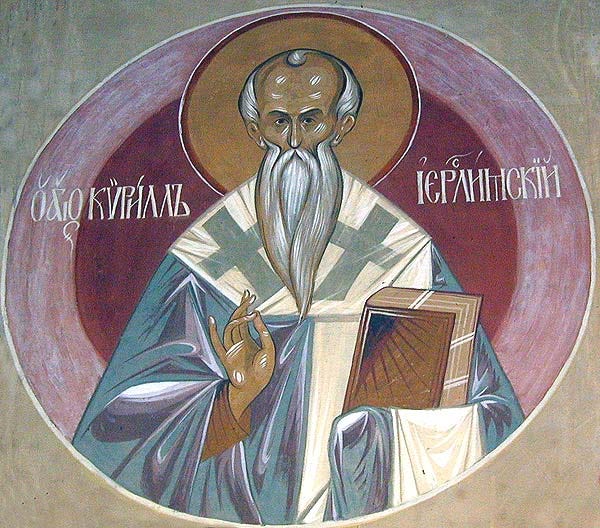
Yet the whole church participated in Lent. According to Cyril, it was a time of confession, of turning to God as we await Resurrection which happens on Easter. So Baptism and the Easter season, we might say, together represented a key moment in moral formation as a pair.
And Egeria witnesses what happened with great detail.
She explains: “I feel I should add something about the way they instruct those who are to be baptized at Easter. Names must be given in before the first day of Lent, which means that a presbyter takes down all the names before the start of the eight weeks for which Lent lasts here” (ch 45).
Egeria continues: “Once the priest has all the names, on the second day of Lent at the start of the eight weeks, the bishop’s chair is placed in the middle of the Great Church, the Martyrium [i.e. the basilica of the Holy Sepulchre complex], the presbyters sit in chairs on either side of him, and all the clergy stand. Then one by one those seeking baptism are brought up, men coming with their [god]fathers and women with their [god]mothers” (ch 45).
So the bishop and elders would receive baptismal candidates who would come alongside their spiritual fathers and mothers. They would go specifically to the Martyrium, a place associated with Christ’s death, since baptism meant that one dies with Christ according to Romans 6.
Then something interesting happens. The bishop asks friends and associates about the moral life of the baptismal candidates:
“As they come in one by one, the bishop asks their neighbours questions about them: “Is this person leading a good life? Does he respect his parents? Is he a drunkard or a boaster?” He asks about all the serious human vices. And if his inquiries show that anyone has not committed any of these misdeeds, he himself puts down his name; but if someone is guilty he is told to go away, and the bishop tells him that he is to amend his ways before he may come to the font” (ch 45).
Basically, since Baptism meant one’s entrance into the body of Christ, the bishop wanted to make sure candidates had counted the cost.
Once past this point, candidates would spend 8 weeks in biblical teaching, the Creed, and daily exorcisms, which in practice amounts to moral formation.
Egeria explains:
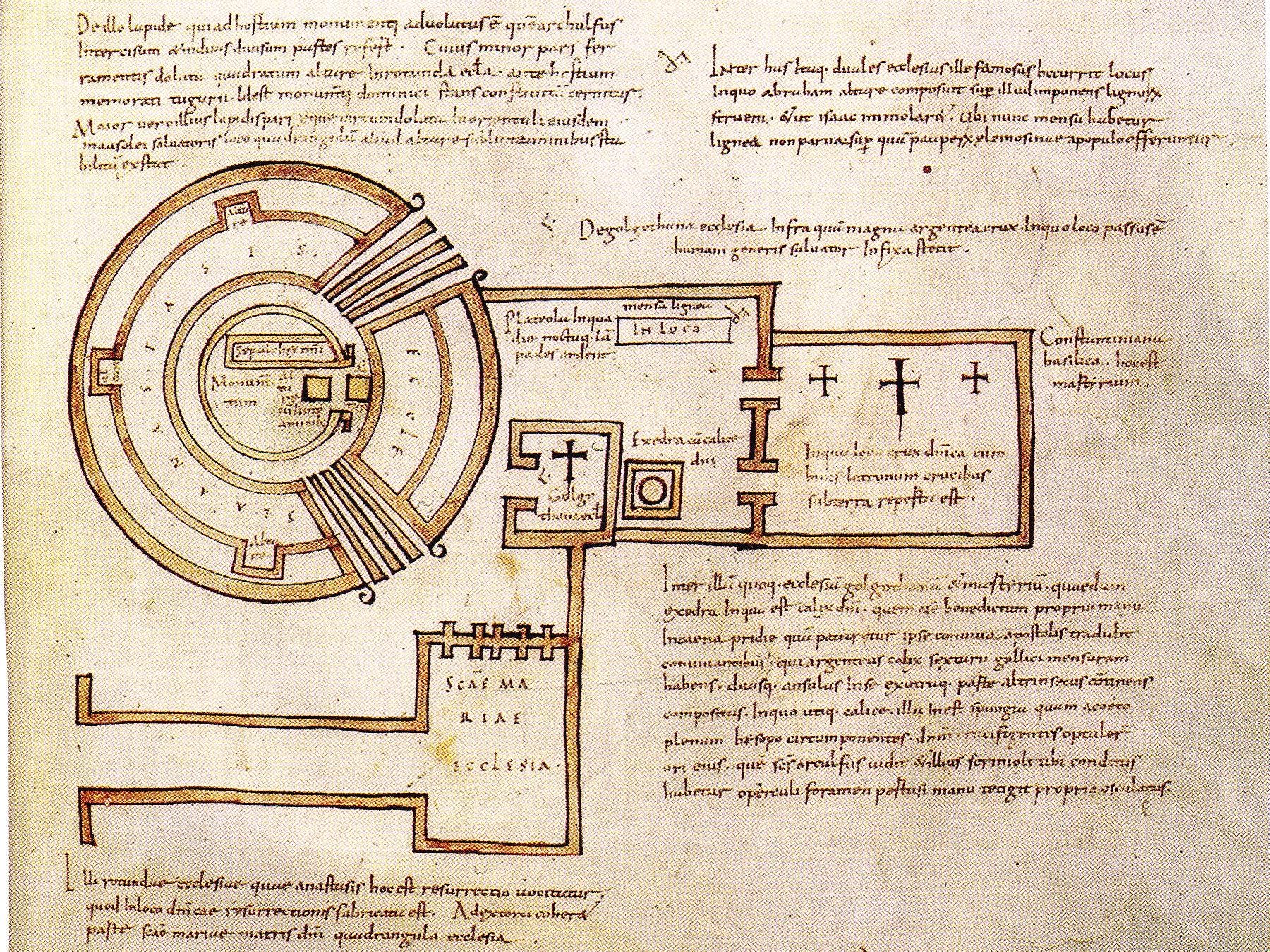
“They have here the custom that those who are preparing for baptism during the season of the Lenten fast go to be exorcized by the clergy first thing in the morning, directly after the morning dismissal in the Anastasis. As soon as that has taken place, the bishop’s chair is placed in the Great Church, the Martyrium, and all those to be baptized, the men and the women, sit round him in a circle. His [i.e. the bishop’s] subject is God’s Law, during the forty days he goes through the whole Bible, beginning with Genesis, and first relating the literal meaning of each passage, then interpreting its spiritual meaning. He also teaches them at this time all about the resurrection and the faith. And this is called catechesis. After five weeks’ teaching they receive the Creed, whose content he explains in the same way as he explained the Scriptures, first literally and then spiritually” (ch 46).
After worship in the Anastasis, a church in Jerusalem associated with Christ’s resurrection, mornings of Lent would involve exorcisms, Bible teaching, and instruction in the Creed. Notice that the whole Bible was taught literally and spiritually: “His [i.e. the bishop’s] subject is God’s Law, during the forty days he goes through the whole Bible, beginning with Genesis, and first relating the literal meaning of each passage, then interpreting its spiritual meaning.” It is vital to know that this was the norm in the early church.
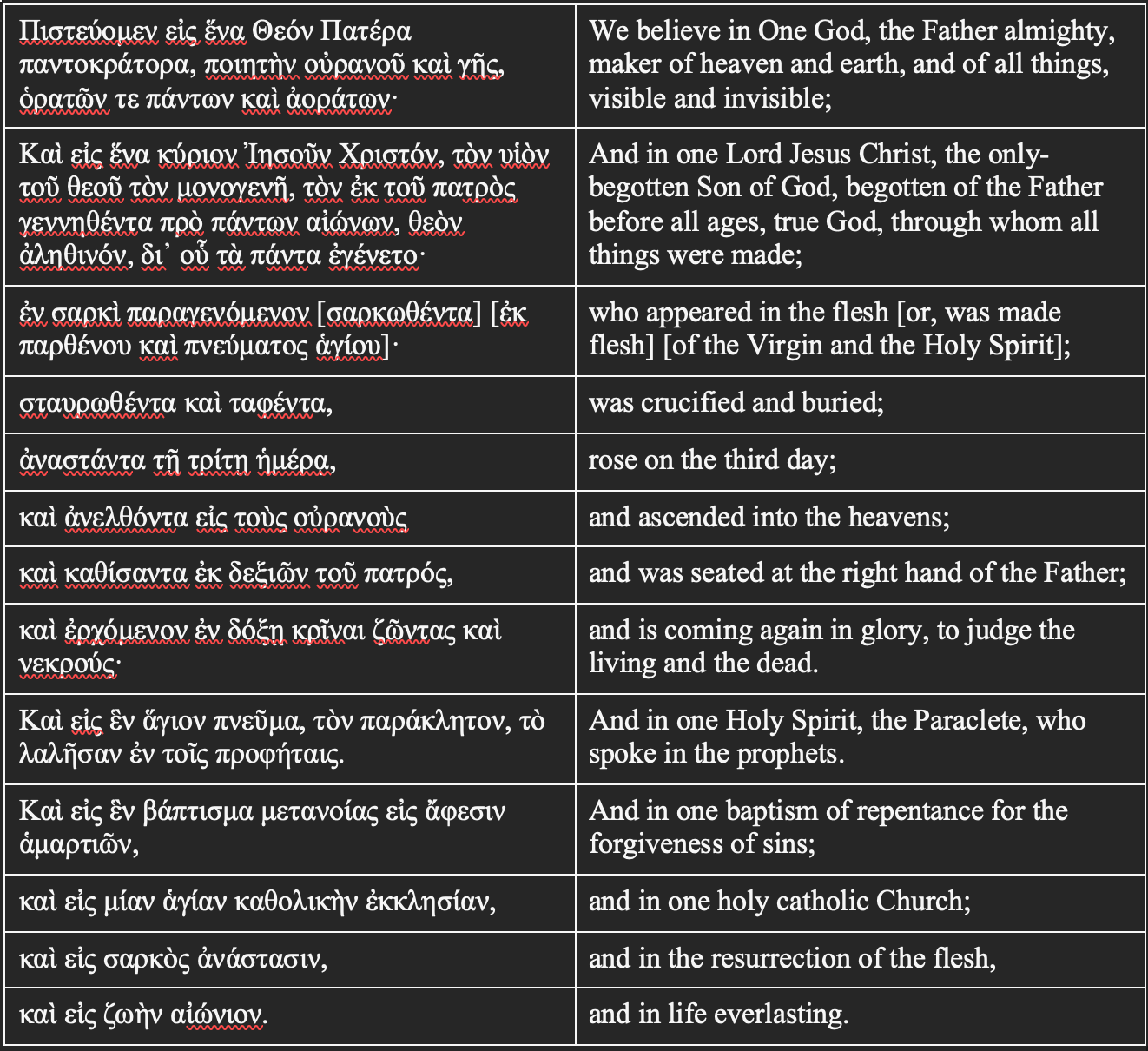
The Creed, here, a Creed very similar to the Nicene Creed would affirm the Father, Son, Spirit, and Church in line with the Bible’s teaching. Christians understand the Creed as a Rule of Faith whose teaching was contained in the apostolic writings.
Regarding exorcisms, this may sound strange until one understands what this meant. Erase Hollywood movies from the mind. Exorcisms generally involved the word of Faith and the renunciation of the devil and all his works. We might say when Biblical teaching created conviction over sin, then candidates would renounce their sin, that is, the devil and his works. One can think of the Lord’s Prayer as a kind of exorcism as well (“deliver us from the Evil One”).
Then around 9 a.m. or the third hour, the catechumens are dismissed, and everyone returns to the Anastasis: “At nine o’clock they are dismissed from Catechesis, and the bishop is taken with singing straight to the Anastasis” ( Ch 46).
The time is important because, as Egeria explains: “So the dismissal is at nine, which makes three hours’ teaching a day for seven weeks” (ch 46). So for the first seven weeks, candidates received about three hours of biblical education daily—remember not on Saturday or Sunday.
When Holy Week comes, that changes. Egeria notes:
But in the eighth, known as the Great Week, there is no time for them to have their teaching if they are to carry out all the services. So when seven weeks have gone by … the bishop comes early into the Great Church, the Martyrium. His chair is placed at the back of the apse, behind the altar, and one by one the candidates go up to the bishop, men with their [god]fathers and women with their [god]mothers, and repeat the Creed to him” (ch 46)
So here, we might say, the preparation comes to a close. And the final component was reciting the Creed, a summary version of what the Bible teaches.
It is possible to reconstruct the Creed from the titles of Cyril’s Baptismal Catecheses. It reads:[2]
Egeria continues:
“When they have done so, the bishop speaks to them all as follows:
“During these seven weeks you have received instruction in the whole biblical Law. You have heard about the faith, and the resurrection of the body. You have also learned all you can as catechumens of the content of the Creed. But the teaching about baptism itself is a deeper mystery, and you have not the right to hear it while you remain catechumens. Do not think it will never be explained; you will hear it all during the eight days of Easter after you have been baptized. But so long as you are catechumens you cannot be told God’s deep mysteries” (ch 46).[3]
So the candidates enter the Martyrium, the place of Christ’s death to confess their faith as they await their entrance into the Church. Later, they will worship at the Anastasis, the place of resurrection, as they participate in life.
But first they must be baptized to enjoy the full participation of life. And so the bishop invites them to be Baptized on Easter Sunday, which begins the Easter Octave, the eight days of Easter (Sunday to Sunday). Each day they will receive further illumination as they learn about the great mysteries of godliness.
[1] Lent is a later word. It was usually called some variant of the word “forty”; thus, in Latin, Quadragesima and in Greek, Τεσσαρακοστή.
[2] Greek text from PG 33:331–1180; translation from Wilkinson, Egeria’s Travels, 161–63. Cited in The Catechetical Lectures of St. Cyril of Jerusalem, trans. Maxwell Johnson, 24–25.
[3] Egeria, Itinerarium 45–46, quoted in The Catechetical Lectures of St. Cyril of Jerusalem, introduction, 22–24.
Would that contemporary practices approaching baptism were even close to this.
While we may learn many a things from post-apostolic times, what is written in the NT remains our guide, lest we find ourselves taking a cafeteria approach to post-apostolic times.