


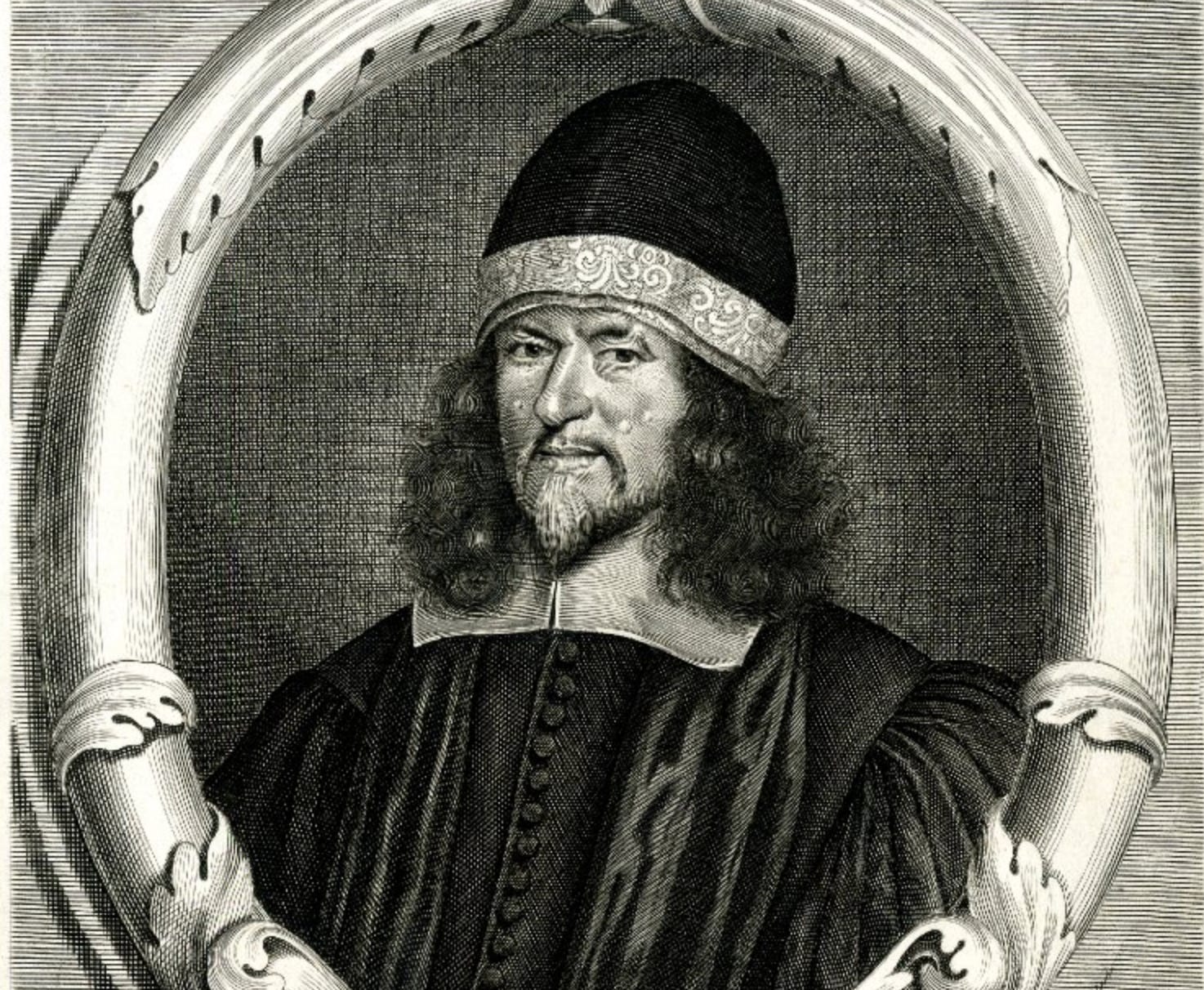
According to Paul, God justifies the ungodly by faith (Rom 3–4). But James claims, “a person is justified by works and not by faith alone” (James 2:24). Assuming that Paul and James are not contradicting each other, how might we explain their two positions?
In answer to this question, the Puritan Thomas Goodwin affirmed our double justification: “There is a double justification by God: the one authoritative, the other declarative or demonstrative” (7:181).
What does Goodwin mean by “double justification”? And how can this help us understand Paul and James? This article aims to answer those questions.
Authoritative justification
Of the authoritative justification, Goodwin explains, “the one is the justification of men’s persons coram Deo, before God, as they appear before him nakedly, and have to do with him alone for the right to salvation; and so they are justified by faith without works, either as looked at by God or by themselves” (7:181). Paul speaks of this justification in Romans 4, Goodwin argues.
The key language here is: “before God” and “right to salvation.” Only by faith can one be justified before God and so gain the right to salvation. As Goodwin will afirm, this authoritative justification relies on the imputation of Christ’s righteousness.
In other words, authoritative justification refers to God imputing Christ’s righteousness to us by faith. Notice too the key phrase “the right to salvation” which will contrast “the possession of salvation” in demonstrative justification.
Declarative or demonstrative justification
Of declarative or demonstrative justification, Goodwin explains, “Now God hath ordered it so, that he will not put the possession of salvation upon that private act of his own, without having anything else to shew for it” (7:181).
He continues, “He will justify his own acts of justification, of this man and not of that; and he will justify the faith of him he had justified (which is James’s main scope), or, if you will, the person himself, as he professed himself to have had faith. And this is as evidently James’s scope, as the other is Paul’s” (7:181).
So God justifies the ungodly by faith and thereby grants “the right to salvation.” By contrast, God will grant “the possession of salvation” to those whose faith produces works (James 2:18).
The language of God justifying “his own acts of justification” refers to his declaration that a believer truly trusts in him, truly fears him, or has a living faith (James 2:17). In context, Goodwin here means God’s declaration of what is already true of us (justified in Christ) when he speaks of God justifying “his own acts of justification.” Notice too that Goodwin specifies that is God’s act of justification (not ours), and that he specifies “he will justify the faith of him he had justified.”
In other words, declarative justification is a show and tell day. The works of faith show a living faith exists in a believer that God has justified; and he tells them, “Now I know you fear me” (Gen 22:12).
Double justification in Paul and James
How exactly does this double justification in Paul and James work? Goodwin answers: “In a word, Abraham’s person, considered singly and alone, yea, as ungodly, is the object of Paul’s justification without works (Rom. 4:3–5). But Abraham, as professing himself to have such a true justifying faith, and to have been justified thereupon, and claiming right to salvation by it, Abraham, as such, is to be justified by works” (7:181).
Again, note that Goodwin points out that Abraham was justified without works and gained the “right to salvation by it.” But then Abraham can be subsequently said “to be justified by works” and thus possess salvation. This justification by works refers to God’s declaration that a believer is truly justified by faith in Christ and has received the right to salvation.
How then are we “justified by works” (James 2:21, 24)?
Goodwin answers by pointing to “a visible, demonstrative justification, as the words seeing and shewing import” (7:181).
More specifically, James himself looks to Abraham offering Isaac as an act that justified him by works: “Was not Abraham our father justified by works when he offered up his son Isaac on the altar?” (James 2:21).
And Goodwin points to Genesis 22:12 where God declares of Abraham’s faith: “now I know that you fear God.” This declaration, Goodwin points out, is the specific demonstration or justification by works where God declares Abraham to really fear God: “Now what was that justification, but that famous testimony of God himself” (7:181).
To this, Goodwin adds the further testimony of James 2:23 that Abraham was God’s friend (7:182) and indicates that we all should be justified by works like Abraham was.
Or more particularly, Goodwin points out that God will pass judgment on our works either by (1) a condemnation or (2) a justification. So he explains, “to be judged according to works’ (when it is spoken of a good man), is meant demonstratively, as they are evidence of his estate” (7:182).
Importantly for Goodwin, James writes for the church, and James wants God to pass judgment upon our works by saying to us what he said to Abraham: “now I know that you fear God” (James 2:21). James, Goodwin thinks, presents this this teaching so that we might know what Jesus warned us about: God will judge our works on the last day.
Jesus on Justification by Works
Of “this outward judgment at the latter day,” Goodwin notes that Jesus, too, argued for a justification by works on the last day: “I tell you, on the day of judgment people will give account for every careless word they speak, for by your words you will be justified, and by your words you will be condemned” (Matt 12:36–37; Works 7:182).
In other words, Goodwin (drawing on Jesus) shows that God’s judgment of our works will either mean we are condemned or justified. What is judged, in context, are the words that we use.
Goodwin immediately comments, “Neither is it anywhere said, that God will judge men according to their faith only nor will it be a sufficient plea at the latter day to say, Lord, thou knowest I believed, and cast myself at thy grace. God will say, I am to judge thee so as every one shall be able to judge my sentence righteous together with me” (7:182).
As James, the brother of Jesus, says, “Show me your faith apart from your works, and I will show you my faith by my works” (James 2:8; see also 1 Cor 4:5).
Goodwin this denies that at the last judgment we are judged by faith or belief, but we are, as Jesus and Scripture says, judged according to our works. One must keep in mind that a believer already has the right to life given to us by faith and the imputation of Christ’s righteousness. Here, Goodwin talks about the necessary works that flow from a living faith that God will pass judgment over to condemn or justify; remember the word justify can mean demonstrate or declare such as when God says, “Now I know you fear me.”
Paul and James Agree on Judgment by Works
Goodwin concludes: “Paul’s judging according to works, and [James’s] justification by works, are all one, and are alike consistent with Paul’s justification by faith only. For in the same epistle where he argues so strongly for justification by faith without works, as Romans 3:4, he in chapter 2 also declares, that ‘he will judge every man according to his works’” (7:182).
In other words, Paul and James both argue that God justifies the ungodly by faith, and God will judge each man according to his works. God does not judge us according to faith, Goodwin notes, because that is not what Paul or Jesus say.
Further, this judgment, according to works, amounts either to a condemnation or a justification (in the sense defined above); and this judgment explains what James means by Abraham being justified by works through offering up Isaac.
Faith Yields Good Works
For Goodwin, these good works flow from faith (Heb 11:17). Of Abraham, James says, “faith was active along with his works, and faith was completed by his works” (James 2:22). Goodwin comments, “And this the reason of the thing also enforceth, for the cause is not perfected by the effect, but is declared perfected. Fruits perfect not, or make not the tree good, but shew the goodness of it” (7:183).
He continues, “Now faith is the cause of works; and so his faith was perfected by works, by being manifested, upon trial (as, Hebrews 11:17, the apostle speaks), to be perfect faith, that is, true and genuine faith (for so perfect is taken by James 1:17, ‘every perfect gift’), in distinction from faith that proves itself hypocritical in the issue. Thus you say of a true dye, it is a perfect colour” (7:183).
Here, Goodwin also points out that the word “perfected” means attaining “the end which it was ordained for” (7:183). To perfect something does not mean moral perfection as it often does today, but it meant reaching an ordained end, as when an acorn is perfected in its becoming an oak tree.
The most important term that Goodwin uses is “demonstration” as he notes: “There was an evident demonstration of making good, a fulfilling or justifying of what God had done, and of that faith he had justified him then upon, clearly shewing that God in justifying him upon that, though a single act of faith, yet had kept to that eternal rule of his in justifying any, that such a faith should be operative and working of holiness” (7:184).
And thus after God imputed righteousness to Abraham by faith (Gen 15:6), “This Abraham in the sequel fulfilled and made good, and God foresaw he would” (7:184). The faith that justified Abraham alone led to works that demonstrated Abraham’s faith.
Or more: “So then, as this renewing the promise was but a further confirmation of what was sure afore on God’s part there, so here in James this fulfilling was but a making for, or open verification, or demonstration, or shewing forth on Abraham’s part, that his faith God had justified him upon was true and real, perfect faith, such as God only professed to justify men upon” (7:184).
And “this justification of Abraham by works (James 2:21) [did not] add anything to God’s real imputing of Christ’s righteousness, but was the signal of it” (7:185). It is for this reason, that Goodwin can speak of God justifying “this my justifying of this man” (7:185). God justifies by faith via imputation, and then gives faith whose works demonstrate or show a true faith; and so God can be said to justify what he has justified in man.
Conclusions
God justifies the ungodly by faith, but judges our outward works on the last day. “And in relation to this outward judgment at the latter day,” Goodwin writes, “our sentence of salvation is termed expressly a justification” (7:182).
Put simply, Goodwin maintains a double justification. The one is authoritative, grants the right of life, relies on the imputed righteousness of Christ, and is given by faith. The other is declarative, grants the possession of life, relies on a pre-existing justification by faith, and centres on the works of a living faith. God passes judgment by saying “you workers of lawlessness” or “you fear God.”
Obviously, once justified by faith in Christ, a believer necessarily will do these good works and already possesses the right to life. Hence, Goodwin speaks of this judgement by works as God justifying his own justification of a believer. Or put another way, God declares what is true of a justified believer who lives by faith: “you truly fear God.”
For more on the topic of justification and works, see my article on Petrus van Mastricht:
Petrus van Mastricht on Good Works: the Way to Life and Continuation of Justification

Jonathan Edwards said of Petrus van Mastricht’s Theoretical-practical Theology that it was “much better than Turretin or any other book in the world, excepting the Bible, in my opinion.” As a churchman and professor, Mastricht’s work as a Reformed theologian deeply influenced the Reformed during the 17th century and beyond.
Further Resources
Mark Jones on future Justification in Goodwin.
Mark Jones on Works and the Continuation of Justification.
Wyatt Graham on whether the Reformed taught justification by works.
Wyatt Graham on imputed and inherent righteousness in early Reformed thought.
This was a great read, something I had never read about...until I read it on the Reformation 21 website, posted by Mark Jones. I'm curious which of you wrote this first?
Completely off topic question, you’re writing nearly daily, what’s your approach to consistently writing well/how do you find the time?