


Since marriage is a mystery of Christ’s love for the church (Eph 5:32–33), the Song of Songs—the Greatest Song, which ends by focusing on divine love (Song 8:6)—by definition previews Christ’s love for his Bride.
Further, the Song itself alludes to divine love through its language. For example, I wrote elsewhere:
Solomon leaves the wilderness and arrives in Jerusalem to marry his bride:
“What is that coming up from the wilderness like columns of smoke, perfumed with myrrh and frankincense, with all the fragrant powders of a merchant? Behold, it is the litter of Solomon! Around it are sixty mighty men, some of the mighty men of Israel” (Song 3:6–7).
The Song of Songs describes Solomon as a “column of smoke,” bringing to mind the way in which God protected Israel from Egypt during the Exodus (Exod 13:21–22). Solomon then leads the men of Israel from the wilderness to Jerusalem, to Zion, to marry his bride (Song 3:11). The consummation of the marriage between Solomon and his bride is like a return to Eden (Song 4:16–5:1).
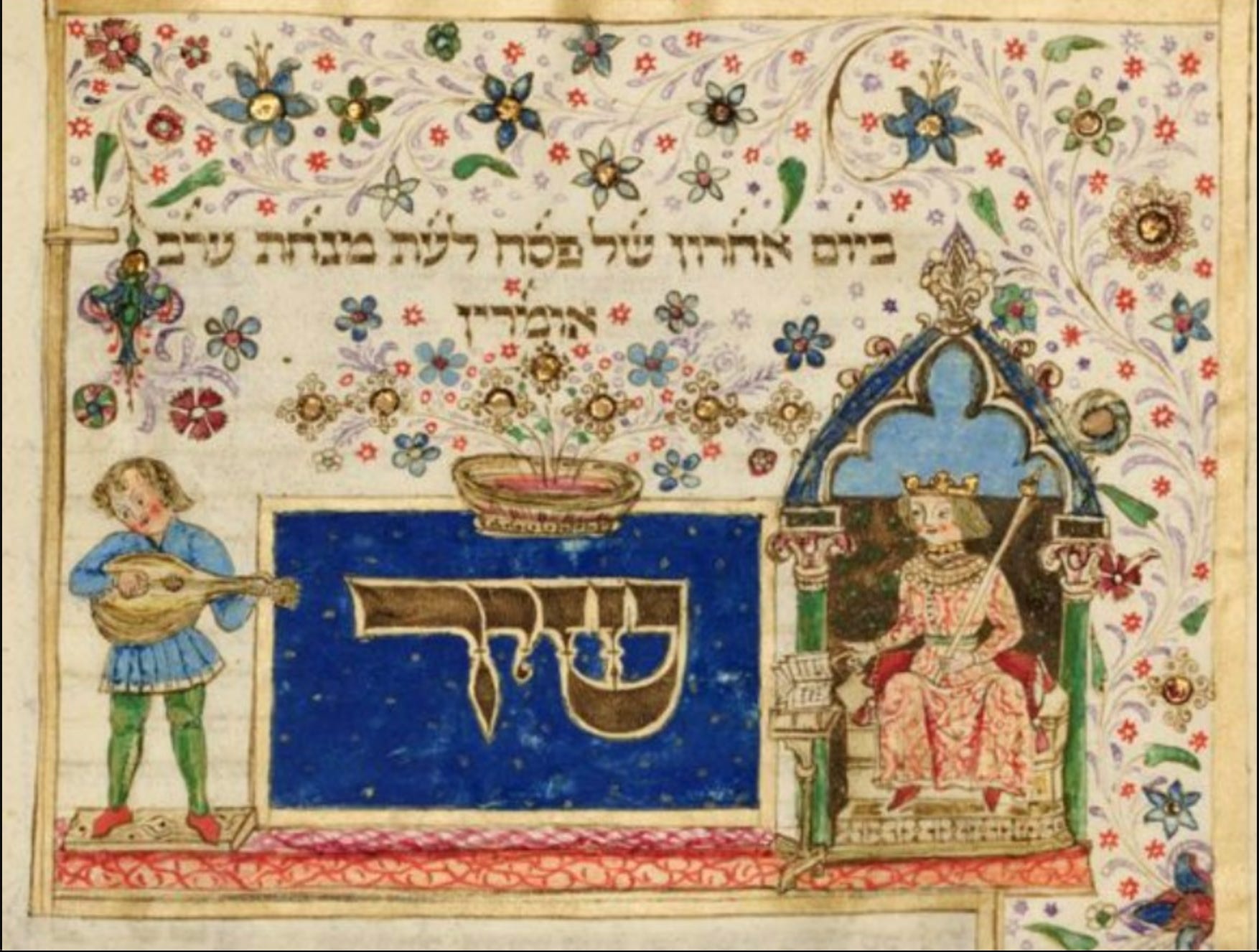
The greatest of songs, the Song of Songs, is a song that celebrates a royal marriage—a marriage that allegorically points to God’s marriage to Israel. Like Hosea’s marriage to Gomer, Solomon’s marriage to the bride intentionally symbolizes God’s relationship with Israel. The Song of Songs is written to be an allegory; that is the author’s intent.
The Song of Songs not only alludes to God’s covenant with Israel, but the entire book celebrates one of the greatest mysteries in the universe: marriage. According to the Apostle Paul, human marriage is a mystery that points to the love Christ has for his church: “This mystery is profound, and I am saying that it refers to Christ and the church” (Eph 5:32). Applied to the Song of Songs, Solomon, in the line of David, points to the ultimate Son of David, the Christ. The bride refers to the church.
This type of reading might make us a little uncomfortable. After all, it does not feel right to equate sexual love with the love that Christ has for his church. But we must realize that marriage is a mystery that points to the intensity of God’s love for us. And that love is pure. Today, we tend to think of sex in pornographic terms due to the over-sexualized culture in which we live. But sex itself is pure, holy—part of what makes a marriage a marriage. It points to God.
Yes: the groom is Solomon. Yes: the bride is the Shulammite woman (Song 6:13). But the Song of Songs is also meant to give insight into one of the greatest mysteries in the universe: Christ’s love for the church. All marriages do this, but the greatest of songs is an inspired account of the holiest of loves: “For love is strong as death, jealousy is fierce as the grave. Its flashes are flashes of fire, the very flame of the LORD” (Song 8:6). Love’s fire is as powerful as the death-defying love and the fiery jealousy of the LORD.
Additionally, Old Testament prophets already saw God’s relationship to Israel as one of bridegroom and bride: “As the bridegroom rejoices over the bride, so shall your God rejoice over you” (Isa 62:5; also 54:5–6). Hosea, for example, illustrates God’s relationship to Israel through Hosea’s marriage with Gomer. Ezekiel and Jeremiah, in particular, take up the marriage metaphor throughout their writings.
Whatever else the Song of Songs is doing, then, it is not implausible that the Bible itself recognizes that God’s marriage to Israel can be portrayed beautifully, as in the Song of Songs, or sinfully, as in Hosea, Isaiah, Jeremiah, and Ezekiel.
A few people have denied that the Song of Songs portrays Christ’s love for his church. I cannot see any biblical reason to do so. Nor does it make sense to affirm that marriage reveals as a mystery Christ’s love for the church, as Paul says, but that Solomon’s love for his bride in the greatest of all love songs cannot.
To do so would reject a common pattern in Scripture, namely, that God relates to his people as bridegroom to bride. It would also seem to take away from the climactic scenes of Scripture where God celebrates the church as his bride:
“Let us rejoice and exult and give him the glory, for the marriage of the Lamb has come,
and his Bride has made herself ready; it was granted her to clothe herself with fine linen, bright and pure” (Rev 19:7–8; also v. 9)
and:
“And I saw the holy city, new Jerusalem, coming down out of heaven from God, prepared as a bride adorned for her husband” (Rev 21:2; also v. 9).
What else can I say?
We must read the Song of Songs according to the letter, as God has revealed it. And we find in it a portrayal of idealized love, a love that represents the mystery of marriage. And that mystery is Christ’s love for his bride, the church.
Everything is multilayered in the Hebrew Scriptures. Beautiful!