


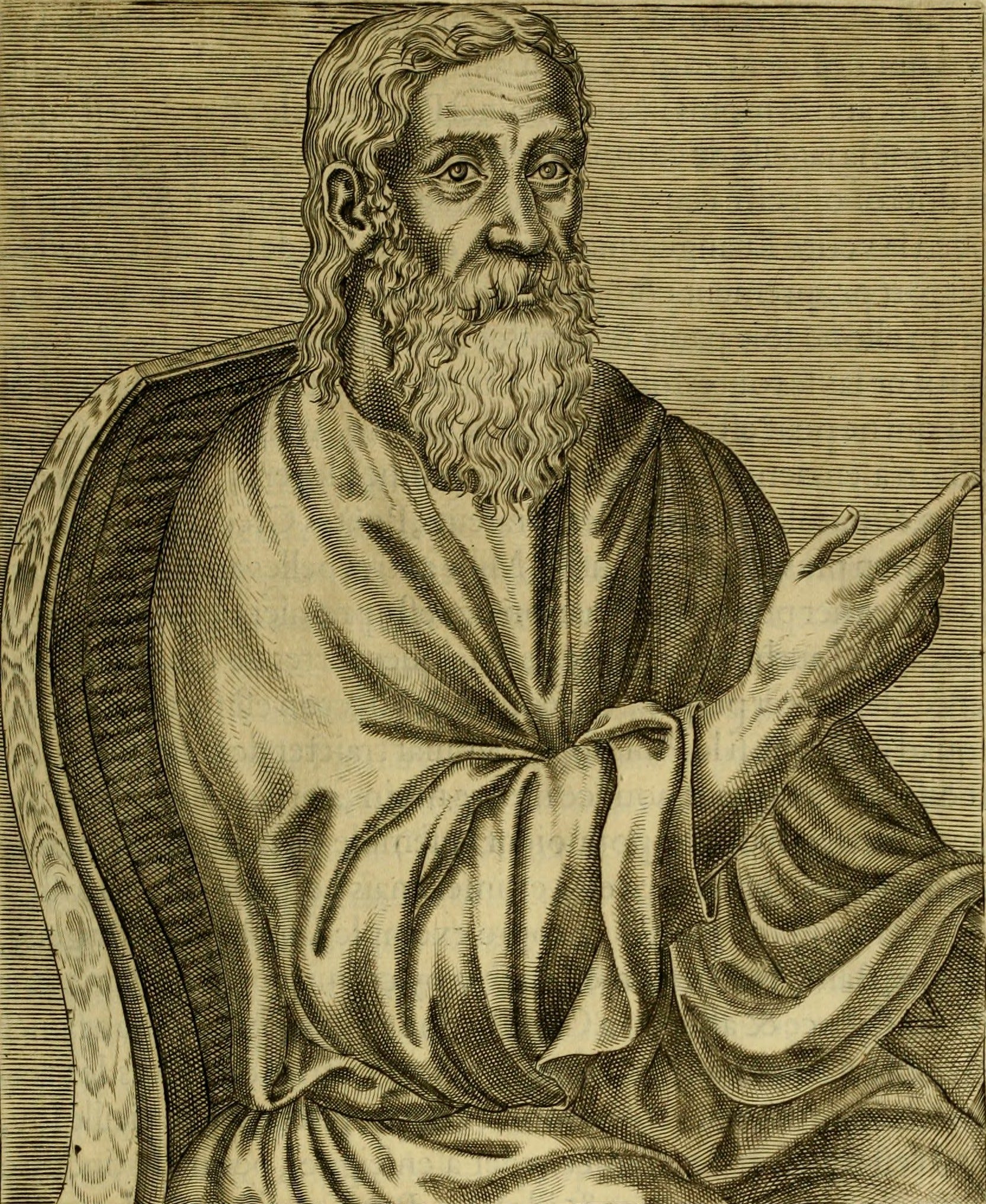
We no longer live in a thoroughly Christian culture. Friedrich Nietzsche’s madman may have been right after all. If God is dead, we must revalue everything. The God of the Bible no longer sits supreme; and so we must revalue morals and create our own meaning. We make our own identities, values, and self-worth. Yet as we do so, we find ourselves struggling to find significance. Nothing seems to make sense.
In short, we live in a time of re-creating or revaluing all morals and meaning, which has the consequence of making life feel meaningless. It doesn’t make sense.
And this means Christian apologetics can no longer only emphasize the historicity of the faith (although this is good to do). Rather, we must also show how Christianity makes sense, how the faith genuinely teaches us what it means to be human in contrast to the shallow theories that we have created in place of the one’s revelation supplied.
It is not that there are no religious expressions today; it’s that there are too many. And everyone chooses as he or she wills. But it does not fit together. All is fragmented; all is diverse; all falls to pieces.
And hence we live in a world akin to the second century when apologists like Clement of Alexandria showed how the Word of God came at the fullness of time and how the thousand religious expressions of Greco-Roman society did not fit together, did not make sense. He was a master sense-maker.
In this article, then, I want to reflect on the life and writings of Clement in order to show how his approach to apologetics may be integrated into our approach today.
Clement of Alexandria
Born in about AD 150, Clement ranks among the great lights of second-century Christianity. He was a Presbyter and teacher at the Alexandrian catechetical school. The latter probably was more informal than the modern word “school” implies. Simon Wood explains, “We might compare it to a modern study club, meeting in a private home without formal class or public pretensions, vigorous in its search for truth” (Christ the Educator, ix)
Yet it cannot be doubted that Clement had a brilliant mind. Having immersed himself in the canon of Greek literature, he was at home quoting long passages of Homer and Plato just as easily as he could Holy Scripture. His intellectual capacity made him an effective apologist of Christianity within a world that was intellectually skeptical of the faith, sometimes even hostile. One example of this hostility involved imperial persecution of some Christians under Septimius Severus in AD 202.
Clement likely fled Alexandria during this period of persecution because we hear of him carrying a letter from Alexander in Jerusalem to the church in Antioch in AD 211. Likely, he died sometime shortly thereafter since the same Alexander wrote to Origen some years later, speaking of Clement and Pantaenus, as those who “have trodden the road before us” (cited in G. W. Butterworth, Clement of Alexandria, xiv).
Conversion And Influence
We know little about his conversion, but it seems clear that he grew up in a household that valued education. His grasp of Greek literature, philosophy, and religion suggests that he acquired this knowledge as a youth in Alexandria, presumably before his conversion. Of the latter, we do know that he wandered many lands, seeking knowledge and teachers. He found six who spoke plainly; these Christian teachers, almost certainly including his predecessor at the Catechetical school in Alexandria, the aforementioned Pantaenus, led to his conversion and ascension to the office of Presbyter in Alexandria.
That he came into contact with six teachers of Christianity in the mid-second century evinces how Christianity expressed itself during its early ascent. At this time, it still remained a minority faith, yet increasingly, as Clement shows, Christianity began to see itself as a player on the world’s stage. The early Apologists—Quadratus, Aristides, Justin, Tatian, Athenagoras, Theophilus, Melito, Minucius Felix, Tertullian, and Clement—all show the faithful not standing on their back foot but advancing the message of Christ into a skeptical and sometimes hostile culture.
Perhaps the two most famous of Clement’s pupils were Alexander (c. 170–251), bishop of Jerusalem, and Origen of Alexandria (c. 184–254). The latter, probably being the most influential Christian in the third century, not only for his apologetic work (Contra Celsum) but for his textual, biblical, and theological writings. As Gregory of Nazianzus wrote, “Origen is the whetstone of us all.”
Writings
Of his many writings, we have in full four: an exhortation to the Greeks to believe in Christ (Protrepticus), the Instructor (Paedagogus) that instructs in how to live a holy life, Stromata, which covers diverse topics within Christianity, and a literary sermon entitled “Who Is the Rich Man that Shall Be Saved?” Fragmentary records of other works exist, and unfortunately, others have been lost to the sands of time.
Yet the extant works provide a rather full introduction to his thought. Here, I am mostly interested in his Protrepticus because it aims to persuade unbelieving pagans to abandon Greek worship of the gods in favour of the one true God, the eternal Word from the Father. His basic question throughout might also be summarized: how does Christianity understand itself in a non-believing culture that is skeptical to the Faith?
I believe North Americans have begun to enter into a similar time period. The Venn diagram of Christianity and culture has increasingly spread apart, so now Christian claims feel suspect, and sometimes even hostile to culture.
Exhortation to the Greeks
In his Exhortation, Clement cites numerous pagan writings and traditions. His mastery of the Greek canon—of Homer and Plato especially— makes this work somewhat unique amongst the apologetics writings of the second century. Methodologically, he shows from the canon of the Greeks that their gods are not morally good, or even gods at all—he polemically calls them the true atheists since they worship demi-gods or daemons. The latter was important because some of the intelligentsia among the Greeks argued that there was one God and the Greek gods were lower beings.
Further, Clement outlines how the various names, traditions, and contradictory stories of the Greek deities show them to be a confusing mess of traditions. Granted, he admits that some Greeks received glimmers of truth by which he mostly means Plato and the Platonists.
By contrast, he points to Christianity as the truth, using John’s title for Christ, the Logos, to show that Christ illuminates us so that we might live by reason and free ourselves from the chains of passions, which lead us to sin and death.
In many ways, he will use the common language of his day to show that God and Christ answer the true longings of the soul. At one point, he even applies titles of Zeus to God to show that God, not Zeus, is the great ruler of the cosmos.
At the heart of his writing, however, is Christ: “The Word, who alone is both God and man, the cause of all our good, appears but lately in His own person to men; from whom learning how to live rightly on earth, we are brought on our way to eternal life” (Exhortation to the Greeks, ch. 1, p 17). Indeed, this eternal Word who took flesh to himself brings salvation to us by removing the chains of passions, conquering death, and bringing the light of knowledge to our dark and ignorant minds.
Incarnation And Salvation
Among his favourite ways of describing God, he will speak of him as lover-of-mankind (philanthropos; e.g., p 55). This title will appear again in the writings of Athanasius, showing that Clement’s influence might still have been felt in the fourth century.
Out of this love for humanity, the Word of God became human, so that we might receive salvation. This gracious gift, for Clement, looks primarily like a regeneration of the human person: in other words, salvation means eternal life, yes, but one that looks like holiness, freedom from the passions of the flesh, and the darkness of ignorance.
In one pointed passage, Clement appeals:
“At the price of a little faith He gives thee this great earth to till, water to drink, other water to sail on, air to breathe, fire to do service, and a world to dwell in. From hence He has granted thee power to send forth a colony into heaven. All these great works of creation and gracious gifts He has let out to thee in return for a little faith.
Again, men who believe in wizards receive amulets and charms which are supposed to bring safety. Do you not rather desire to put on the heavenly amulet, the Word who truly saves, and, by trusting to God’s enchantment, to be freed from passions, which are diseases of the soul, and to be torn away from sin?
For sin is eternal death. Surely you are altogether bereft of sense and sight, spending your lives, like moles, in darkness, doing nothing but eat, and falling to pieces through corruption. But it is the truth, I say, which cries, “Light shall shine out of darkness.” Let the light then shine in the hidden part of man, in his heart; and let the rays of knowledge rise, revealing and illuminating the hidden man within, the disciple of the light, friend of Christ and joint-heir with Him; more especially since there has come to our knowledge the name, worthy of all honour and reverence, of one who is a good Father to a good and dutiful child, whose precepts are kindly, and whose commands are for His child’s salvation. He who obeys Him gains in all things. He follows God, he obeys the Father; when erring he came to know Him; he loved God; he loved his neighbour; he fulfilled God’s commandment; he seeks after the prize; he claims the promise.
It is ever God’s purpose to save the flock of mankind. For this cause also the good God sent the good Shepherd. And the Word, having spread abroad the truth, showed to men the grandeur of salvation, in order that they may either be saved if they repent, or be judged if they neglect to obey. This is the preaching of righteousness; to those who obey, good news; to those who disobey, a means of judgment.” (Ch 21, 246–7)
Here, we see a master class in showing how Christianity makes sense by using the symbolic world of his audience. He points out the strangeness of amulets from wizards that have little benefit and points to Christ, who alone can save us, and who can transform us.
The Greek gods, he has argued, cannot do this; nor can the greatest of the philosophers. Only the Word from the Father can. He has shown how Greek custom does not make sense of reality and save us—but God in Christ does.
Sense Making
Why I believe Clement and the other early apologists matter today is because they make sense of Christianity and show the emptiness of pagan thought. This, I think, has returned to central importance today.
We no longer have a Christian culture whose primary need is evidence or arguments to confirm the faith. It remains important to know that the Bible has many ancient manuscripts to support it and that eyewitnesses saw the resurrection, but those questions assume a sympathetic or interested posture to Christianity.
Today, we instead deal with indifference, ignorance, skepticism, and even hostility to the Faith. For this reason, showing how the Way makes sense and how other ways do not matters more than it has in years; we must be like the second and third century apologists again.
Arguably, this approach is the kind of thing Peter advocates for in his First Epistle:
“But even if you should suffer for righteousness’ sake, you will be blessed. Have no fear of them, nor be troubled, but in your hearts honor Christ the Lord as holy, always being prepared to make a defense to anyone who asks you for a reason for the hope that is in you; yet do it with gentleness and respect, having a good conscience, so that, when you are slandered, those who revile your good behavior in Christ may be put to shame. For it is better to suffer for doing good, if that should be God’s will, than for doing evil.” (1 Pet 3:14–17)
Peter has encouraged his readers in this manner through the letter, and he here provides the apologetic principle: a holy heart, a gentle answer, and a proclamation of the hope within (Christ resurrected). All of this in the context of the Romans persecuting or at least being hostile to the Christian faith.
Yet Peter commends not only rational defence but also holiness (“it is better to suffer for doing good”). Here, I think, is another area where the early apologists can help us make sense of Christianity. They tie belief with practice; truth with holiness.
Thus, “in your hearts honor Christ the Lord as holy” and “being prepared to make a defense to anyone who asks you for a reason for the hope that is in you” bind together into a union of orthodoxy and orthopraxy.
Clement takes this approach to heart, models it in a later context, and shows us how we might unite holiness and a gentle defence of the faith today. We are once again in the age of the apologists. By looking to the past, to Clement and others, we can find resources to make sense of the Faith today. And sense-making is the need of the hour, more than anything else.
#1 "IRONICALLY", Trinitarians on one side & (JW & Islam-Muslims) on the other, are two opposite extrems of the SAME EXACT HERESY!!
https://allendaves.substack.com/p/children-of-a-lesser-god?utm_source=share&utm_medium=android&r=1xhldx
#2 THE GOSPEL SONG OF MOSES v SONG OF LAMB .....THE WEDDING FEAST .....GET IT?
https://allendaves.substack.com/p/the-gospel-simultaneous-doom-and?utm_source=share&utm_medium=android&r=1xhldx
#3 ......IT'S NOT FOR EVERYONE https://allendaves.substack.com/p/most-true-christains-go-to-hell?utm_source=share&utm_medium=android&r=1xhldx
Free will & absolute determinisim are NOT mutually exclusive, counterintuitive, yes but only because humans thinking is backwards from base reality.
a) That which is finite must have some infinity in which to define its limitations witjin…..
b) the finite can never superceed the infinity in which it exist
c) an infinity must be known to itself at all points in space & time such that it is deterministic in its construct no randomness exist
d) The finite is by definition set (s) limitation. Randomness only exist due to lack of knowledge understanding. Free agency is a exercise in limited knowledge, time, space & limited foreknowledge of outcomes or how-why thoes outcomes arrived.
Scripture teaches both because BOTH ARE LOGICAL IMPARITIVES AS WELL AS THE ENTIRE CONSTRUCT OF SOTERIOLOGY ITSELF.
"Ironically" both the calvinist & "free will" people R grossly wrong!!.... absolute determinisim & free will R NOT mutually exclusive logically & bible teaches both equally.