


Baptists may have written more confessions of faith than any other group of Protestants. Associations united around them, individual congregations often wrote their own, and most churches also covenanted together. This was true in the seventeenth century and remains true today, although for a period in the mid-twentieth century, many Baptist churches had local church confessions without necessarily uniting around an explicit statement of faith.
Because I was saved in a Baptist Union of Western Canada church, I want to speak about my home denomination (now called the Canadian Baptists of Western Canada). Within our history, we have had four key denominational texts that defined our faith and ordered our unity as a group of Baptists who were formerly a convention (between 1882 and 1909) before modelling ourselves as a union in 1909 and as an association since 2007.
In what follows, I present in full, with brief commentary, six texts that mark how Baptists in Western Canada have stated their faith: the New Hampshire Confession adopted by the first church (1875), a doctrinal compendium (1884), a list of Baptist principles (1962), the Carey Hall statement (1982), a borrowed pan-evangelical statement (1986), and a denominational identity statement (2022).
1. The New Hampshire Confession of Faith (1833)
John Newton Brown composed the New Hampshire Confession of Faith for the New Hampshire Baptist Convention in 1833. The confession circulated across North America in the Baptist church manuals of Brown (1853) and Pendleton (1867). These manuals contain the eighteen-article form printed here.
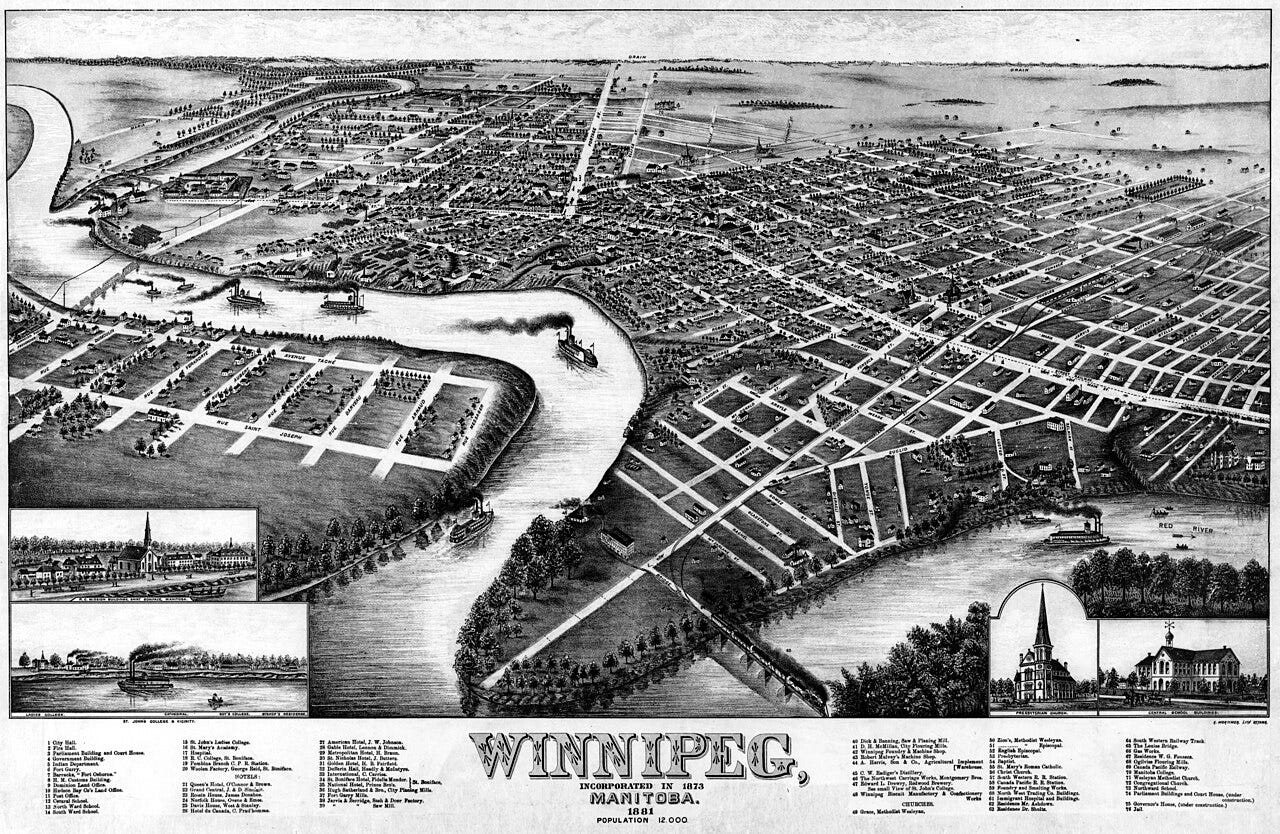
On February 7, 1875, the seven members who organized the First Regular Baptist Church in Manitoba at Winnipeg heard Alexander McDonald preach on 1 Corinthians 1:2, “unanimously approved” this Confession as their statement of faith, and celebrated the Lord’s Supper.[1] Many local churches over the decades would adopt this confession as the local church’s statement of faith.
Declaration of Faith
1. Of the Scriptures
We believe that the Holy Bible was written by men divinely inspired, and is a perfect treasure of heavenly instruction; that it has God for its author, salvation for its end, and truth without any mixture of error for its matter; that it reveals the principles by which God will judge us; and therefore is, and shall remain to the end of the world, the true centre of Christian union, and the supreme standard by which all human conduct, creeds, and opinions should be tried.
2. Of the True God
We believe that there is one, and only one, living and true God, an infinite, intelligent Spirit, whose name is Jehovah, the Maker and Supreme Ruler of heaven and earth; inexpressibly glorious in holiness, and worthy of all possible honor, confidence, and love; that in the unity of the Godhead there are three persons, the Father, the Son, and the Holy Ghost; equal in every divine perfection, and executing distinct but harmonious offices in the great work of redemption.
3. Of the Fall of Man
We believe that man was created in holiness, under the law of his Maker; but by voluntary transgression fell from that holy and happy state; in consequence of which all mankind are now sinners, not by constraint, but choice; being by nature utterly void of that holiness required by the law of God, positively inclined to evil; and therefore under just condemnation to eternal ruin, without defense or excuse.
4. Of the Way of Salvation
We believe that the salvation of sinners is wholly of grace; through the mediatorial offices of the Son of God; who by the appointment of the Father, freely took upon him our nature, yet without sin; honored the divine law by his personal obedience, and by his death made a full atonement for our sins; that having risen from the dead, he is now enthroned in heaven; and uniting in his wonderful person the tenderest sympathies with divine perfections, he is every way qualified to be a suitable, a compassionate, and an all-sufficient Saviour.
5. Of Justification
We believe that the great gospel blessing which Christ secures to such as believe in him is Justification; that Justification includes the pardon of sin, and the promise of eternal life on principles of righteousness; that it is bestowed, not in consideration of any works of righteousness which we have done, but solely through faith in the Redeemer’s blood; by virtue of which faith his perfect righteousness is freely imputed to us of God; that it brings us into a state of most blessed peace and favor with God, and secures every other blessing needful for time and eternity.
6. Of the Freeness of Salvation
We believe that the blessings of salvation are made free to all by the gospel; that it is the immediate duty of all to accept them by a cordial, penitent, and obedient faith; and that nothing prevents the salvation of the greatest sinner on earth, but his own inherent depravity and voluntary rejection of the gospel; which rejection involves him in an aggravated condemnation.
7. Of Grace in Regeneration
We believe that, in order to be saved, sinners must be regenerated, or born again; that regeneration consists in giving a holy disposition to the mind; that it is effected in a manner above our comprehension by the power of the Holy Spirit, in connection with divine truth, so as to secure our voluntary obedience to the gospel; and that its proper evidence appears in the holy fruits of repentance, and faith, and newness of life.
8. Of Repentance and Faith
We believe that Repentance and Faith are sacred duties, and also inseparable graces, wrought in our souls by the regenerating Spirit of God; whereby being deeply convinced of our guilt, danger, and helplessness, and of the way of salvation by Christ, we turn to God with unfeigned contrition, confession, and supplication for mercy; at the same time heartily receiving the Lord Jesus Christ as our Prophet, Priest, and King, and relying on him alone as the only and all-sufficient Saviour.
9. Of God’s Purpose of Grace
We believe that Election is the eternal purpose of God, according to which he graciously regenerates, sanctifies, and saves sinners; that being perfectly consistent with the free agency of man, it comprehends all the means in connection with the end; that it is a most glorious display of God’s sovereign goodness, being infinitely free, wise, holy, and unchangeable; that it utterly excludes boasting, and promotes humility, love, prayer, praise, trust in God, and active imitation of his free mercy; that it encourages the use of means in the highest degree; that it may be ascertained by its effects in all who truly believe the gospel; that it is the foundation of Christian assurance; and that to ascertain it with regard to ourselves demands and deserves the utmost diligence.
10. Of Sanctification
We believe that Sanctification is the process by which, according to the will of God, we are made partakers of his holiness; that it is a progressive work; that it is begun in regeneration; and that it is carried on in the hearts of believers by the presence and power of the Holy Spirit, the Sealer and Comforter, in the continual use of the appointed means — especially the Word of God, self-examination, self-denial, watchfulness, and prayer.
11. Of the Perseverance of Saints
We believe that such only are real believers as endure unto the end; that their persevering attachment to Christ is the grand mark which distinguishes them from superficial professors; that a special Providence watches over their welfare; and they are kept by the power of God through faith unto salvation.
12. Of the Harmony of the Law and the Gospel
We believe that the Law of God is the eternal and unchangeable rule of his moral government; that it is holy, just, and good; and that the inability which the Scriptures ascribe to fallen men to fulfill its precepts, arises entirely from their love of sin; to deliver them from which, and to restore them through a Mediator to unfeigned obedience to the holy Law, is one great end of the Gospel, and of the means of grace connected with the establishment of the visible church.
13. Of a Gospel Church
We believe that a visible Church of Christ is a congregation of baptized believers, associated by covenant in the faith and fellowship of the gospel; observing the ordinances of Christ; governed by his laws; and exercising the gifts, rights, and privileges invested in them by his word; that its only scriptural officers are Bishops, or Pastors, and Deacons, whose qualifications, claims, and duties are defined in the Epistles to Timothy and Titus.
14. Of Baptism and the Lord’s Supper
We believe that Christian Baptism is the immersion in water of a believer, into the name of the Father, and Son, and Holy Ghost; to show forth, in a solemn and beautiful emblem, our faith in the crucified, buried, and risen Saviour, with its effect in our death to sin and resurrection to a new life; that it is prerequisite to the privileges of a Church relation; and to the Lord’s Supper, in which the members of the Church, by the sacred use of bread and wine, are to commemorate together the dying love of Christ; preceded always by solemn self-examination.
15. Of the Christian Sabbath
We believe that the first day of the week is the Lord’s Day, or Christian Sabbath; and is to be kept sacred to religious purposes, by abstaining from all secular labor and sinful recreations; by the devout observance of all the means of grace, both private and public; and by preparation for that rest that remaineth for the people of God.
16. Of Civil Government
We believe that civil government is of divine appointment, for the interests and good order of human society; and that magistrates are to be prayed for, conscientiously honored, and obeyed; except only in things opposed to the will of our Lord Jesus Christ, who is the only Lord of the conscience, and the Prince of the kings of the earth.
17. Of the Righteous and the Wicked
We believe that there is a radical and essential difference between the righteous and the wicked; that such only as through faith are justified in the name of the Lord Jesus, and sanctified by the Spirit of our God, are truly righteous in his esteem; while all such as continue in impenitence and unbelief are in his sight wicked, and under the curse; and this distinction holds among men both in and after death.
18. Of the World to Come
We believe that the end of the world is approaching; that at the Last Day Christ will descend from heaven, and raise the dead from the grave to final retribution; that a solemn separation will then take place; that the wicked will be adjudged to endless punishment, and the righteous to endless joy; and that this judgment will fix forever the final state of men in heaven or hell, on principles of righteousness.
2. Article II, Constitution of the Baptist Convention of Manitoba and the North-West (1884)
In 1882 Alexander McDonald’s congregation and nine other Baptist Churches formed the Regular Baptist Missionary Convention of Manitoba and the North-West (the North-West Territories, including present-day AB and SK). The Convention on July 12, 1884 adopted the compendium of doctrines directly from the Haldimand Association of Canada West, which had adopted it in 1849.
This compendium descended through two traditions. The first involves a compendia tradition in England which was rooted in the Midland Association’s compendium of 1752. The second roots itself in the Second London Confession (1689), as adopted by the Philadelphia Association (1742) and digested by the Niagara Association of New York (1833). The Convention added one clause of its own: “and who continue in good standing.” The first tradition gave the compendia its form, and thirteen of sixteen BCOQ associations confessed it by 1900. The second gave it theological structure, being a summary of the Second London Baptist Confession.
This compendium was never officially repealed and was known in Western Canada until at least 1939 (and probably much later).[2]
This Convention shall be composed of such churches only as embrace in substance, the following doctrines:
The Being and Unity of God; the existence of three Equal Persons in the Godhead;
Divine inspiration of the Old and New Testaments, as the complete and infallible rule of faith and practice;
the depravity and just condemnation of all mankind through the fall of our first parents;
election by grace according to the foreknowledge of God;
the proper Divinity of our Lord Jesus Christ;
the self-sufficiency of His atonement through which believers are justified freely by grace;
perseverance of the saints;
the immersion of believers in the name of the Trinity, the only Christian baptism;
the Lord’s Supper, a privilege of baptized believers regularly admitted into fellowship and who continue in good standing in our churches;
the resurrection of the body and general judgment;
the final happiness of the saints, and the misery of the wicked, alike interminable;
the obligations of every intelligent creature to love God supremely, to believe what God says, and to practise what God commands; also
religious observance of the first day in the week.
3. Ten Baptist Principles, Baptist Union of Western Canada Constitution (1962)
The preamble of the Union’s revised constitution was the first denominational statement since 1884.[3] The constitution included a list of principles of polity and practice rather than a confession of doctrine. The constitution opens with “those great basic principles for which Baptist churches have historically stood”:[4]
1. The absolute pre-eminence of Jesus Christ as Saviour and Lord,
2. The supreme authority of the Holy Scriptures, illuminated by the Holy Spirit, as our sufficient rule of faith and practice,
3. The competency of the individual soul in direct approach to God, and the consequent right of private conscience,
4. A regenerate church membership,
5. The immersion of the believer in the ordinance of baptism, in obedience to the command of Christ, as an outward expression of an inward experience of Christ,
6. The democratic principle in the church, under God, with a solemn obligation of majority rule, and the guarantee of equal rights to all and special privileges to none,
7. The independence of the local church, and also its interdependence in associated fellowship with other churches of like faith,
8. The spiritual unity of all believers in Christ,
9. The separation of church and state, while the individual believer relates his Christian convictions to the whole of life,
10. A world-wide program of evangelism in obedience to the commands of Christ.
4. Carey Hall Statement of Faith (1982), adopted as the CBWC Statement of Faith (2007)
The Carey Hall board adopted a Statement of Faith in 1982. It borrowed the statement of Regent College (itself similar to the World Evangelical Fellowship statement)[5] with one clause added for Baptist ecclesiology (article 7).
It was the only statement “approved by the Baptist Union” when Jeremy Bell opened the question of a Union-wide statement in 2005. In 2007 it became in lightly revised form the Statement of Faith of the Canadian Baptists of Western Canada. The 2007 form is the one embedded in the 2022 Identity Statement (text 6 below).
The 2007 revisions to the below are: article 1, “The sovereignty, love, and grace of God, the Father, the Son and Holy Spirit”; article 3, “The value of each human being as created by God. The universal sinfulness of humankind since the fall, which alienates all from God and subjects all to condemnation”; article 8, “…our participation in the resurrection, and the hope of eternal life.”[6]
We accept wholeheartedly the revelation of God given in the scriptures of the Old and New Testaments and confess the faith therein set forth. We here explicitly assert the doctrines which we regard as crucial to the understanding and proclamation of the Gospel and to practical Christian living:
1. The sovereignty and grace of God, the Father, Son and Holy Ghost in creation, providence, revelation, redemption and final judgment.
2. The divine inspiration of Holy Scripture and its consequent entire trustworthiness and supreme authority in all matters of faith and conduct.
3. The universal sinfulness and guilt of human nature since the fall, making man subject to God’s wrath and condemnation.
4. The full deity and humanity of the Lord Jesus Christ, the incarnate Son of God, whose substitutionary sacrifice is the sole ground of redemption from the guilt, penalty and power of sin.
5. The justification of the sinner by the grace of God through faith alone in Christ crucified and risen from the dead.
6. The illuminating, regenerating, indwelling and sanctifying work of God, the Holy Spirit, in the believer.
7. The church as set forth in the New Testament and understood historically by the Baptist Community.
8. The expectation of the personal, visible return of the Lord Jesus Christ.
5. Statement of Faith of the Evangelical Fellowship of Canada, affirmed by the BUWC (1986)
The EFC statement of faith circulated to BUWC churches along with executive minister Douglas Moffat’s supplement of November 1985. At that year’s assembly in Kelowna, it was debated and later affirmed at the Calgary Assembly of 1986. The assembly voted 229 to 64 to join the Evangelical Fellowship of Canada.
This statement followed the BUWC’s break up with the United Church of Canada (1961–65) and the Canadian Council of Churches (1980). Both groups were perceived as liberal by the BUWC.
The EFC statement was then meant to cement the evangelical nature of the BUWC. It was Pan-evangelical by design, and it therefore says nothing of baptism, the ordinances, church order or election. It may be that the Assembly felt that local churches would reproduce these beliefs in their local church’s statement of faith and covenant.
The 1985 wording is reproduced below, although the EFC has since lightly revised it.[7]
1. The Holy Scriptures, as originally given by God, divinely inspired, infallible, entirely trustworthy, and the only supreme authority in all matters of faith and conduct.
2. One God, eternally existent in three Persons, Father, Son and Holy Spirit.
3. Our Lord Jesus Christ, God manifest in the flesh, His virgin birth, His sinless human life, His divine miracles, His bodily resurrection, His ascension, His mediatorial work, and His personal return in power and glory.
4. The salvation of lost and sinful man through the shed blood of the Lord Jesus Christ by faith apart from works, and regeneration by the Holy Spirit.
5. The Holy Spirit, by whose indwelling the believer is enabled to live a holy life, to witness and work for the Lord Jesus Christ.
6. The unity in the Spirit of all true believers, the Church, the Body of Christ.
7. The resurrection of both the saved and the lost; they that are saved unto the resurrection of life, and they that are lost unto the resurrection of damnation.
6. Identity Statement of the Canadian Baptists of Western Canada (2022)
The Canadian Baptists of Western Canada approved an Identity Statement that includes a Statement of Faith at its Assembly in Calgary in May 2022. It sets the Statement of Faith (text 4, in its 2007 form) inside a description of Baptist practice (priesthood of all believers, the two ordinances, congregational governance, association, church and state, marriage and mission) and is the first Western Canadian denominational text since 1884 to confess doctrine and practice together.[8]
The BUWC renamed itself as the CBWC in 2007 to align with Canadian Baptist Ministries and the other Canadian Baptist regions and apparently saw itself as an Association, no longer a Union of BC and Prairie Baptists as it had in 1909.
The text reads:
The Canadian Baptists of Western Canada (CBWC) is a voluntary association of independent Baptist churches gathered under the Lordship of Jesus Christ as revealed through Scripture. As a Spirit-led, multicultural community, we assemble to seek the Father’s will together in unity of faith and to celebrate God’s past, present and future work among us and through us. Churches choose to associate for the purpose of enhancing our local and global participation in this work of the triune God, as disciples of Christ in word and deed, thus engaging in God’s mission in the world.
Standing within the historic orthodox understanding of church and Scripture, as Baptists in name and heritage, we affirm the following statements of faith and practice. They are the core of our identity and are expressed in our policies, practices, and Assembly Resolutions (esp. 1959, 1987, 1988, 2003, 2011, 2015, 2017). Scripture passages referenced are illustrative, not comprehensive.
Statement of Faith
The Canadian Baptists of Western Canada accept wholeheartedly the revelation of God given in the Scriptures of the Old and New Testaments and confess the faith therein set forth. We here explicitly assert the doctrines which we regard as crucial to the understanding and proclamation of the Gospel and to practical Christian living:
1. The sovereignty, love, and grace of God, the Father, the Son and Holy Spirit in creation, providence, revelation, redemption and final judgment.
2. The divine inspiration of Holy Scripture and its entire trustworthiness and supreme authority in all matters of faith and conduct.
3. The value of each human being as created by God. The universal sinfulness of humankind since the fall, which alienates all from God and subjects all to condemnation.
4. The full deity and humanity of the Lord Jesus Christ, the incarnate Son of God, whose substitutionary sacrifice is the sole ground of redemption from the guilt, penalty and power of sin.
5. The justification of the sinner by the grace of God through faith alone in Christ crucified and risen from the dead.
6. The illuminating, regenerating, indwelling and sanctifying work of God, the Holy Spirit, in the believer.
7. The church as set forth in the New Testament and understood historically by the Baptist community.
8. The expectation of the personal, visible return of the Lord Jesus Christ, our participation in the resurrection, and the hope of eternal life.
Priesthood of All Believers
Loved by God and created in God’s own image, each one of us is able to meet with God through the atoning work of Christ. As male and female, equally called, the churches of the CBWC honor each person’s responsibility to exercise their giftedness in Christ’s body, the church, and to minister to each other as a ‘priesthood of all believers.’ With Christ as our Lord, each person is to regard others with the same humility that Christ exemplified in the cross. We live in voluntary submission to one another out of reverence for Christ.
Acts 6:1–7; 15:22–35; 17:10–12; Rom 12; 1 Cor 12:1–31; Eph 4; Phil 2:1–18; Heb 4:14–16; 10:19–25; 1 Pet 2:1–10; Rev 1:4–8
Ordinances
We believe there are two ordinances (sometimes referred to as sacraments): Believer’s Baptism and the Lord’s Supper. We practice these ordinances in faith and obedience until the Lord returns. They are not a means of salvation.
Believer’s Baptism – We each come to faith in God through a free, personal decision as convicted by the Holy Spirit. Therefore, whenever possible, we practice the baptism of believers by full immersion in the name of the Father, the Son and the Holy Spirit. Since baptism is reserved for those mature enough to make a fully conscious and committed decision as an act of obedience to Jesus’ teaching and example, we do not practice infant baptism. Matt 28:18–20; Acts 2:37–41; 8:12–13, 34–40; 10:44–48; 16:29–34; Rom 6:1–14; Gal 3:23–29; Titus 3:4–7
The Lord’s Supper – On a regular basis (weekly to monthly) we communally remember and identify with the saving death and resurrection of Jesus by sharing in Christ’s body and blood through receiving the bread and cup. Matt 26:17–30; Mark 14:12–26; Luke 22:7–20; 1 Cor 11:23–34
Congregational Governance
We follow a form of governance in which congregants submit to the Lordship of Christ and the authority of Holy Scripture. With the guidance of the Holy Spirit, they discern and participate in the Father’s ministry of reconciliation. Local churches grant membership to those who publicly confess Jesus Christ as Saviour, are baptized, and who demonstrate a desire to follow Christ as Lord in a life of obedience and service. Members are given an equal voice, vote, and opportunity to serve according to their spiritual gifts in an environment of mutual participation and accountability. In accordance with the priesthood of all believers, congregations affirm spiritual giftings and appoint Spirit-led leaders. In partnership with the CBWC, local congregations set apart ministers of the gospel, both men and women, to teach, preach, shepherd, and make disciples of Christ.
Matt 18:15–20; John 14:12–31; Acts 2:37–47; 10:44–48; 13:1–3; Rom 12; 2 Cor 5:16–6:2; Eph 2:11–22; 4:7–16; 1 Tim 3:1–13; Titus 1:5–9; 1 Pet 5:1–5
Church Association as Interdependence
Just as membership in a local church is voluntary and for the sake of interdependence in the life of the church, so participation of Baptist congregations in the CBWC is voluntary and for the sake of interdependence. Under the Lordship of Christ, associated churches reflect the life and teachings of Jesus and the practices of the New Testament church, working together to accomplish the Great Commandment and the Great Commission. The identity of associated churches is tied to the values of the larger CBWC body.
We desire to be grace-filled, compassionate and ever open to God’s leading, so that all may come to know and experience God’s love through the proclamation of the gospel. Thus, associated churches share resources to fulfill our mandate. We recognize the value of cooperating in mission through such means as training in theology, discipleship and leadership, the ordination of women and men, pastoral support, camping outreach, community development, and local and global evangelism.
Mark 12:28–34; Acts 1:1–14; 1 Cor 16:1–20; 2 Cor 8:1–9:15; Col 3:1–17
Separation of Church and State
We affirm the practice of religious liberty and freedom of conscience to be essential to the security and wellbeing of both Church and State and recognize the unique and separate functions of each. The Church is called to be salt and light in the world, pointing to the Kingdom of God and contributing to the greater good of all.
Ps 72:1–14; Dan 3:1–30; Matt 5:13–16; 22:15–22; Acts 4:1–21; 5:17–42; Rom 13:1–7; 1 Pet 2:11–17; Rev 19:11–21
Marriage
We define marriage as a publicly recognized lifelong covenant between a woman and a man whose relationship is characterized by loving faithfulness. The purpose of marriage is interdependence, mutual responsibility, and potential for procreation. Marriage symbolizes the relationship of God to his people and of Christ to his church.
Gen 1:26–31, 2:18–25; Mal 2:10–16; Matt 19:1–12; Eph 5:18–32
Engaging in Mission
We believe that the gospel has transforming power, rooted in the grace and righteousness of God. We are compelled to proclaim this good news of Christ’s atoning sacrifice, to stand firm against injustice, and to practice mercy. In our broken world, God invites us to participate in His work of reconciliation, which involves us in the work of restoring relationships to wholeness—the relationship each person has with God, creation, other human beings, and the self. Because we believe in the God-breathed sanctity of human life from conception to death, we make every effort to demonstrate Christian love to all people.
Gen 1–2; 12:1–3; Exod 19:1–6; Ps 24:1–2; 86:8–13; Isa 58; 65–66; Mic 6:1–8; Matt 5–7; 10:1–11:1; 22:36–40; 28:16–20; Acts 1:1–11; 10:1–48; 17:16–34; Rom 12:9–21; 2 Cor 5:11–21; Jas 1:19–27; 1 Pet 3:8–16; 1 John 4:7–12
This statement was approved by the Assembly in May 2022. NOTE: The Assembly requested that scripture references be added to the Statement of Faith portion of this Identity Statement. Carey Theological College has been tasked with this project. The amended version will be posted online once it is available.
[1]Text from the Baptist Church Manual (Philadelphia: American Baptist Publication Society), as reprinted in Philip Schaff, The Creeds of Christendom, vol. 3 (New York: Harper, 1877), 742–48; see William L. Lumpkin, Baptist Confessions of Faith, 2nd rev. ed., rev. Bill J. Leonard (Valley Forge, PA: Judson Press, 2011). On the 1875 adoption, Theo. T. Gibson, Beyond the Granite Curtain: The Story of Alexander McDonald (Ancaster, ON, 1975), chap. 10, quoting the church minute book; Harry A. Renfree, Heritage and Horizon: The Baptist Story in Canada (Mississauga, ON: Canadian Baptist Federation, 1988), 175.
[2]“Constitution of the Baptist Convention of Manitoba and the North-West,” in “The Baptist Convention of Manitoba & the North-West, Minutes of the First Meeting, 1884–1885,” Baptist Year Book (1885): 81–83; reprinted in C. C. McLaurin, Pioneering in Western Canada: A Story of the Baptists (Calgary: published by the author, 1939), 110–11. “Self-sufficiency” is McLaurin’s reading; the Ontario texts have “all-sufficiency.” For the lineage, William Norman Albert Gillespie, “Ontario’s 19th Century Baptist Tradition: Its Roots and Its Development” (PhD diss., University of Waterloo, 1990), chap. 4.
[3] In 1925 a committee of the British Columbia Convention, within the Baptist Union of Western Canada, issued a minority report advocating a twenty-one-point Statement of Faith. The report was rejected that year, and a motion to require a statement of faith was defeated at the 1927 assembly. In that same year, seventeen churches left the BC Convention and the BUWC, forming the Convention of Regular Baptist Churches of British Columbia. They joined the Fellowship in 1953. Interestingly, the statement seems fairly normal theologically. It looks like it didn’t pass due more to personality differences than theological ones. One simply has to look across the country to TT Shields to see what I mean.
[4]Callum Norman Jones, “The Canadian Baptists of Western Canada: Baptist Identity and Ecumenical Relationships, 1907–1986” (PhD thesis, Middlesex University / London School of Theology, 2013), 23–24, quoting the BUWC constitution.
[5] https://worldea.org/who-we-are/statement-of-faith/
[6]Jones, “Canadian Baptists of Western Canada,” 294–95 and Appendix II, 348–49, reproducing Appendix A of Douglas Moffat, Statements of Faith and Baptist History Supplement, supplement to The Link, November 15, 1985; Jeremy Bell, “Of Statements of Faith, Creeds and Covenants: A Primer,” News & Notes 3, no. 8 (February 21, 2007), Canadian Baptists of Western Canada.
[7]Jones, “Canadian Baptists of Western Canada,” Appendix II, 349–50, reproducing Appendix C of Moffat, Statements of Faith; on the vote, Jones, chap. 6.
[8]Canadian Baptists of Western Canada, “Identity Statement of the Canadian Baptists of Western Canada,” approved by the CBWC Assembly, May 2022, https://thechurchco-production.s3.amazonaws.com/uploads/sites/3589/2023/01/A.-Identity-Statement-Approved-Assembly-2022.pdf.
1st Principles
1) Modalisim NOT trinity
2) The Return of Christ war of AD70
NEARLY ALL “CHRISTAINS” ARE EQUALLY HERETICAL IN THE MOST DAMNDABLE WAYS POSSIBLE …
#1 "IRONICALLY", Trinitarians on one side & (JW & Islam-Muslims) on the other, are two opposite extrems of the SAME EXACT HERESY that makes Jesus a DIFFERENT PERSON.
Trinity is no different then claiming a pagan pantheon is just different persons of the same “essance”, “substance” & or “Being” of the “one true God”… “LOOK MA, PAGANS ARE MOTHEIST TOO, WE ALL WORSHIP ONE OUSIA” 🤡…
Trinitarians faith is in 3 different god persons with different amounts of knowledge, power & authority over each other & deny thats a pantheon like a liar who denies he is lying.
THE
SUBSERVIANT
JESUS-GOD
“My father is greater then I”
“No man knows, only my father”
Father = spirit only👉John 17:3.. “THEE THE ONLY TRUE GOD”)
“I can of my own self do nothing”
THE SUBSERVIANT
JESUS-GOD
FORCES EITHER
A) ACCEPT JESUS AS A DIFFERENT LESSER GOD PERSON IN A PANTHEON TRINITY= three different persons with diffiferent minds, amounts of Knowledge, power & authority over each other.
OR
B) A DIFFERENT PART OF THE SAME PERSON IN A WAY LIKE YOUR HEAD & RIGHT ARM.
MODALISIM - one person who is God manifested in different ways.
[THE ONE SENDING = THE ONE SENT!!]
Isaiah 43:10 Ye are my witnesses..and 👉MY SERVANT👈 whom 👉I👈 have chosen: that ye may KNOW and BELIEVE 👉me👈, and UNDERSTAND that
👉✝️I AM HE✝️👈........11 I, even I, am the LORD; and 💢👉BESIDE ME👈 THERE IS NO SAVIOR💢....13 Yea, BEFORE THE DAY was✝️I AM HE✝️;
Psalms 118:16 💪THE RIGHT HAND💪of the LORD is ✝️EXALTED✝️
(John 17:1.., Father, the hour is come; ✝️GLORIFY thy Son,✝️ …:):
... THE 💪RIGHT HAND💪 of the LORD DOETH….. 22 THE STONE WHICH THE BUILDERS REFUSED IS BECOME THE HEAD STONE OF THE CORNER…
ISAIAH 52:6.. MY PEOPLE SHALL 🎯KNOW MY NAME🎯 therefore they shall know IN THAT DAY that ✝️I AM HE✝️ that doth speak: 👉behold, IT IS I👈. .. FEET OF HIM THAT BRINGETH 😇GOOD TIDINGS😇,… 10. THE LORD HATH MADE BARE 💪HIS HOLY ARM💪..
John 8:24....IF YE BELIEVE NOT that ✝️I AM HE✝️, ye shall DIE IN YOUR SINS…. 28. ... LIFTED UP the Son of man, THEN shall ye KNOW that ✝️I AM HE✝️ .....58 Jesus said.....BEFORE Abraham was, ✝️I AM ✝️. 59 Then took they up stones...) 👈SPECIFIC TIME JESUS SPECIFICALY CLAIMS TO BE GOD & THEY UNDERSTOOD HIM PERFECTLY!!
You cant claim to believe that "I am HE" if you believe Jesus is a different person because to you Jesus is not HE but "some other different person sent by Him"!?!
WHY would “Christians” denounce head & right arm as just metophore & heresy while appealing to obscure abstracts “confessed” as “incomprehensible true faith”?
“WHO” it was (what person) that came “IN THE FLESH”, IS THE DETERMINING FACTOR IN WHAT IT MEANS TO BE “ANT-CHRIST”! Even Islam claims Jesus was the Jewish messiah/Christ who was to come in the flesh. They all deny “WHO” (what person) came Christ in the flesh!?!
1Jn 2:22..He is antichrist who denies the Father and the Son. Whoever denies the Son does not have the Father either; …”
To deny father is to deny son because they are the same person in the flesh!
.....THE BASTARD CHILD JESUS?
https://substack.com/@allendaves/note/p-205079622?r=1xhldx
Mark 12:29 Jesus answered, "The 💥MOST IMPORTANT💥 is, 'Hear, O Israel: THE LORD OUR GOD, the Lord IS ONE. 👈.........30 And thou shalt LOVE 👈the Lord thy God with all ….. this is the first commandment.
( That LOVE must be with ONENESS)
If you cannot grasp "ONE" rest of your theology is moot.
In garden Satan states no you will be more WISE & now, "3 in 1" is more WISE & humility of God’s grandeur, the “incomprehisable” mystery of “true faith”🤡
20pg “CLIFTS NOTES”
https://www.scribd.com/document/844419833/20-Page-Summary-PDF-1
"CHILDEREN OF A LESSER GOD"
https://allendaves.substack.com/p/children-of-a-lesser-god?utm_source=share&utm_med
#2 JESUS ISNT COMMING BACK …BUT A STRONG DELUSION MIGHT
FULL 480pgs https://www.scribd.com/doc/305366745/Revelation-the-First-Gospel-of-the-Kingdom
SEE ALSO,
https://substack.com/@allendaves/note/c-342632816?r=1xhldx