


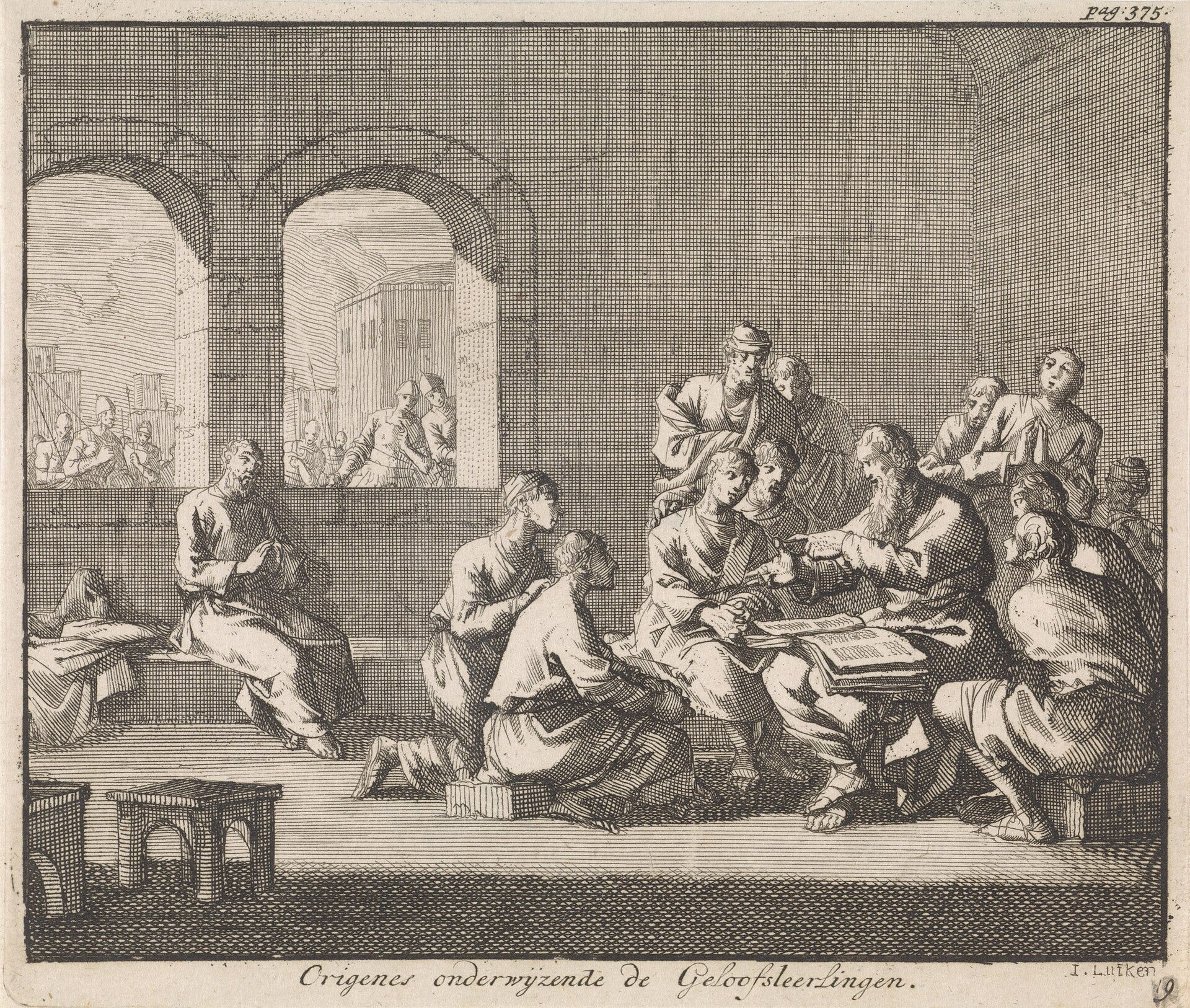
Origen of Alexandria has a reputation problem. Many accuse him of over-allegorizing Scripture, others state that he castrated himself, and still others condemn him as a teacher of heresy.
I have argued elsewhere that these standard accusations are largely incorrect and that we forget what history in fact establishes: Origen was tortured for the faith he confessed. And he spent most of his life supporting the church through Scriptural exegesis and theological education.
That faith, which Origen held dear, is my subject here. After all, the Cappadocian fathers sharpened their theology on Origen. Gregory of Nazianzus calls him the whetstone of us all.
Before we criticize his speculations (and we should do this), we need to ask what he confessed as the church’s Dogma (i.e., the Rule of Faith) and what he discussed only with hesitation. My goal here is simply to understand Origen’s Dogmatic teaching, and, by that means, to explain why he was so important to Pro-Nicene Christianity (even if he was also a partial liability!).
Origen’s Speculation Outside the Rule of Faith
Among Origen’s extant writings, we only have one Greek version of his Rule of Faith, although the ancient Latin translations of his writings by Rufinus also convey two other versions of the Rule of Faith . These three texts represent an important testimony to the ongoing relevance of the Rule for Scriptural interpretation as well as to how Christians felt about speculations outside of the Rule.
Origen evidently felt able and authorized to speculate on questions of theology outside of the Rule, and he did so with some hesitation. Later readers would discern his speculative and contingent explorations as settled beliefs, which led to all sorts of accusations against Origen.
For example, Origen held to the restoration of all things at the end of times, even speaking of the devil as able to be restored. Yet in his letters, he will deny that he teaches the devil’s salvation, accusing heretics of inserting words into his writings, which indeed may have been the case. Yet it’s hard to doubt, after reading Origen himself, that many would scratch their heads at some of his speculations.
In his own words, Origen distinguishes Dogma from speculative matters in this way:
These things are indeed spoken about by us with great fear and caution, discussing and investigating rather than establishing as fixed and certain. For it has been pointed out by us above what are those points that must be clearly determined by dogma, which, I think, we have done to the best of our ability when we spoke about the Trinity; but now, however, we are occupied, as best we can, in matters of a kind needing discussion rather than definition. (On First Principles 1.6.1)[1]
What Origen calls Dogma (Trinity) corresponds to the Rule of Faith (Pr. 3–10) and is discussed in On First Principles 1.1–4. By contrast, Origen will sometimes speculate about how God could be Almighty before he was mighty over any of his creation. He speculates that God by his Wisdom (Christ) had within himself the pre-figuration and pre-formation of all things, and hence God could delight in his creation and be Almighty through his Wisdom by means of pre-figuration. And hence, God eternally is Almighty, despite the fact that creation comes into being in time (On First Principles 1.4.5).[2]
With that caveat aside, Origen remains the great theological influence of the early third century, and we cannot doubt his importance for both biblical exegesis and thus the Rule of Faith, as delivered by the Apostles and necessary for our salvation.
Origen on the Faith: His Rule
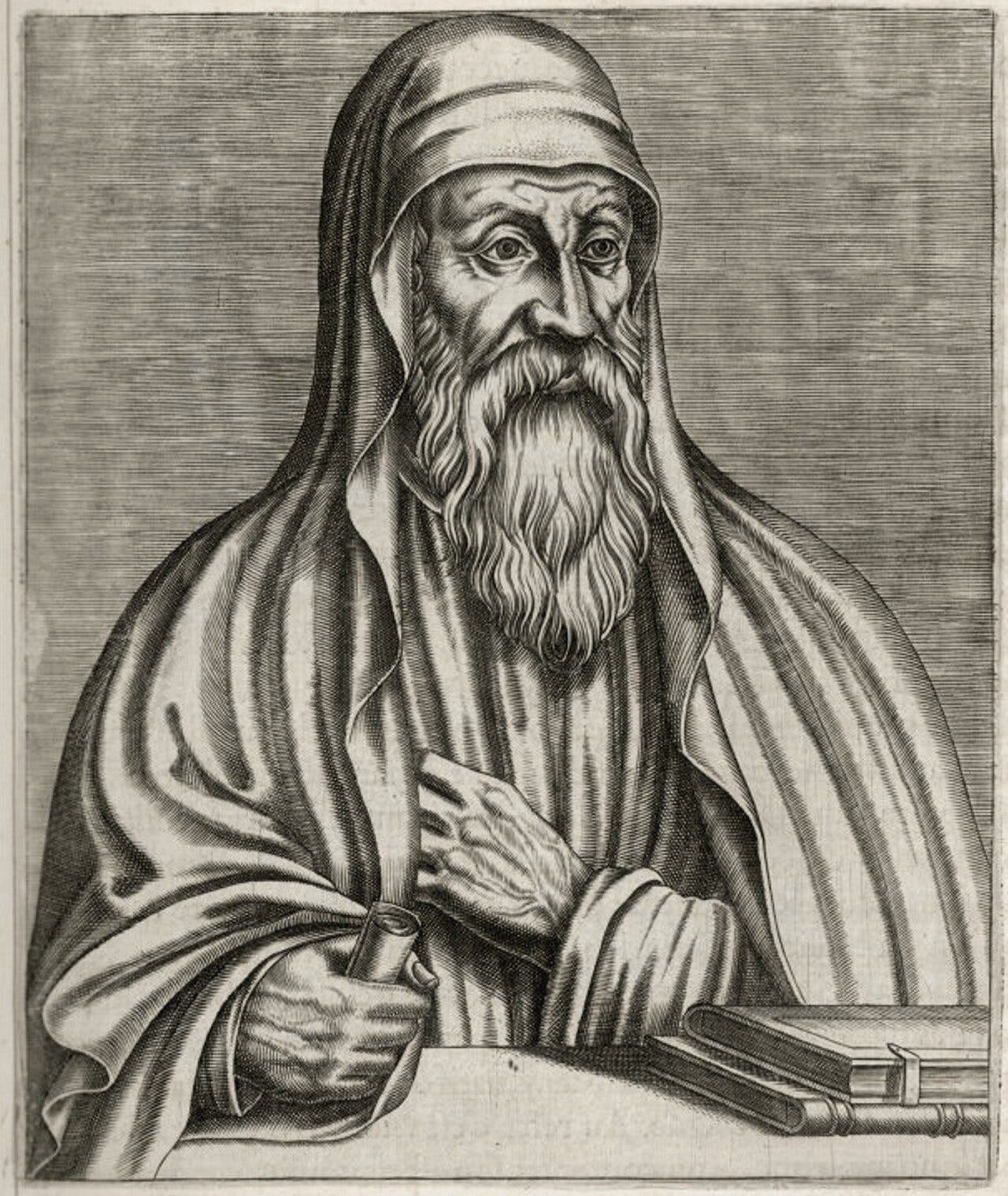
Origen affirms the same Rule of Faith that Irenaeus, Tertullian, Justin, and others do. He is not unique in his affirmation of the Faith once and for all delivered by the apostles and contained in the evangelical (Gospels) apostolic writings. However, he writes at a time when gnostic teaching had been exposed, Christianity was growing, and believers had time and opportunity to reflect on the meaning of their worship.
Here, I want to cite first of all his shortest version of the Rule of Faith, and one preserved in Greek from his commentary on John:
“First of all believe that God is one, who created all things, and fashioned them and made all things to exist out of what did not exist.”
And one must also believe that Jesus Christ is Lord, and believe in all the truth about him in relation to his divinity and humanity.
And one must also believe in the Holy Spirit, and that, because we possess free will, we are chastened for our sins, and rewarded for our good actions.
For instance, then, if someone, hypothetically, should seem to believe in Jesus, but should not believe that the God of the law and of the gospel is one, whose glory the heavens declare, since they were made by him, and the work of whose hands the firmament proclaims, since it is their work, this person would be deficient in the greatest article of faith.
Or again, if someone believes that he who was crucified in the time of Pontius Pilate visited the world in respect to some holy and saving matter, but that he did not receive his birth from the Virgin Mary and the Holy Spirit, but from Joseph and Mary, he would, even in this, be deficient in beliefs that are indispensable for possessing all faith.
And again, if someone should accept his divinity, but take offence at his humanity and believe that nothing human occurred concerning him, or that he did not receive substantive existence (ὑπόστασιν), he would, even in this, be deficient in beliefs that are not trivial for all faith.
Or, on the contrary, if he should accept the human things about him, but reject the substantive existence of the Only-Begotten and Firstborn of all creation, this person too would not be able to say that he has all faith. (Commentary on the Gospel According to John 32.187–193)[3]
Origen here explains Dogma or Rule of the Church. Notice that his first sentence cites the Shepherd of Hermas (Mandate 1.1.1), who wrote around the turn of the second century. So even in his affirmation of the Faith, he signals continuity with the past.
Notice also that the Rule primarily (in this selection) refers to God: Father, Son, and Spirit. Obviously, he will in other places expand on the fullness of Christ’s incarnate work, but here he focuses on the Rule’s triadic structure.
And last: he demonstrates how the Rule excludes heresies that deny something necessarily implied in the affirmations of the Rule. First, he rebuffs Marcionism and Valentinianism (as well as other gnostic groups) for denying that the God who created is the Father of our Lord Jesus Christ.
Next, he points to the deficiency in believing that Jesus is a mere man, born of Mary and Joseph naturally, which likely has Ebionism in its sights (a form of Jewish Christianity). Logically, he progresses to those who instead affirm Jesus’s divinity but do not affirm his substantive existence (hypostasis) as a human; such a person would lack the true faith. Indeed, he goes further and claims that if one denies the substantive existence of Christ in his divinity (”the Only-Begotten and Firstborn of all creation”), then that person too would lack the fullness of faith.
In short, Origen sees the rule of faith affirming a triune shape to our faith that requires a full belief in the hypostatic existence of Christ who is both God and man. Given that he writes over two hundred years prior to Chalcedon (451), we should not read too much into his statement about the hypostases of Christ, since he here aims only to affirm the true existence of Christ in his humanity and divinity, as his writings frequently show.
Indeed, the second article of the Rule above affirms that one must believe in “every truth concerning his divinity and humanity” (πάσῃ τῇ περὶ αὐτοῦ κατὰ τὴν θεότητα καὶ τὴν ἀνθρωπότητα ἀληθείᾳ). In other words, the Incarnation of the Word of God the Father is an article of faith alongside the full affirmation of the humanization of the God-Word. And further, given the negative examples he provides in the latter parts of the Rule, we can see how Origen believed this Rule of Faith was necessary for salvation.
In the following, then, I will explain both Origen’s Trinitarian belief (what he sees as Dogma, part of the Rule) and why this Dogma saves us (or rather how God does as represented in this Dogma).
Origen on the Faith: His Trinitarian Theology
The reasons why the three Cappadocian Fathers (Gregory of Nazianzus, Basil of Caesarea, and Gregory of Nyssa) revered Origen included his brilliance, spirituality, love of the church, biblical exegesis, and trinitarian theology. Admittedly, Origen lived before the Arian debates, and so he obviously takes no side in that debate; and he frequently will use arguments that both sides will be able to use a hundred years later. But reading Origen in his own historical context to understand what he means by his own words matters.[4]
First, it’s instructive to see how Origen articulates theology in his On First Principles. He begins with God, then Christ, and then Spirit. Afterwards, he addresses rational creatures and their salvation. The structure of his theological project, then, follows the line of the Rule of Faith: God, Christ, Spirit, Rational Creatures.
He begins by affirming that God is bodiless, pointing to the biblical descriptions of God as light, fire, and Spirit (On First Principles 1.1.1–2). God then has no physical place to dwell and thus is immeasurable by our standards; he is also incomprehensible since he exists outside of our materiality (1.1.5). He is an intellectual being—in the sense of being immaterial. Origen and theology in general will call this the doctrine of divine simplicity (1.1.6).
As a consequence, we can only know God by his effects:
Our eyes frequently cannot look at the nature of the light itself, that is, upon the substance of the sun; but when we see its brightness and rays pouring in through windows, perhaps, or any small opening for light, we can reflect about how great is the source and fountain of bodily light. So too the works of divine providence and the art of this universe are as if rays of the nature of God, in comparison with his own substance and being. Therefore because our own intellect is not able to behold God as he is, it understands the father of the universe from the beauty of his works and the comeliness of his creatures. (On First Principles 1.1.6)
Indeed, we come to know God through the things which he has made (Rom 1:20). Further, the kind of nature that God is will be important as Augustine not only affirms the full unity of Father and Son (both sharing in the intellectual nature) but will also play a role in how we are saved. Before getting to that latter idea, we need to spend more time on God and Christ.
Origen will assert that both Father and Son can be known but not seen with the eyes of the flesh, citing Matthew 11:27 (obviously the Incarnation means we can see Christ, but that is not yet his point). Then he makes the important assertion, “what pertains to the nature of divinity is common to the Father and the Son” (On First Principles 1.1.8). In this context, that means that the nature of Father and Son (i.e., God) “is naturally invisible” (1.1.8). Origen here importantly adds a caveat to both Irenaeus and Tertullian, who argued that Christ was visible in the manifestation of the Old Testament, which later Arians would use to drive a wedge between the invisible nature of the Father and the visible nature of the Son.
When it comes to the second article of Faith, Christ, Origen will affirm “that in Christ the nature of his divinity, as he is the only-begotten Son of God, is one thing, and another is the human nature, which in the last times he took on account of the economy” (On First Principles 1.2.1). Of his divinity, Origen will claim that “the only-begotten Son of God is his Wisdom subsisting substantially” (1.2.1). Here, again, Origen uses the key term hypostasis to indicate the word’s subsistence.
As God’s Wisdom, God never existed without his Wisdom. Hence, God and Wisdom (Christ) always were united: “God is always the Father of his only-begotten Son” (On First Principles 1.2.2). And this is because the Father always begot his Son, his Wisdom. There was never a time without the Son. And while this may sound materialistic, because Origen has already established God is simple, one cannot infer that the unity of God the Father and Son imply any material division in God as it might in “humans or other animals” (1.2.4). Rather, “this is an eternal and everlasting begetting, just as brightness is begotten from light. For he does not become Son, in any external matter, through adoption in the Spirit, but is Son by nature [natura]” (1.2.4).
Here, we see that the Son’s hypostasis or subsistence agrees with the unity of God’s nature through the Father eternally begetting the Son. This theological syntax, for Origen, flows out of the apostolic teaching in which the Son is begotten of the Father and shares in his divinity. And it would also provide the syntax for the Nicene Creed and the Cappadocian theology more generally.
Further, Origen identifies the Father as the source of the Son’s subsistence. In short, the Son “is assuredly born of him, as an act of his will proceeding from the intellect” (On First Principles 1.2.6). And thus, “the subsistence of the Son is also begotten by him” (1.2.6). Note that the intellectual nature of God begets Wisdom eternally, that is, the Father always has begotten his Son, whose subsistence originates with the Father.
Expanding on the idea that God is intellectual nature and thus an eternal begetting cannot divide God, Origen asserts:
Rather, then, as an act of the will proceeds from the intellect, and neither cuts off any part nor is separated or divided from it, so, in some similar fashion, is the Father to be supposed to have begotten the Son, that is, his own image, so that just as he is himself invisible by nature, so also he has begotten an image that is invisible. (On First Principles 1.2.6)
While I have not noted it, Origen here is citing Scripture constantly as he interprets the names of Christ: Wisdom, Light, Son, and so on. Indeed, he makes a similar argument in Commentary on John in which the Gospel frequently shows Jesus doing the will of the Father (e.g., John 4:34). Here, Origen will underscore that, “it is only the Son who has comprehended the complete will of God and does it for which reason he is also his image” (Comm. John 13.231).
So one cannot infer that Origen believes that Jesus is an intellectual product of the will in an eternal way, but rather as an Image is to the Reality Itself. So Origen writes, “Perhaps this is why he is the image of the invisible God. For indeed the will that is in him is an image of the first will, and the divinity that is in him is an image of the true divinity” (Comm. John 13.234).
These caveats are important because Origen will speak of Christ, citing Proverbs 8:22, as a creature of God. But such an affirmation does not gainsay the unity of God in Father and Son; rather, it flows from the explicit wording of the text and had not yet come under the scrutiny that later Arian debates would bring in the fourth century, where the language of creature for Christ would become anathema, at least as it regards his divinity. Indeed, Athanasius will look at Proverbs 8:22, believing that the creation of wisdom referred to the Incarnation.
We need not worry about these later debates, and it did not occur to Origen that Proverbs 8:22 would be at variance with his affirmation that God was always with his Son, who shared in the same invisible nature of God through a relation of eternal generation.
With reference to the third article, on the Holy Spirit, Origen will affirm that the Spirit is included in the Trinity, especially because Matthew 28:19 places the name of the triad over the one baptized (On First Principles 1.3.2). The Spirit is not made or created but rightly constitutes the unity of the Trinity, being there at the beginning as Genesis 1:2 states (1.3.3).
I will only note here one important distinction of the operations of God the Trinity. Whereas the Father principally is shown to give being (esse), the Word of God, through whom the Father created, renders humanity rational (i.e., able to act virtuously or viciously), and the Spirit makes holy, making us capable of receiving Christ. The particular operations or graces that the Trinity is shown to effect in Scripture give Origen important insight into how the Rule of Faith upholds the doctrine of salvation.
Origen on the Faith: His Trinitarian Redemption
Origen’s view of salvation differs greatly from modern accounts. It is not as though he would deny Christ’s substitutionary death for our salvation, quite the opposite. But he does not lay primary importance on a forensic account but rather has a realistic (i.e., ontological) way of describing what happens in salvation.
To begin with, he sees God the Trinity as having particular operations in the economy that suggest a model for salvation. Thus, he writes, “The God and Father bestows upon all that they should be; and participation in Christ, in respect of the fact that he is the Word or Reason, renders them as rational beings. From which it follows that they are deserving either of praise or blame, because they are capable of virtue and vice” (On First Principles 1.3.8).
Origen sees God and Christ as co-creators in the cosmos, and particularly sees the Christ as the Word and Wisdom of God the Father as the one who bestows reason upon rational beings (including angels). While “rational” sounds odd today, for Origen, it basically amounts to the ability to know God and think morally about what is right and wrong. An ant lives by instinct and cannot blaspheme the Holy Spirit, for instance.
Origen continues by pointing to the particular operation of the Spirit: “For this reason, consequently, there is present the grace of the Holy Spirit, that those who are not essentially holy may be made holy by participating in it.”
Then he speaks about salvation as progress into the life of the triune God:
When, then, they have, firstly, from the God and Father, that they should be; secondly, from the Word, that they should be rational beings; thirdly, from the Holy Spirit, that they should be holy, they become capable of Christ anew, in respect of his being the Righteousness of God, those, that is, who have previously been sanctified by the Holy Spirit; and those who have been deemed worthy to progress to this level by the sanctification of the Holy Spirit will attain, no less, to the gift of wisdom according to the power and working of the Spirit of God. This is what I think Paul means when he says that, to some is given the word of wisdom, to others the word of knowledge, according to the same Spirit. (On First Principles 1.3.8)
He continues with his interpretation of Paul:
And, while pointing out each distinction of gifts, he refers them all to the fount of the universe and says, there are varieties of workings, but one God who works all in all. Whence also the working of the Father, which confers existence upon all things, is found to be more glorious and magnificent, while each one, by participation in Christ, as wisdom and knowledge and sanctification, makes progress and comes to a higher level of perfection; and when one who is sanctified by this participation in the Holy Spirit is made purer and cleaner, he more worthily receives the grace of wisdom and knowledge so that, when all stains of pollution and ignorance are removed and cleansed, he may receive so great an advance in cleanliness and purity that what he received from God, that he should be such, is such as to be worthy of God, of him who gave it indeed to be pure and perfect; so that the one who is thus may be as worthy as he who made him be this. For in this way he, who is such as the one who made him wished him to be, will receive from God the power always to be and to abide forever. That this may come to pass and that those who were created by him may unceasingly and inseparably be present with He Who Is, this is the work of wisdom, to instruct and to train them and to lead them on to perfection by the strengthening and unceasing sanctification of the Holy Spirit, by which alone they are able to attain God. (On First Principles 1.3.8)
And then he concludes:
In this way, then, through the ceaseless working of the Father and of the Son and of the Holy Spirit on our behalf, exercised at each stage of progress, we may just, if firm, at the last behold the holy and blessed life, in which, when after many struggles we are able to enter it, we ought so to continue that no satiety of that good should ever seize us, but the more we perceive of its blessedness, the more the desire for it in us should be expanded and extended, while with ever more zeal and capacity we attain and hold fast the Father and the Son and the Holy Spirit. (On First Principles 1.3.8)
There is much more I could say here, but I wanted to highlight how the intellectual nature of God and the unity of the three play an integral role in our salvation. Origen will spend much more time spelling out our redemption, but this provides a sort of theological summary of the various details.
Origen speculated, and sometimes he speculated in ways we should reject. But he did so with “great fear and caution,” and he confessed the church’s Rule: one God who created all things; the Lord Jesus Christ in all the truth of his divinity and humanity; and the Holy Spirit who makes the unholy holy.
The Rule is no mere boundary marker. It names the triune God who saves: the Father gives us being; the Word makes us rational; the Spirit makes us holy until, as Origen says, we “attain and hold fast the Father and the Son and the Holy Spirit.” That is Origen on the Rule of Faith. And that is why we still read him.
Appendix 1
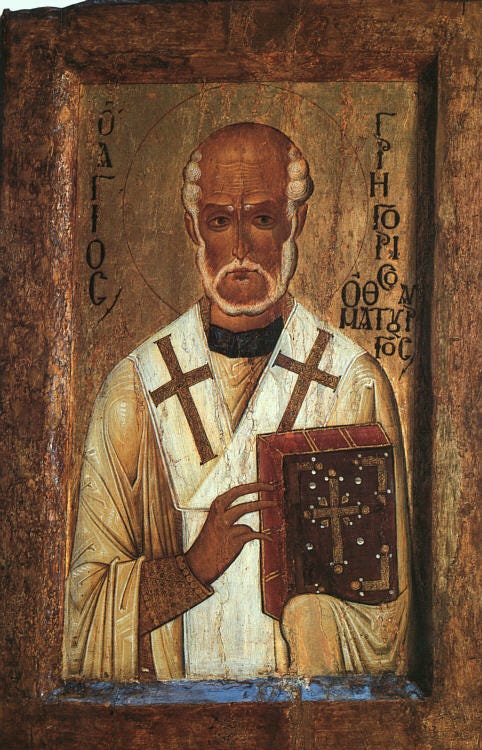
Gregory Thaumaturgus studied under Origen, and he ministered in Pontus as bishop of Neocaesarea. His influence on the Cappadocian Fathers was massive. The grandmother of Basil and Gregory of Nyssa, Macrina the Elder, preserved Gregory’s teaching at Neocaesarea and passed it down to the family. Gregory of Nyssa remembers the former Gregory’s Confession of Faith, which I will recount here because it shows how influenced Gregory Thaumaturgus was by Origen, and yet how the former’s theology redirected Origen’s teaching into what would become Pro-Nicene patterns of thought.
Here is Gregory’s Statement of Faith, preserved by Gregory of Nyssa:
There is one God, the Father of the living Word, who is His subsistent Wisdom and Power and Eternal Image (χαρακτῆρος ἀϊδίου): perfect Begetter of the perfect Begotten, Father of the only-begotten Son.
There is one Lord, Only of the Only (μόνος ἐκ μόνου), God of God, Image and Likeness of Deity, Efficient Word (λόγος ἐνεργός), Wisdom comprehensive (περιεκτική) of the constitution of all things, and Power formative (ποιητική) of the whole creation, true Son of true Father, Invisible of Invisible, and Incorruptible of Incorruptible, and Immortal of Immortal and Eternal of Eternal (ἀΐδιος ἀϊδίου).
And there is One Holy Spirit, having His subsistence (ὕπαρξιν) from God, and being made manifest (πεφηνός) by the Son, to wit to men (δηλαδὴ τοῖς ἀνθρώποις): Image (εἰκών) of the Son, Perfect Image of the Perfect; Life, the Cause of the living; Holy Fount; Sanctity, the Supplier, or Leader (χορηγός), of Sanctification; in whom is manifested God the Father, who is above all and in all, and God the Son, who is through all.
There is a perfect Trinity, in glory and eternity and sovereignty, neither divided nor estranged (ἀπαλλοτριουμένη). Wherefore there is nothing either created or in servitude (δοῦλον) in the Trinity; nor anything superinduced (ἐπείσακτον), as if at some former period it was non-existent, and at some later period it was introduced. And thus neither was the Son ever wanting to the Father, nor the Spirit to the Son; but without variation and without change, the same Trinity abideth ever.[5]
Notes
[1] Origen, On First Principles 1.6.1, ed. and trans. John Behr, 2 vols., Oxford Early Christian Texts (Oxford: Oxford University Press, 2017), 1:105.
[2] This Origen mentions at the end of a section on Dogma, pivoting towards topics that he speculates upon, such as celestial beings.
[3] Origen, Commentary on the Gospel According to John 32.187–193, trans. Ronald E. Heine, Fathers of the Church 89 (Washington, DC: Catholic University of America Press, 1993), 378. In Greek, the text reads: «Πρῶτον πάντων πίστευσον ὅτι εἷς ἔστιν ὁ θεός, ὁ τὰ πάντα κτίσας καὶ καταρτίσας καὶ ποιήσας ἐκ τοῦ μὴ ὄντος εἰς τὸ εἶναι τὰ πάντα.» χρὴ δὲ καὶ πιστεύειν ὅτι κύριος Ἰησοῦς Χριστός, καὶ πάσῃ τῇ περὶ αὐτοῦ κατὰ τὴν θεότητα καὶ τὴν ἀνθρωπότητα ἀληθείᾳ. δεῖ δὲ καὶ εἰς τὸ ἅγιον πιστεύειν πνεῦμα, καὶ ὅτι αὐτεξούσιοι ὄντες κολαζόμεθα μὲν ἐφ’ οἷς ἁμαρτάνομεν, τιμώμεθα δὲ ἐφ’ οἷς εὖ πράττομεν. φέρε οὖν καθ’ ὑπόθεσιν, εἴ τις δοκῶν πιστεύειν εἰς τὸν Ἰησοῦν μὴ πιστεύοι ὅτι εἷς ἐστιν ὁ θεὸς ὁ νόμου καὶ εὐαγγελίου, οὗ τὴν δόξαν οὐρανοί, ὡς ὑπ’ αὐτοῦ γεγενημένοι, διηγοῦνται, καὶ τὸ στερέωμα ἀναγγέλλει τὴν ποίησιν τῶν χειρῶν αὐτοῦ, ὡς ἔργον τυγχάνον αὐτῶν, οὗτος ἂν μεγίστῳ λείποι τῆς πίστεως κεφαλαίῳ. ἢ πάλιν εἴ τις πιστεύων ὅτι ὁ ἐπὶ Ποντίου Πλάτου σταυρωθεὶς ἱερόν τι χρῆμα καὶ σωτήριον τῷ κόσμῳ ἐπιδεδήμηκεν, ἀλλ’ οὐκ ἐκ παρθένου τῆς Μαρίας καὶ ἁγίου πνεύματος τὴν γένεσιν ἀνείληφεν, ἀλλ’ ἐξ Ἰωσὴφ καὶ Μαρίας, καὶ τούτῳ ἂν λείποι εἰς τὸ πᾶσαν ἔχειν τὴν πίστιν τὰ ἀναγκαιότατα. πάλιν τε αὖ εἰ τὴν μὲν θεότητά τις αὐτοῦ παραδέχοιτο, τῇ δὲ ἀνθρωπότητι προσκόπτων μηδὲν ἀνθρώπινον περὶ αὐτὸν πιστεύοι γεγονέναι, ἢ ὑπόστασιν εἰληφέναι, καὶ τούτῳ ἂν λείποι πρὸς πᾶσαν τὴν πίστιν οὐ τὰ τυχόντα. ἢ εἰ ἀνάπαλιν τὰ μὲν περὶ αὐτὸν ἀνθρώπινα προσίοιτο, τὴν δὲ ὑπόστασιν τοῦ μονογενοῦς καὶ πρωτοτόκου πάσης κτίσεως ἀθετοῖ, καὶ οὗτος ἂν οὐ δύναιτο λέγειν πᾶσαν ἔχειν τὴν πίστιν. So Origen, Der Johanneskommentar, ed. Erwin Preuschen, vol. 4 of Origenes Werke, Die griechischen christlichen Schriftsteller der ersten drei Jahrhunderte 10 (Leipzig: J. C. Hinrichs, 1903), 32.187–193.
[4] Origen would have agreed, despite the incorrect assumptions made about his allegorical method.
[5] Gregory Thaumaturgus, “A Declaration of Faith,” trans. S. D. F. Salmond, in The Ante-Nicene Fathers, vol. 6, ed. Alexander Roberts and James Donaldson, rev. A. Cleveland Coxe (Buffalo: Christian Literature Publishing, 1886; repr., Peabody, MA: Hendrickson, 1994), 7. The Greek in parentheses comes from Salmond’s footnotes (nn. 19–34).