


Irenaeus’s On the Apostolic Preaching (c. 190) is the earliest extant non-polemical summary of Christian teaching that we know of (Behr, Preaching, 7). He wrote it to help a man named Marcianus understand the whole body of Christian teaching. As such, we can suppose it functioned as a catechesis document, aiming to help seekers and Christians alike know what the Faith once for all delivered was (Jude 3).
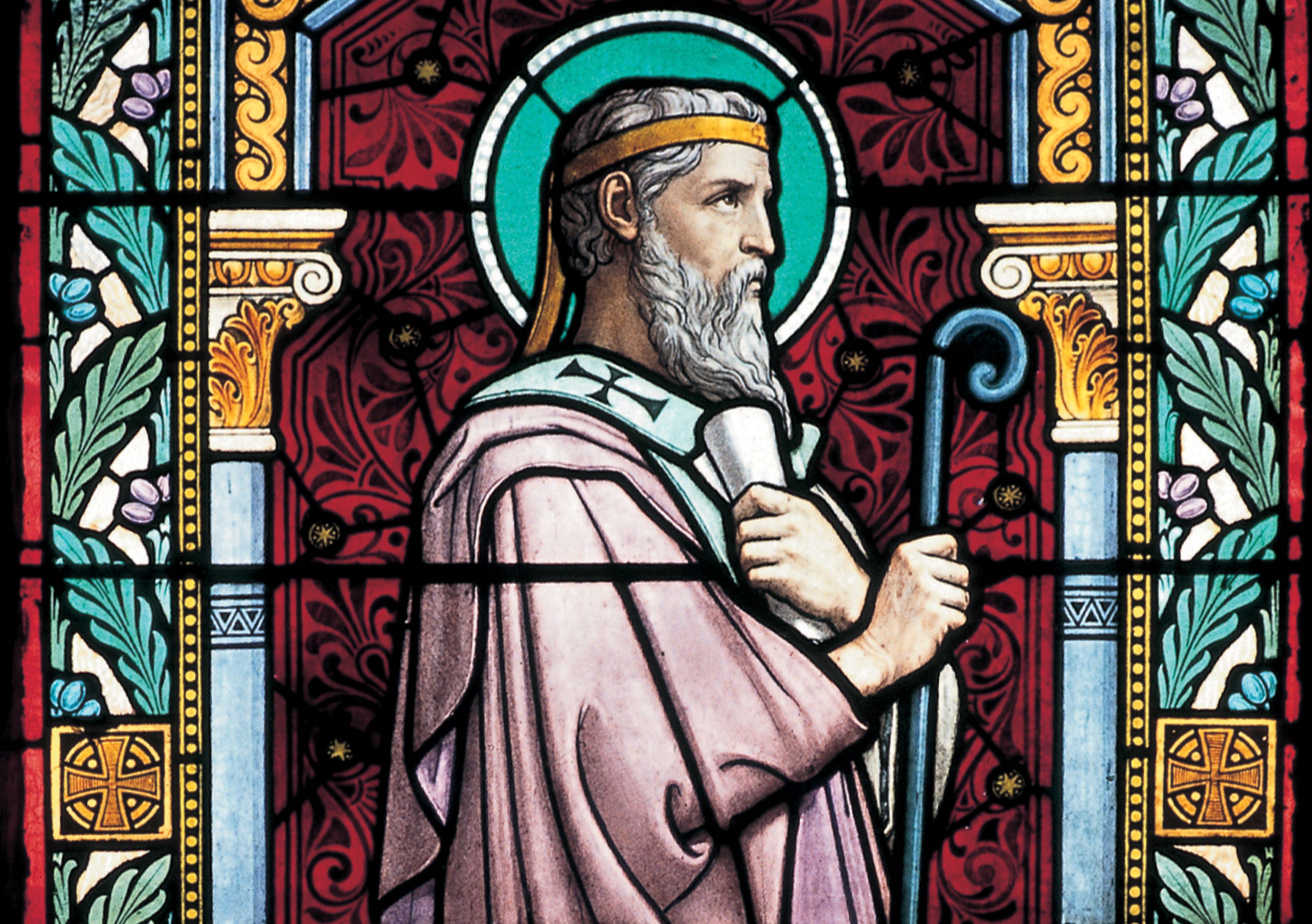
Three Features of On the Apostolic Preaching
What makes Irenaeus’s work worth reflecting on today are the following features. First, Irenaeus studied under Polycarp, who himself learned from the apostles. So Irenaeus has insight into part of the original audience of the New Testament documents, and he knew certain habits of mind that derive from the apostolic era.
Second, the work’s form follows patterns present in Acts (Behr, Preaching, 7). Irenaeus thus begins with Moses and all the prophets, showing how the Scriptures speak of Christ (cf. Luke 24:27). So we can see a work of ancient biblical theology that self-consciously aims to replicate apostolic patterns of scriptural interpretation.
Third, and related to this, Irenaeus calls the Old Testament Scripture, and he cites it primarily (not the New Testament) to establish the Faith. He obviously read the New Testament because he alludes to and cites it. But like the Apostolic Preaching in Acts, the Scriptures primarily refer to what we know as the Old Testament. None of these points means Irenaeus did not view the New Testament writings as authoritative, but rather that he, in imitation of the apostles, read Scripture to establish faith in Christ Jesus.
OT as Substructure for Apostolic Preaching
This approach might seem peculiar, yet I am convinced it is how we ought to approach the Scriptures through the apostolic writings. While I am not arguing this narrow point here, my judgment is that we often skip to the apostolic conclusions in the New Testament without understanding the Scriptural substructure of the Apostles. Irenaeus course-corrects us here, exposing at least one area where we typically lack sufficient knowledge.
Put simply, early Christians preached Christ according to Scripture primarily through the Old Testament while being guided by the Apostolic Writings (New Testament). Irenaeus shows us how second-century Christians did so in conscious imitation of the speeches of Acts and other New Testament writings.
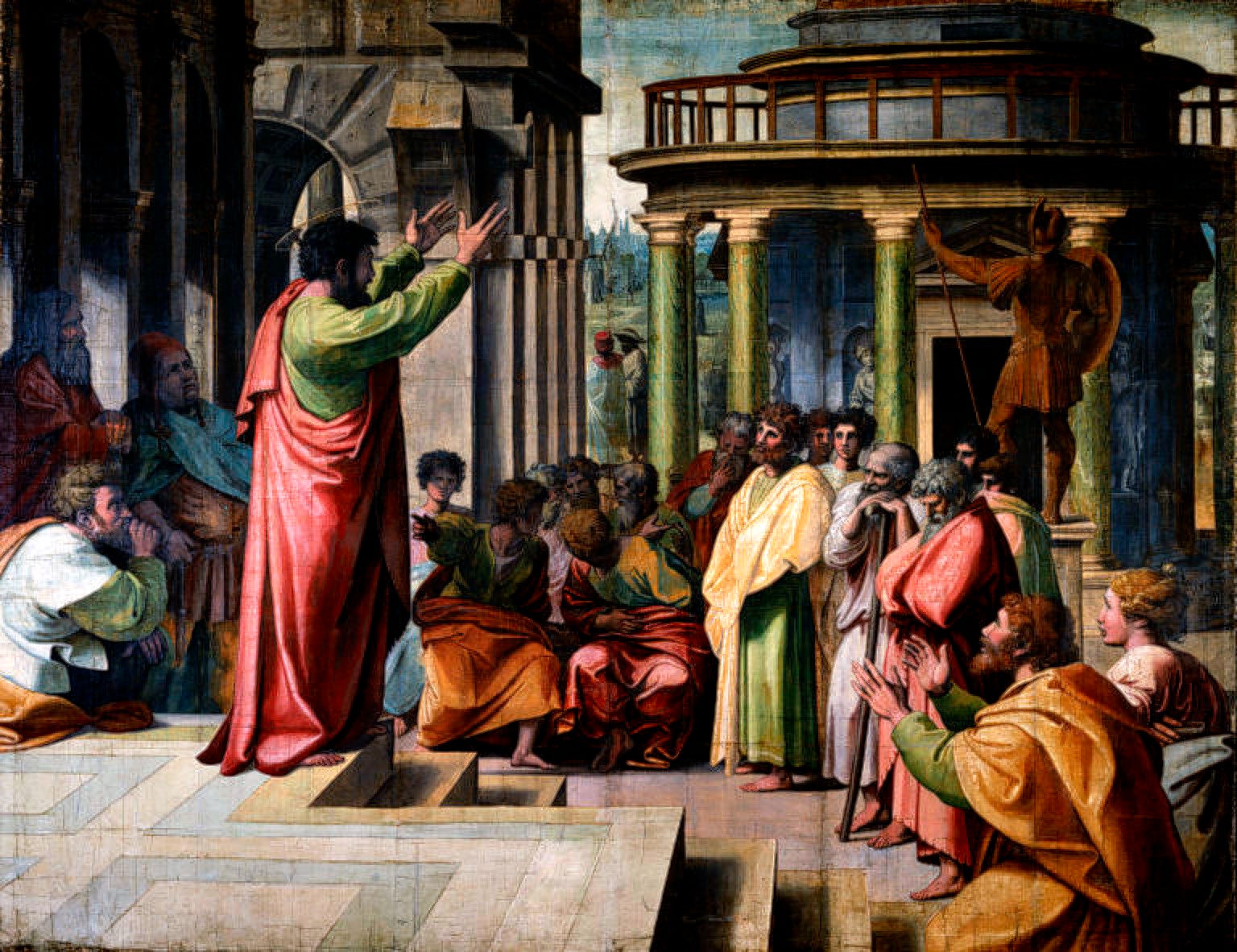
John Behr explains Irenaeus’s intent in this way: “to relate the content of the apostolic preaching by outlining the history narrated in Scripture, culminating in the apostles’ proclamation that what is prophesied therein is now fulfilled in Jesus Christ, and thereby, in reverse, recognizing the scriptural authority of this preaching of the apostles” (Preaching, 16).
In other words, Irenaeus in his Demonstration of the Apostolic Preaching demonstrates how the Scriptures (Old Testament) establish the proclamation of the apostles. Or put differently, Irenaeus maintains that the apostles read the Old Testament in light of Christ, or Christ in accordance with Scripture.
Consider how the Apostle Paul puts it in 1 Corinthians 15:3–4: “I delivered to you as of first importance what I also received: that Christ died for our sins in accordance with the Scriptures, that he was buried, that he was raised on the third day in accordance with the Scriptures.”
As becomes clear in Paul’s letters, the way in which Paul reads Scripture is in a Christ-centric way. Christ is a main character, for example, during and after the Exodus when Moses struck the rock, which was Christ (1 Cor. 10:4). Jude 5 specifies that Jesus saved the people of Israel during the Exodus. And the preaching of the apostles regularly demonstrates their desire to show how Scripture anticipates Christ, who fulfills and proclaims the presence of the good promises of God.
Jesus evidently taught the Apostles this methodological approach to Scripture as Luke 24:27 implies: “And beginning with Moses and all the Prophets, he interpreted to them in all the Scriptures the things concerning himself.” One inference of this teaching may be that doctrine does not develop past the Scriptures and Christ’s proclamation, since the Christian faith centres on Christ as promised in the Scriptures (2 Tim. 3:16–17).
A second inference involves the source of the apostolic preaching and thus of the second-century church’s proclamation; Irenaeus locates that common source in the Old Testament Scriptures, not in Greek philosophy or other such thought. Put simply, the doctrine of the Trinity (and others) substantially existed in the apostolic writings themselves; and the later theological language applied revealed principles of unity and distinctness in God to a new problem (e.g., Arianism).
The Argument of On the Apostolic Preaching
Behr isolates “two integrated projects” that Irenaeus undertakes: first, to demonstrate or unfold the content of Scripture, the Old Testament, as it pertains to the revelation of Jesus Christ as preached by the apostles; second, “to recognize the scriptural authority of that preaching by demonstrating that the apostles’ proclamation of what has been fulfilled in Jesus Christ, shaped as it is by Scripture, was indeed so prophesied” (Preaching, 17).
He continues, “These two tasks are both conveyed by the one word which Irenaeus uses to describe this work—an ἐπίδειξις: a ‘demonstration’ both in the sense of an ‘exposition’ as well as a ‘proof.’ It is also in terms of these two projects that the text falls most naturally into two distinct parts” (Preaching, 17). Irenaeus first exposits the apostolic preaching (3b–42a) and then secondly demonstrates this teaching by scriptural citation (42b–97; Behr, Preaching, 18, 21).
In his introduction, Irenaeus says his work will “demonstrate, by means of a summary, the preaching of the truth, so as to strengthen your faith. We are sending you, as it were, a summary memorandum (κεφαλαιωδης ὑπόμνημα), so that you may find much in a little, and by means of this small [work] understand all the members of the body of the truth” (ch. 1).
The word demonstration (ἐπίδειξις), as Behr notes, indicates both exposition and proof, particularly of the teaching of the apostles. And Irenaeus believes that this will help Marcianus “understand all the members of the body of truth.”
Rule of Faith
In order to do so, Irenaeus maintains, “we must keep the rule (κανών) of faith” (ch. 3). This rule or canon of faith provides a guideline to understanding the whole scope of Scripture, including its order (ch. 6) and purposes. The rule of faith, by the time of Irenaeus and certainly after him, was recited in slightly modified forms during baptisms across the Christian world. Variations of it would eventually make their way into Creeds like the Nicene Creed and the Apostles’ Creed.
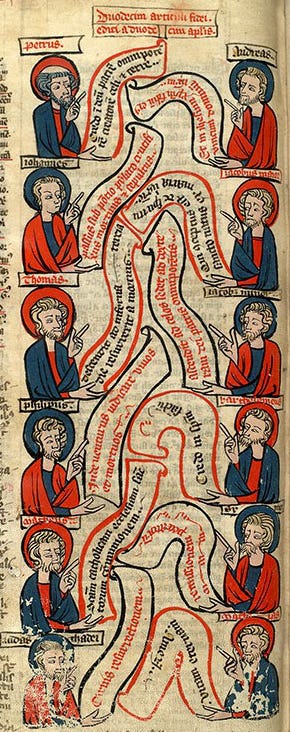
In Irenaeus’s second-century setting, he recounts the rule of faith in this way:
“So, faith procures this for us, as the elders, the disciples of the apostles, have handed down to us: firstly, it exhorts us to remember that we have received baptism for the remission of sins, in the name of God the Father, and in the name of Jesus Christ, the Son of God, [who was] incarnate, and died, and was raised, and in the Holy Spirit of God;
and that this baptism is the seal of eternal life and rebirth unto God, that we may no longer be sons of mortal men, but of the eternal and everlasting God;
and that the eternally existing God is above everything that has come into being and everything is subjected to Him, and that which is subjected to Him is all made by Him, so that God does not rule nor is Lord over what is another’s, but over His own, and all things are God’s: and therefore God is the Almighty and everything is from God” (ch. 3).
Note the following features. First, this rule (and all its extant variations) is trinitarian: it is a confession in the name of the Father, Son, and Spirit (Matt. 28:19). Second, this rule was “received in baptism,” because of the baptism in the name of the Father, Son, and Spirit. Last, baptism here is “the seal of eternal life,” which brings remission of sin and rebirth (Titus 3:5).
Given this rule, Irenaeus orders his approach to Scripture, showing how the Bible speaks about the God who is. Thus, he can speak of the whole Bible revealing God and make theological comments like: “God is verbal (λογικός), therefore He made created things by the Word; and God is Spirit, so that He adorned all things by the Spirit” (ch. 5; cf. John 1:1–3).
The point here is that for Irenaeus, the apostolic preaching from the Old Testament maintained a trinitarian shape, evinced in the Rule of Faith.
Irenaeus expands on this trinitarian Rule in Baptism by maintaining:
“For this reason the baptism of our regeneration (παλιγγενεσία) takes place through these three articles, granting us regeneration unto God the Father through His Son by the Holy Spirit: for those who bear the Spirit of God are led to the Word, that is to the Son, while the Son presents [them] to the Father, and the Father furnishes (περιποιέω) incorruptibility. Thus, without the Spirit it is not [possible] to see the Word of God, and without the Son one is not able to approach the Father; for the knowledge of the Father [is] the Son, and knowledge of the Son of God is through the Holy Spirit, while the Spirit, according to the good-pleasure of the Father, the Son administers, to whom the Father wills and as He wills” (ch. 7).
The shape of redemption is triune, and thus so is our baptism of regeneration (Titus 3:5). For the rest of this work of catechesis, Irenaeus will demonstrate that this is indeed the apostolic preaching and that through the prophetic writings, their preaching maintains its authority.
Demonstration of the Apostolic Preaching
After outlining what the Apostolic Preaching was, tracing the story of Jesus Christ beginning in Genesis, Irenaeus then turns to his demonstration. We might say he first recounts the Biblical storyline before showing how the conclusions the apostles made about this storyline make sense.
For example, Irenaeus discerns that the apostles taught that “the Father is Lord and the Son is Lord, and the Father is God and the Son is God, since He who is born of God is God” (ch. 47). So to demonstrate from the Old Testament that this is true, Irenaeus cites passages like Psalm 45:7–8. So when the Sons of Korah state, “God, your God, has anointed you,” Irenaeus understands this to mean the Father anoints the Son, both being the one God of Israel. So the Son is God and the Father is God yet “one God is demonstrated” (ch. 47).
He continues to cite a myriad of passages such as Psalm 110, Psalm 2, and Isaiah 45 to demonstrate that the teachings of the apostles can be demonstrated from the Old Testament. But he does not simply focus on the Trinity; he also speaks of such doctrines like the virgin birth, citing Isaiah 7:14 (chs 53–4).
The point here is that Irenaeus demonstrates that what the apostles taught came from the Scriptures (the Old Testament). By contrast today, we tend to have a developmental view of doctrine. Often, we assume that the early church had a simple faith, living lives empowered by the Spirit. And while there is undoubted truth to this narrative, it does not quite match the New Testament documents themselves.
For example, Jude 3 speaks of “the faith that was once for all delivered to the saints” and notes that believers should be “building yourselves up in your most holy faith” (Jude 20). Hebrews 10:23 speaks of “the confession of our hope” and outlines a basic catechism in Hebrews 6:1–3. Paul tells the Thessalonians to “stand firm and hold to the traditions that you were taught” (2 Thess 2:15). The apostle also speaks about a standard of teaching that we are baptized into (Rom 6:17).
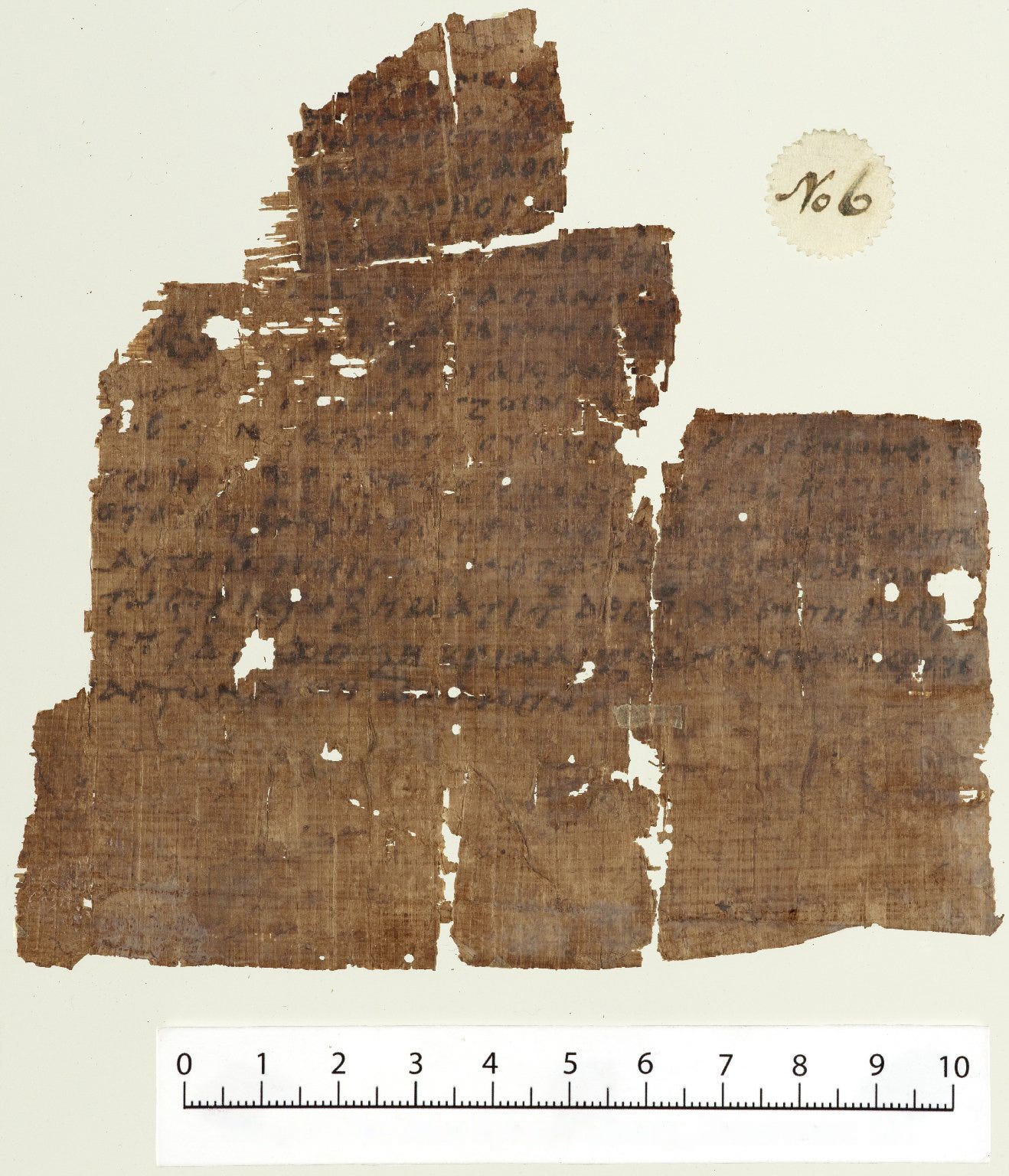
The New Testament also contains many encouragements to hold fast to the pattern of sound words, health-giving doctrine, and more besides. The fact that the church spread the Gospel of Jesus Christ indicates a central concern for doctrinal teaching: namely, that Jesus Christ is the messiah who brings a message of forgiveness and freedom.
All that to say, the New Testament presents early Christians as having a keen focus on sound teaching that builds us up into the most holy Faith. It will be obvious that the New Testament documents often do not state doctrine like a modern textbook, but its authors collectively contribute to something that we can recognize as the Faith, or better: the rule of faith.
So what?
Early Christians articulated trinitarian theology, among other doctrines, according to the Scriptures. We tend to think the apostles taught such theology due to their relationship with Jesus, even if we grant that the Scriptures anticipate that teaching.
And while it may be the case that Scripture anticipates Christ, that is not the only way that Irenaeus and the Fathers read the Old Testament. They agreed but demonstrated further that the Old Testament explicitly taught Christ’s pre-existence, his messianic work, Incarnation, and shared deity with the Father.
They did so precisely because they believed the Apostles approached Scripture (i.e., the Old Testament) with a demonstrable interpretive approach, one that we can not only demonstrate but also ought to imitate in order to conclude apostolic teaching.
Many disagree. For example, Richard Longenecker in his Biblical Exegesis in the Apostolic Period argues that we should accept the apostolic teaching but not their interpretive approach to the Bible. He reasons that the apostles’ interpretive method was “culturally conditioned” (2nd ed., xxxviii). So we must make do with understanding their approach in context, and then try to use our own culturally conditioned approaches (for Longenecker, a historical-critical approach) to apply the Bible to our times.
Yet I cannot quite affirm this position. I believe the way the Apostles approach the Bible interpretively leads to the conclusions they make about doctrine. Without their approach, we don’t have the biblical rationale for their doctrine. This, by the way, is precisely Irenaeus of Lyons’s point in writing his Demonstration of Apostolic Teaching.
And on this point, it is important to emphasize that one reason why the teaching of the Apostles has authority is because it is Scriptural. Hence, Paul will speak of matters of first importance by saying Christ died and rose according to Scripture (1 Cor 15:1–4).
From Irenaeus, we can therefore learn that the apostles preached Christ in accordance with Scripture, that is, the Old Testament. At least for early Christians, both their approach to reading Scripture and their doctrine derive from Scripture in light of Christ. And if this is the case, I suspect we should think more carefully about what it means to read Scripture like the apostles did. It may challenge some of our key assumptions about our interpretive task.
Very helpful. How best should we describe their interpretive approach? Christological? Typological? Theological? Etc..
Excellent and worth a read again. Patrick Schreiner helpfully employs the four-senses approach to Scripture in his recent work, The Transfiguration of Christ. Literal, allegorical, moral and analytical.