


Few doctrines can boast more of dividing Christians than the doctrine of baptism. And yet Christians have maintained that baptism unites us into one body. So how can we overcome this disagreeable state? Well, by God’s grace through much prayer, reflection, and the Spirit. As a possible first stage in this process, we might also consider how Christians in the first two-hundred years of Christianity baptized. For the most part, they remained united on the meaning of baptism despite regional diversity.
Perhaps we can find in them a model for holding disagreements while staying united on the main things. But even if not, the historical exercise can help us better understand what Christians have meant by baptism. That, it seems to me, is worthwhile in and of itself.
In the following, therefore, I outline how early Christians understood and practiced baptism. I do not claim to be comprehensive but only to show how some representative Christian communities during the first two centuries of Christianity understood and practiced baptism.
Methodologically, I have tried to explain how Christians in the early centuries described baptism in their own words. Believers in these early centuries did not feel the need to overly nuance or articulate the mechanics of baptism. They did not have centuries worth of baptismal debates like we have.
For this reason, they affirm the necessity of baptism in biblical language unencumbered by later debates. I hope that this article helps readers both to recognize the basic continuity we share with early Christians and also to perceive how different that world is.
With that said, this article begins briefly with a discussion on baptismal washings prior to the New Testament before addressing that Testament and also Christian writers up to about 250 AD on the topic of baptism.
Pre-New Testament
Ceremonial baths existed around the temple precincts in Jerusalem. Likely, they existed for ceremonial washings. Later traditions indicate that such washings centre on ritual purity and as initiation rites (e.g., m. Pesach 8.8). These traditions, however, come later than the New Testament (so McGowan, 2014: Ancient Christian Worship, 137).
Andrew McGowan also points out that the baptisms in the Essene community (and also as described in the Dead Sea Scrolls) do not signify initiation rituals but map onto “ritual washing practices” (McGowan, 2014: 138).
So while pre-New Testament traditions provide important context for ritual washings and baths, Christian baptism does something evidently unique. In short, Christian baptism functioned as an initiation rite into the body of Christ, whereby the washing of water meant the forgiveness of sins and the Spirit’s act of regeneration

John the Baptist
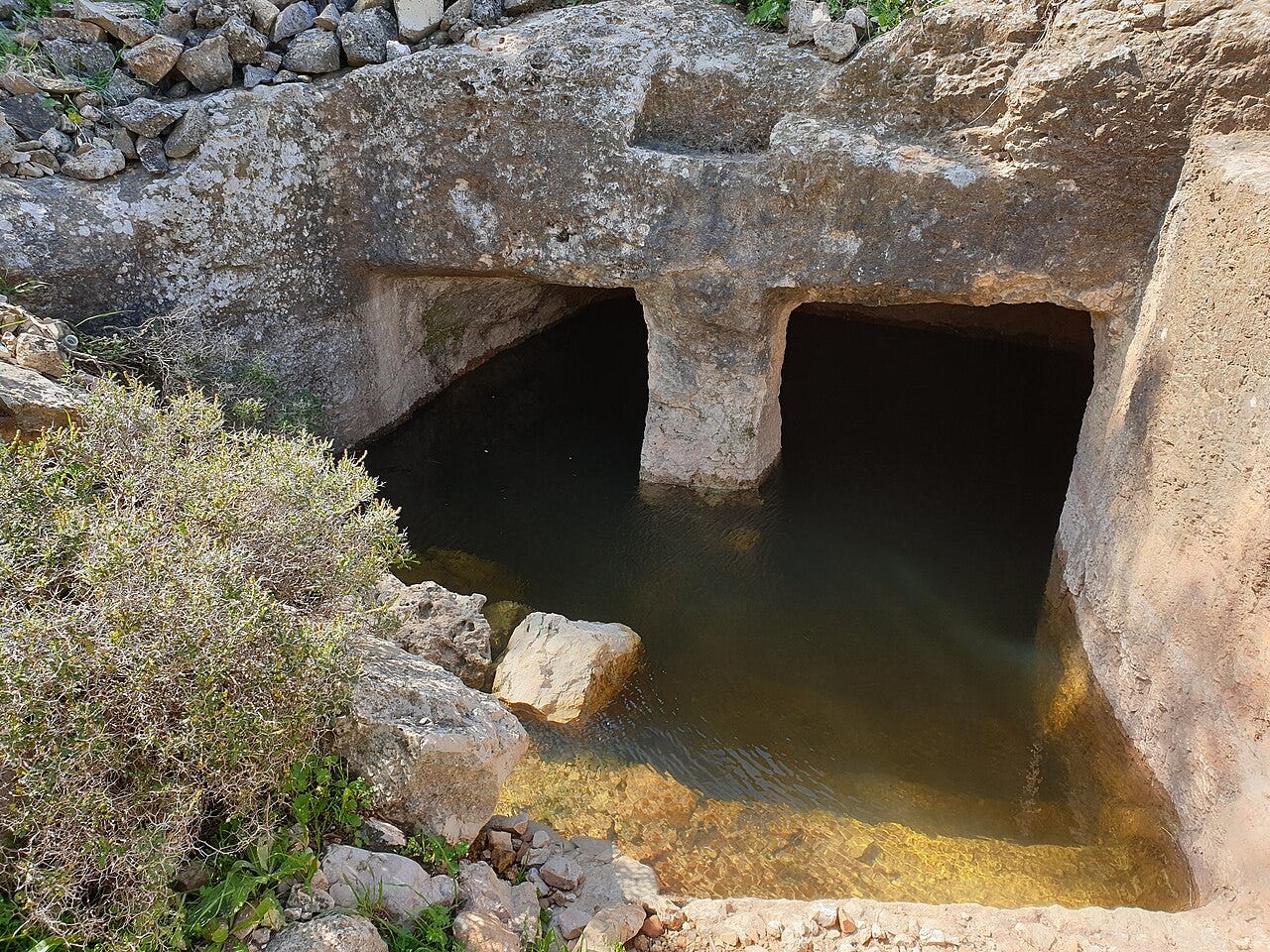
John the Baptizer followed a long tradition of ceremonial cleansing rituals within Judaism. What marks him as unique was not so much his baptizing but the reason he gave for his baptizing. John baptized people to prepare the way for Christ, and he spoke of his baptism as one of repentance for the forgiveness of sins (Mark 1:4; Luke 3:3). Matthew records that John also preached repentance due to the kingdom being at hand (Matt 3:2).
Importantly, John contrasts his baptism in water with Jesus’s superior baptism by the Spirit (Matt 3:11 // Mark 1:8 // Luke 3:16). John thus distinguishes his baptism from Christian baptism; they are of different orders with different purposes and effects. Further, that Jesus baptizes with the Spirit may explain why Paul speaks of baptism in relation to the Spirit (1 Cor 12:13). Christian baptism signifies the Spirit’s work of washing away sins and incorporating us into the Christian community.
Historically speaking, Josephus, the Jewish historian, provides external evidence for John and the meaning of his baptism. For example, Josephus speaks of John, noting “that [he] was called the Baptist” (Antiquities 18.116). And Josephus explains John’s baptismal ministry as follows:
“Herod slew [John], who was a good man, and commanded the Jews to exercise virtue, both as to righteousness towards one another, and piety towards God, and so to come to baptism; for that the washing [with water] would be acceptable to him, if they made use of it, not in order to the putting away [or the remission] of some sins [only], but for the purification of the body; supposing still that the soul was thoroughly purified beforehand by righteousness” (Antiquities 18.117).
Josephus’s emphasis on righteousness matches the Bible’s language. John proclaimed “a baptism of repentance for the forgiveness of sins” (Luke 3:3), but since he did not baptize with the Spirit nor bring forgiveness as Christ did, we might say that the purpose clause—“for the forgiveness of sins”—fits into his preparatory ministry, because Christ forgives sinners and gives the Spirit without measure (cf. Acts 2:38).
Tertullian makes a similar point in his On Baptism, writing, “[John’s baptism] was directed only to repentance, which is in a man’s own power, not to forgiveness or to the gift of the Holy Spirit” (On Baptism, 1.10). And a bit later, he concludes, “The remission of sins which John preached was not present, but future, and his baptism of repentance was no more than a preparation for this” (1.10). Most would agree with this judgment (e.g., Origen, Romans, 5.8.6), although writers like Clement of Alexandria will still see Jesus’s baptism as paradigmatic for later Christians baptisms.
Paul
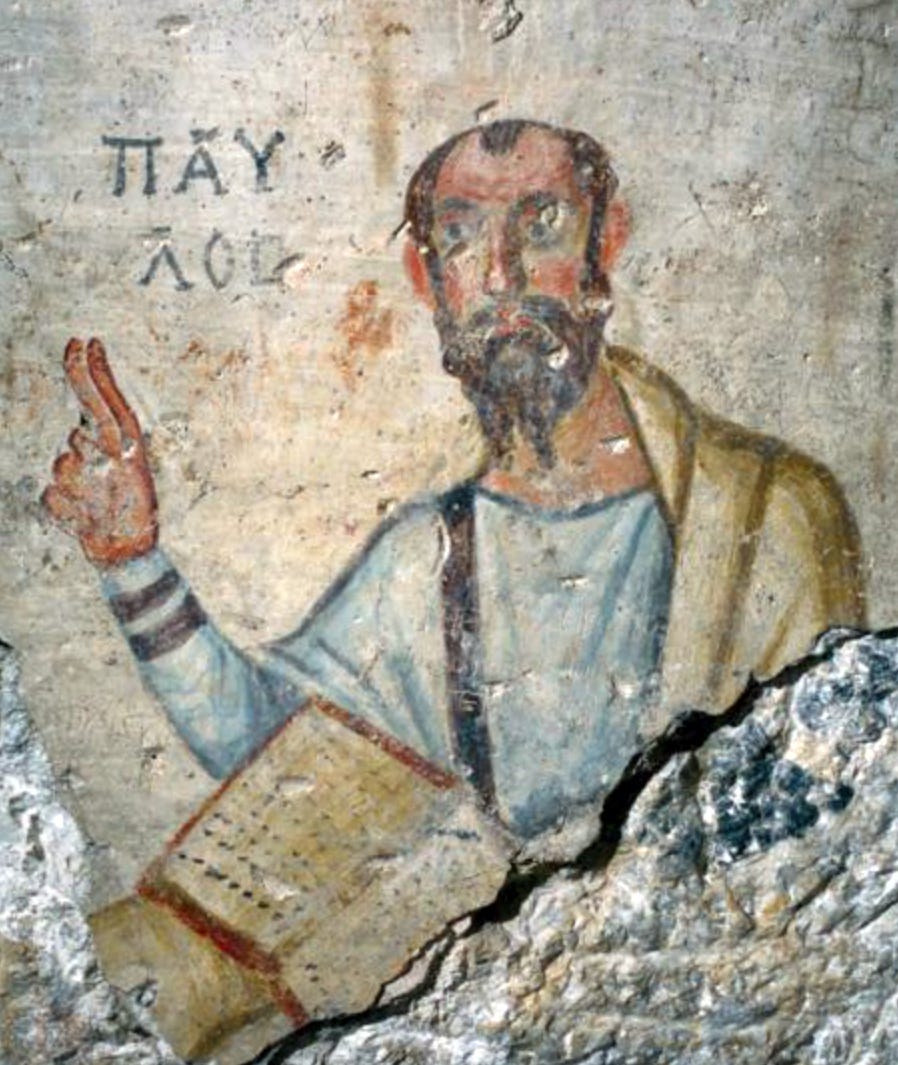
Paul, the earliest New Testament author to write on baptism, does not outline the practice of baptism in detail, rather he theologizes about its meaning. The most common way that he describes baptism is by being baptized “into Christ”:
Romans 6:3: “Do you not know that all of us who were baptized into Christ Jesus were baptized into his death?” Paul then says we are “buried with him through baptism into death” (Rom 6:4). And quickly afterwards, he maintains that we also rise with him in a resurrection like his: “For if we have been united with him in a death like his, we shall certainly be united with him in a resurrection like his” (Rom 6:5).
Galatians 3:27: “For as many of you as were baptized into Christ have put on Christ.”
1 Corinthians 12:13: “For in one Spirit we were all baptized into one body.” Here, the body is the body of Christ.
Colossians 2:12: “having been buried with him in baptism, in which you were also raised with him through faith in the powerful working of God, who raised him from the dead.”
For Paul, baptism into/with Christ indicates that our baptism means participation in Christ’s life; particularly, Paul names his death and resurrection.
That said, our union with Christ by baptism includes more than the events of Christ’s death and resurrection, since Paul will speak of Christ living in him comprehensively (Gal 2:20). Baptism incorporates us into the life of Christ, and our life fully belongs to Christ: “For you have died, and your life is hidden with Christ in God” (Col 3:3). Baptism thus signifies that death and resurrection into our new life with Christ. We are new creations (e.g., 2 Cor 5:17).
Important to this discussion is Ephesians 4:5–6 where Paul names our sevenfold oneness through our one faith in the Trinity and our baptism into one body: “There is one body and one Spirit—just as you were called to the one hope that belongs to your call—one Lord, one faith, one baptism, one God and Father of all.”
When it comes to the practical questions of how, who, and when, we need to read Paul cautiously since he only implies answers to these questions. As to how, Paul may believe baptism spatially symbolizes our death in Christ as we enter the waters and our resurrection with Christ as we ascend from them. That at least seems to be the implication in Romans 6:3–5.
Further, baptism implies washing with water, which further explains how Paul thought one should be baptized:
1 Corinthians 6:11: “you were washed, you were sanctified, you were justified.”
Titus 3:5: Paul speaks of “the washing of regeneration.”
Ephesians 5:26: Of the body of Christ, the church, Paul says, Christ “cleansed her by the washing of water with the word.”
1 Corinthians 10:2: Paul argues for a typological relation between crossing the Red Sea and baptism: “all were baptized into Moses in the cloud and in the sea.”
These passages confirm what the word baptism obviously implies: being washed with water.
As to who baptizes, Paul implies that leaders generally baptized new believers (1 Cor 1:13–17). In 1 Corinthians 1, congregants remembered which leader baptized them and had a hierarchy of sorts on that basis. This hierarchy is a problem, but Paul does not seem to criticize the practice of named leaders being the ones who regularly baptize.
The baptized person becomes part of the body of Christ, the church: “For in one Spirit we were all baptized into one body” (1 Cor 12:13). And hence the New Testament regularly speaks of the church as one body, the body of Christ, and so on. In fact, the New Testament only defines the church four times explicitly, and in each case, it identifies it with the body of Christ (Col 1:18; 1:24; Eph 1:22–23; Eph 5:23). The most basic definition of the church is the body of Christ, and baptism incorporates us into that body (cf. Eph 4:4–6).
Finally, when it comes to when someone is baptized, Paul specifies no age or capacity for baptism per se, but the apostle does mention that there is only one baptism due to its symbolism in Ephesians 4:5: “one Lord, one faith, one baptism.” This may mean re-baptisms are inappropriate to the symbolism.
Further, Paul claims that our death and resurrection in baptism occur “through faith” in Colossians 2:12, which implies the presence of faith in the one baptized.
Synoptic Gospels
The three synoptic Gospels (Matthew, Mark, Luke) are written after the Pauline epistles, and they testify to Jesus’s own understanding of baptism. In the first place, John Baptizes Jesus to fulfill all righteousness (Matt 3:15). Jesus also metaphorically speaks of his death as a baptism, and commissions the apostles to baptize in the name of the Father, Son, and Spirit. Each point is worth recounting briefly to fill out our understanding of early Christian baptism.
Jesus consented to John’s baptism because, he explained, “it is fitting for us to fulfill all righteousness” (Matt 3:15). In Matthew’s Gospel, Jesus uses the word “fulfill” to indicate how his life completes a pattern begun in the Old Testament. For example, Jesus’s parents took him to Egypt in Matthew 2:15 “to fulfill what the Lord had spoken by the prophet, Out of Egypt I called my son’” (Hos 11:1).
During this time, we learn that Herod threatened the life of Israelite children as Pharaoh threatened the lives of Israelite children in Egypt, which once again fulfills scripture (Matt 2:17). And after Jesus’s baptism, the Spirit ushers him into the wilderness for forty days where he lives not by bread alone but God’s word in parallel to Israel who learned that lesson during their forty years of wandering the desert (Deut 8:3).
So in Matthew 3:15, Jesus may very well think of his baptism as parallel to Israel’s baptism into the waters of Moses, since the passage narratively follows sojourn in Egypt and precedes his forty days of wandering in the wilderness. If so, then Jesus walked through the waters of baptism as Israel walked through the waters of the Red Sea. This fulfillment of baptism would parallel Paul’s typological view of baptism (1 Cor 10:1–2).
Jesus also talks about his baptism for his disciples. When he does so, Jesus underscores that the apostles would be baptized into his suffering (death).
Here are the relevant passages:
Mark 10:38–39: “You do not know what you are asking. Are you able to drink the cup that I drink, or to be baptized with the baptism with which I am baptized?” And they said to him, “We are able.” And Jesus said to them, “The cup that I drink you will drink, and with the baptism with which I am baptized, you will be baptized.”
Luke 12:50: “I have a baptism to be baptized with, and how great is my distress until it is accomplished!”
In Mark, James and John seek a powerful place in the coming kingdom. Jesus tells them if they want a senior place in the kingdom, they must undergo the baptism of death. They will need to suffer as he will. In Luke, Jesus speaks more generally of his baptism of death.
Importantly, Jesus invites the disciples to take up their cross and follow him (Mark 8:34), suggesting that being baptized into his suffering means following Jesus on the way of the cross. This may be the kind of thing Jesus means when he speaks of the cup of suffering in Mark 10:38–39.
Possibly then, this language of being baptized into Jesus’s suffering led Christians like Paul to see baptism into Christ’s death as a way to identify themselves with Jesus in his death. After Jesus rose from the dead, it may have seemed obvious that baptism into Christ’s death also meant baptism into his resurrection. After all, Jesus tells James and John that they must suffer before they receive glory, just as Jesus must suffer the cross before he receives the crown.
Lastly, Jesus commissions his apostles, saying: “Go therefore and make disciples of all nations, baptizing them in the name of the Father and of the Son and of the Holy Spirit” (Matt 28:19). Key here is the phrase “baptizing them in the name of the Father and of the Son and of the Holy Spirit.” Paul more concisely speaks of being baptized “into Christ,” but most Christians found Jesus’s full saying to be the best way to describe the theological meaning of baptism.
This trinitarian baptism would therefore play a pivotal role in early Christian baptisms. These baptisms included some sort of trinitarian confession and/or a triune dipping into the water. But interestingly, in the Book of Acts, Christians are often baptized in the name of Jesus.
As a final note, Mark 16:16 also contains an important passage on baptism: “Whoever believes and is baptized will be saved, but whoever does not believe will be condemned.” Many argue that this passage, in the longer ending of Mark, was not original to the Gospel but added early on.
Even if we grant that point, then it remains an important early Christian testimony to the theology of baptism. Early Christians also knew of this ending and cited it as Scripture (e.g., Irenaeus, Against Heresies, 3.10.6). No matter one’s textual view of the passage, it still tells us something illuminating. Here, we see that faith and baptism are closely united. And since one is condemned for a lack of faith and not for a lack of baptism in Mark 16:16, we might say that Jesus here underscores the priority of faith in salvation.
Acts of the Apostles
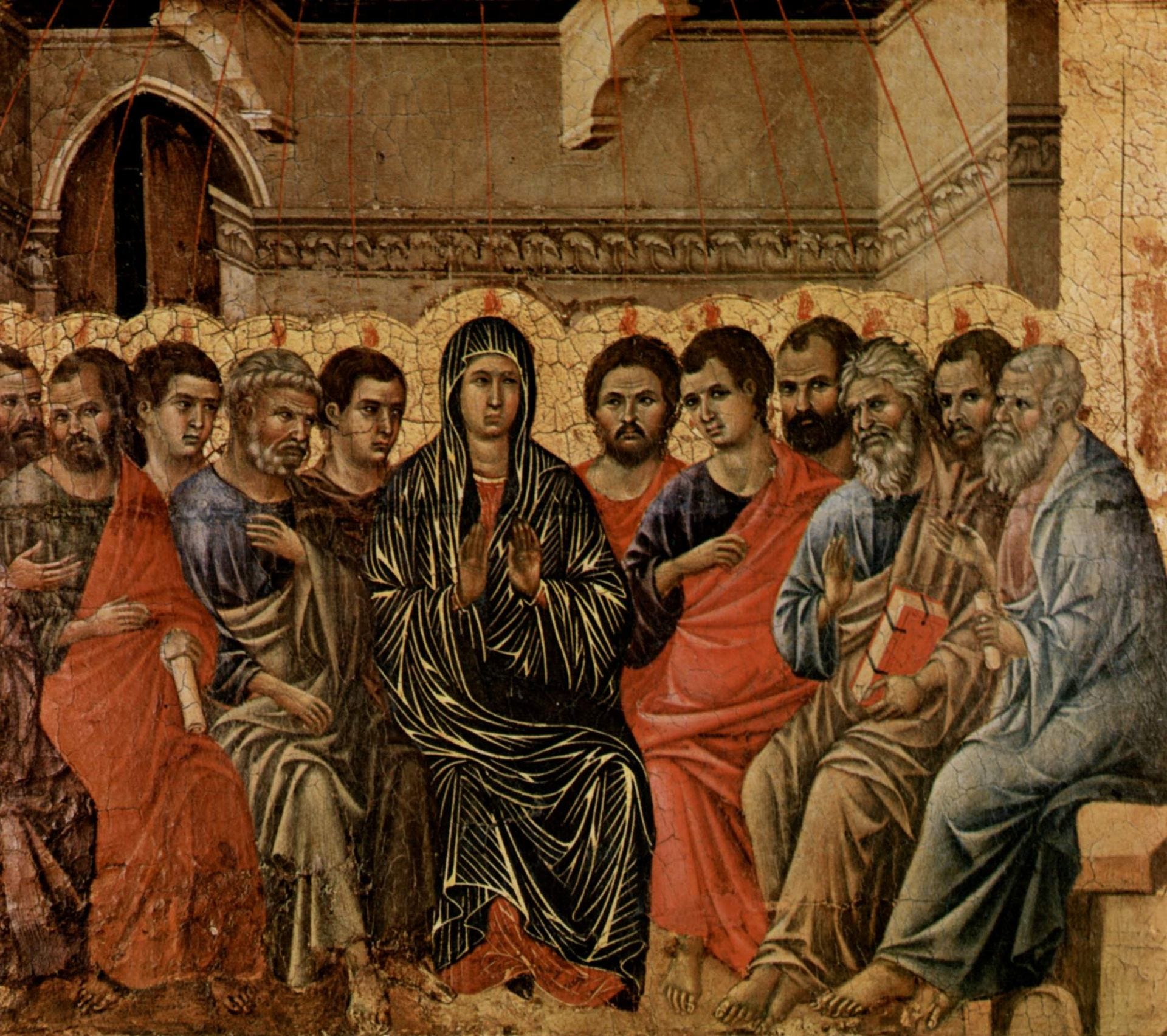
Acts narrates the Church’s growth in its earliest years, and it provides numerous examples of baptism.
First, baptisms occurred with large groups, small groups, or individuals (e.g., Acts 2:41; Acts 10:47–48; 8:36–8).
Second, baptisms happened in public or in semi-private settings, such as when Peter baptized Cornelius and his household (Acts 10:47–48).
Third, when leaders of households were baptized, Acts records the rest of the household also being baptized (Acts 10:44–48; 16:15, 33). Likely, this would have included not only immediate family members but household servants too. One implication might be that faith in the earliest churches had a corporate dimension; household heads led in faith on behalf of those under their care.
Fourth, baptism usually involved the Holy Spirit, but the timing of the Holy Spirit’s reception varied: before baptism (Acts 10:44–48), during baptism (Acts 2:38; 19:5–6), and after baptism (Acts 8:14–17). The Spirit and baptism go hand-in-hand, but there is no strict order or timing of the Spirit’s reception relative to baptism.
Fifth, baptism occurs in the name of Jesus (2:38; 8:16; 10:48; 19:5), which may be a summary statement that does not exclude a Matthean baptism into the name of the Father, Son, and Spirit.
Sixth, baptism involves repentance and believing in the Lord Jesus (Acts 2:38; 8:12; 16:31–33).
Seventh, baptism marked entrance into the community of faith (Acts 2:41–42), although not every baptism in Acts explicitly shows this initiation.
Eighth, named leaders baptize throughout Acts, even when baptisms happen semi-privately.
Ninth, baptisms generally do not include laying on of hands, but the laying on of hands sometimes occurs close to baptism or the reception of the spirit (Acts 8:17; 19:6). Baptism, laying on of hands, and the Spirit seem related, but they need not happen at the same time or in any particular order according to the Book of Acts.
Tenth, baptism immediately follows belief in some cases (Acts 8:36–38; 16:33). In other words, in Acts, we find no evidence of long periods of preparation before baptism.
The picture that emerges from Acts is that when someone repents and believes in the Lord Jesus Christ, they get baptized, receive the Spirit, and sometimes have hands laid upon them. The timing, place, size, and persons baptizing the baptized vary. Acts 2:41–42 notes that baptism initiates someone into the community of faith, what Paul calls the body of Christ or the church.
Peter
The apostle Peter draws a connection between Noah’s ark that saved eight persons through the flood and Christian baptism (1 Pet 3:20). He then writes, “Baptism, which corresponds to this, now saves you, not as a removal of dirt from the body but as an appeal to God for a good conscience, through the resurrection of Jesus Christ.”
Peter seems to draw a distinction here between a merely physical baptism (“a removal of dirt from the body”) and a baptism that involves “an appeal to God for a good conscience, through the resurrection of Jesus.” It is, in this way, that baptism saves us: by appealing to God through Jesus Christ. The water alone does not save; but the water with the appeal to God through Christ saves.
The Gospel of John
The Gospel of John may be one of the last writings in the New Testament, possibly being written in the mid 90s. Hence, the Gospel book seems to assume baptismal practices and thus focuses on deepening the theology of baptism.
Like in the Synoptic Gospels, John the Baptist contrasts his water baptism with Jesus’s baptism by the Spirit (John 1:33). But in John, this contrast is programmatic because throughout this Gospel book, Jesus, the Spirit, and water tie together theologically.
For example, Jesus explains what new birth means to Nicodemus in John 3:5. Here, the Lord says, “Truly, truly, I say to you, unless one is born of water and the Spirit, he cannot enter the kingdom of God.” In other words, one must be born again by water, which may refer both to birth waters and baptismal waters, along with the Holy Spirit who gives life (John 6:63).
Jesus says that he gives the Spirit without measure (John 3:34) and speaks about living water (i.e., the Spirit) in John 4:10–14. John 7:37–39 identifies the Spirit with living water:
“On the last day of the feast, the great day, Jesus stood up and cried out, “If anyone thirsts, let him come to me and drink. Whoever believes in me, as the Scripture has said, ‘Out of his heart will flow rivers of living water.’ “ Now this he said about the Spirit, whom those who believed in him were to receive, for as yet the Spirit had not been given, because Jesus was not yet glorified.”
When Jesus says, “Out of his heart will flow rivers of living water,” he either means the one who believes or, as I take it, to be quite literally the side of Christ on the cross from which water and blood pour out, signifying the Spirit and Christ’s atonement sacrifice: “But one of the soldiers pierced his side with a spear, and at once there came out blood and water” (19:34). Elsewhere, John remembered Jesus’s teaching and said, “For there are three that testify: the Spirit and the water and the blood; and these three agree” (1 John 5:7–8).
In short, John unites baptism with new birth and the Spirit. Living water symbolizes the Holy Spirit—”Now this he said about the Spirit”—in order to deepen our understanding of the Spirit’s relationship to Jesus and how Jesus baptizes by the Spirit, that is, living water. Early baptismal manuals (see below) commended baptism in living waters (i.e., fresh water), possibly in memory of the words of Jesus.
Paul also unites water with the Spirit in Titus 3:5 when he speaks of “the washing of regeneration [i.e., new birth] and renewal of the Holy Spirit.” And elsewhere, he can speak of Christ sanctifying the church, “having cleansed her by the washing of water with the word” (Eph 5:26). He may be remembering the words of Jesus, which John later recorded in his Gospel Book.
In any case, Christians must have picked up on Jesus’s teaching on baptism, living water, and the Spirit. Acts shows us that the connection between water and the Spirit is not mechanical. But living water, nevertheless, symbolizes the Spirit who acts in our rebirth.
John may also support a non-mechanical connection between the living waters in baptism and the Spirit. When Jesus speaks to Nicodemus, he says, “Do not marvel that I said to you, ‘You must be born again.’’ The wind blows where it wishes, and you hear its sound, but you do not know where it comes from or where it goes. So it is with everyone who is born of the Spirit” (John 3:7–8). The Spirit cannot be tied down to one act. This would agree with Acts where the Spirit comes before, during, and after baptisms.
The NT on Baptism
The above survey bypassed important passages in Hebrews for the sake of brevity. I mainly aimed to draw attention to key themes in the New Testament that early Christians emphasized and repeated over the next two centuries across various locales (Syria, Rome, North Africa).
Before I do, I need to mention one of the most important passages in the Bible for understanding the theology of baptism, Acts 2:38, where Peter says, “Repent and be baptized every one of you in the name of Jesus Christ for the forgiveness of your sins, and you will receive the gift of the Holy Spirit.” Christians would, like Peter, think of baptism as for the remission of sins and tied to the divine gift of the Spirit, who was thought to wash away our sins. Further, being baptized “in the name of Jesus” was usually understood as a summary of the Faith, which Matthew 28:19 expands into a trinitarian confession of the faith.
Early Christians used the language of Peter (forgiveness, baptism, gift, Spirit) and of the Faith given in Matthew 28:19 to order their baptismal practices. To see how they did so, we can now turn to the Didache and various other early Christian documents to advance our understanding of baptism by showing how representative early post-NT Christians baptized.
Syria: Didache
Christians in Syria likely wrote the Didache in the second century, yet its traditions may trace back to the time of the apostles in the first century (2 Thess 2:15). Its language and feel match the Gospel of Matthew but it is written as a manual for church practice. Hence even if its traditions go back to the apostles themselves, it did not amount to Scripture for early Christians.
In the seventh chapter, the Didache provides a somewhat detailed description of baptism:
“And concerning baptism, baptize in this way: having reviewed all of these things, baptize in the name of the Father, and of the Son, and of the Holy Spirit, in [living] water. But if you do not have access to [living] water, baptize in other water. And if you are not able to baptize with cold water, then baptize with warm water. But if you possess neither, pour water on the head three times, in the name of the Father, and of the Son, and of the Holy Spirit. And before the baptism the baptizer should fast beforehand, and the one being baptized and any others who are able. Call upon the one being baptized to fast beforehand for one or two days.”
First, notice that baptism in the Didache is not spontaneous as it appears to be in Acts. There is a time of preparation, which in the Didache looks like moral formation but presumably it also included doctrine given the trinitarian baptism and theological discussions in the didache, which assume prior knowledge.
Second, observe that baptism occurs “in the name of the Father, and of the Son, and of the Holy Spirit” as it does in Matthew 28:19.
Third, baptism happens ideally in “living water” which means running or fresh water, like a river. This ideal setting plausibly links to the teaching of Jesus in which the spirit and living waters share a symbolic world.
Fourth, the water of baptism has a sequence of options, depending on what is available. One can baptize in non-living water, cold water, warm water, and so on. In fact, if small amounts of water are only available, one can “pour water on the head three times, in the name of the Father, and of the Son, and of the Holy Spirit.” Possibly, the triple pour parallels an implied triple dip into living waters given the parallel here.
Fifth, the one being baptized should “fast beforehand for one or two days.” For the Didache community, fasting was a normal practice, occurring on Wednesdays and Fridays (8:1).
Sixth, later in the Didache, we learn that only the baptized may enjoy the Eucharist (Lord’s Supper): “But none shall eat or shall drink from your Eucharist but those baptized in the name of the Lord; for also concerning this the Lord has said, “Do give not what is holy to the dogs’” (9:5). As far as I can discern, fencing the table in this way was the normal practice for early Christians.
If the Didache recounts the spoken traditions of the disciples of Jesus, and that seems possible (2 Thess 2:15), then the spontaneous baptisms in Acts had already given way to baptism after a time of preparation very early on for this community. Other writings in the second and third centuries confirm that preparation before baptism was the norm. This reality suggests that Christians did not view Acts as teaching what must be done in the church but rather a narrative of how the risen Lord, through his Apostles, led the church.
Rome: Shepherd of Hermas
The Shepherd of Hermas traces its origin to Rome. As a composite document, the author(s) wrote portions of it as early as the 90s and as late as the 140s. The named-author is Hermas, a prophet from Rome.
According to Hermas, baptism includes the forgiveness of sins, since Hermas says there is only one more repentance after baptism and, for him, repentance meant forgiveness (Mandate 4.3.1–4). Further, in a different section of the book, Hermas emphasizes the necessity of baptism for entering the kingdom of God (Visions 9.16; cf. John 3:5). This would constitute evidence from the early second century that Roman baptism concerned forgiveness and repentance.
A final note on Hermas. He calls baptism a “seal” (Vision 9.16), a term associated in the New Testament with the Spirit who seals our salvation. For example, Paul says God has “put his seal on us and given us his Spirit” (2 Cor 1:22). In Ephesians, Paul speaks of being “sealed with the promised Holy Spirit” and of the Holy Spirit “by whom you were sealed for the day of redemption” (Eph 1:13–14; Eph 4:30).
In their original context, these sealing passages do not explicitly mention baptism. But Christians inferred that baptism may be the seal of the Spirit, a sort of visible imprint of the Spirit’s inner work. That, at least, is how many Christian authors after Hermas spoke about the Spirit’s sealing.
Alexandria: The Epistle of Barnabas
The Epistle of Barnabas was composed sometime in the early second century, although it may go all the way back to the first century. Its provenance is not known, but many suspect it comes from Alexandria because of its allegorical approach to Scripture. If so, it provides early evidence for how Christians in Alexandria understood baptism.
Barnabas, in the eleventh chapter of his Epistle, cites a long list of Scriptural passages to show how the waters of baptism flow from ancient precedent (Jer 2:12–13; Isa 16:1–2; Isa 45:2–3; Isa 33:16–18; Ps 1:3–6; Zeph 3:19; Ezek 47:12). For Barnabas, the living water in which we are baptized harkens back to the waters and tree of life.
He cites Ezekiel 47:12, “And there was a river flowing on the right hand, and beautiful trees rose up from it; and whosoever shall eat of them shall live forever,” and then concludes: “This he says, because we go down into the water laden with sins and filth, and rise up from it bearing fruit in the heart, resting our fear and hope on Jesus in the spirit. And whoever shall eat of these shall live forever; he means this: whoever, he says, shall hear these things spoken and shall believe, shall live forever” (Barnabas 11:11).
In context, “in spirit” means in the Holy Spirit (Barnabas 11:9), and this baptism also leads to the remission of sins according to Barnabas (11:1). The language of going “down into the water” and rising “up from it” pictures someone immersing themselves in a river or bath, such as happened in John’s Baptism or as the Didache prescribes (“living waters”). It may also reflect Paul’s view of baptism in Romans 6, wherein Paul speaks of going down (death) and rising up (resurrection) with specific theological meaning.
Rome: Justin Martyr
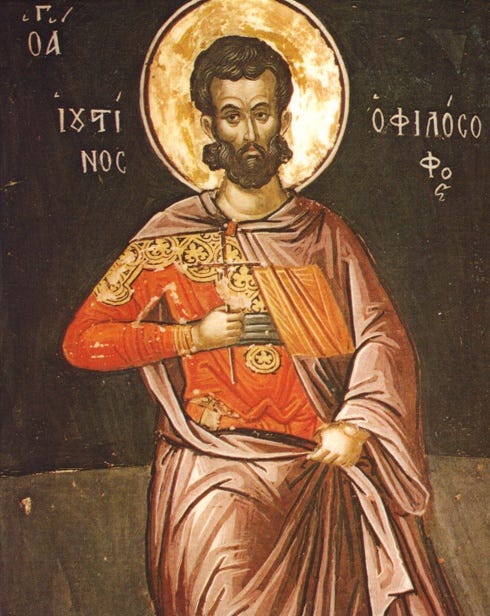
Justin Martyr, writing from the middle of the second century in Rome, describes baptism as he observed it in Rome (First Apology, 61). First, Justin points out that: “As many as are persuaded and believe that what we teach and say is true, and undertake to be able to live accordingly, are instructed to pray and to entreat God with fasting, for the remission of their sins that are past, we praying and fasting with them.”
In short, once believers are persuaded of Christian teaching and believe, they seek out baptism. Justin explains: “Then they are brought by us where there is water, and are regenerated in the same manner in which we were ourselves regenerated. For, in the name of God, the Father and Lord of the universe, and of our Saviour Jesus Christ, and of the Holy Spirit, they then receive the washing with water.”
In this context, he cites John 3:5 and Isaiah 1:16–20 to illustrate how baptism washes and cleanses us and thereby regenerates us. Baptism in Justin’s Roman churches occurred in the name of God the Father, Jesus Christ, and Holy Spirit.
In terms of meaning, Justin maintains that our first birth involved sin and lack of knowledge, and so our new birth involves our choice to “obtain in the water the remission of sins formerly committed.” And, comments Justin, “there is pronounced over him who chooses to be born again, and has repented of his sins, the name of God the Father and Lord of the universe; he who leads to the laver the person that is to be washed calling him by this name alone.”
Our choice in baptism is key for Justin. By this choice, the baptized receive illumination since sin and ignorance had ruled over humans since their first birth. Justin continues:
“For no one can utter the name of the ineffable God; and if any one dare to say that there is a name, he raves with a hopeless madness. And this washing is called illumination, because they who learn these things are illuminated in their understandings. And in the name of Jesus Christ, who was crucified under Pontius Pilate, and in the name of the Holy Ghost, who through the prophets foretold all things about Jesus, he who is illuminated is washed.” (First Apology, 61)
Since we had lived in ignorance and sin, “this washing is called illumination” because God illumines our minds to understand him. Hence, baptism is, for Justin, a regeneration (new birth).
After baptism, the baptized, now illuminated, could enter into the assembly, pray, kiss, and enjoy the Eucharist (First Apology, 65). This service ended with a formal meal to celebrate the inclusion of the newly baptized: “those who are called by us deacons give to each of those present to partake of the bread and wine mixed with water over which the thanksgiving was pronounced, and to those who are absent they carry away a portion.”
Gaul: Irenaeus of Lyon
Irenaeus of Lyon may be the greatest second-century theologian of the church due to his having written his magisterial Against Heresies that not only rebuffed one species of gnosticism but also established with clarity the truth of the Faith. While Against Heresies does mention baptism, another writing of Irenaeus’s provides clear positive affirmation of its meaning. This work, called On the Apostolic Preaching, functioned as a manual to sum up the Christian faith.
Irenaeus first recounts how the elders (the disciples of the apostles) handed down the faith. It is worth noting that Irenaeus studied under Polycarp, the disciple of John and likely heard these traditions while in Smyrna or elsewhere in Asia Minor before his time as Bishop of Lugdunum in Gaul, or modern day Lyons in France.
In his own words, Irenaeus writes:
“So, faith procures this for us, as the elders, the disciples of the apostles, have handed down to us: firstly, it exhorts us to remember that we have received baptism for the remission of sins, in the name of God the Father, and in the name of Jesus Christ, the Son of God, [who was] incarnate, and died, and was raised, and in the Holy Spirit of God; and that this baptism is the seal of eternal life and rebirth unto God, that we may no longer be sons of mortal men, but of the eternal and everlasting God” (Preaching, 1.3).
So baptism, as everyone agrees, is for “the remission of sins,” language that Peter himself uses (Acts 2:38). Further, this baptism is a trinitarian baptism (Matt 28:19). The act of baptism also is “the seal of eternal life and rebirth unto God.” Here, we observe the seal language, drawn from Paul, to indicate that baptism seals our eternal life; it is the imprint upon us that shows us we are reborn into eternal life.
The trinitarian aspect of baptism reveals its creedal dimension. Irenaeus points out that the Rule of Faith, a phrase that describes a paradigm for Christian confession, which believers in the second century followed to understand Scripture, is a Trinitarian rule. Hence, baptism was creedal. After recounting the Rule (which is similar to the Apostles Creed), Irenaeus writes “For this reason the baptism of our regeneration (παλιγγενεσία) takes place through these three articles [i.e., a confession of the Father, Son, and Spirit], granting us regeneration unto God the Father through His Son by the Holy Spirit: for those who bear the Spirit of God are led to the Word, that is to the Son, while the Son presents [them] to the Father, and the Father furnishes (περιποιέω) incorruptibility” (Preaching, 1.7)
In short, baptism for Irenaeus is for the remission of sins and into the name of the Father, Son, and Spirit. And this “into” implies a full confession of the Rule of Faith, which as far as I can discern, was usual practice in extant second and third century texts (and beyond).
Alexandria: Clement
According to Simon Wood, Clement or “Titus Flavius Clemens was born c. 150, most probably in Athens” (Christ the Educator, vi). He was a brilliant Christian teacher, who systematically taught the faith. As an intellectual, Clement nevertheless knew Scripture well, suggesting that he grew up as a Christian. We at least know that he learned from the Christian stoic Pantaenus in Alexandria in the mid-second century, and Clement further seems to have taken over the role of catechetical teacher from Pantaenus. Origen would later follow Clement in this capacity, although there is some doubt as to the nature of this catechetical school.
The foundational paradigm for Clement’s view of baptism is Christ’s baptism in which he was washed and consecrated by the Holy Spirit (The Instructor, 1.6.25). While Christ was already perfect, Clement observes that he was baptized to give us a paradigm to understand our baptism. One should keep in mind, however, that the New Testament distinguishes John’s baptism with water from Jesus’s with the Spirit; Clement would be aware of this distinction but emphasizes that Jesus still remains a paradigm or model for us to imitate in baptism.
As to what baptism means, Clement explains, “When we are baptized, we are enlightened; being enlightened, we become adopted sons; becoming adopted sons, we are made perfect; and becoming perfect, we are made divine. ‘I have said,’ it is written, ‘you are gods and all of you the sons of the most High’” (The Instructor, 1.6.26). In his writing, the two key motifs appear to be rebirth and illumination, which agrees with the emphasis of Justin Martyr in Rome a few decades earlier.
He also names the various words that describe the rite of baptism in Alexandria during the second century:
“This ceremony is often called ‘free gift,’ ‘enlightenment,’ ‘perfection,’ and ‘cleansing’—’cleansing,’ because through it we are completely purified of our sins; ‘free gift,’ because by it the punishments due to our sins are remitted; ‘enlightenment,’ since by it we behold the wonderful holy light of salvation, that is, it enables us to see God clearly; finally, we call it ‘perfection’ as needing nothing further, for what more does he need who possesses the knowledge of God? It would indeed be out of place to call something that was not fully perfect a gift of God. He is perfect; therefore, the gifts He bestows are also perfect. Just as at His command all things came into existence, so, on His mere desire to give, there immediately arises an overflowing measure of His gifts. What is yet to come, His will alone has already anticipated” (The Instructor 1.6.26).
Clement also sees this as a rebirth or a beginning of life: “Moreover, release from evil is only the beginning of salvation” (The Instructor, 1.6.26). It seems obvious that Clement has in mind adults in baptism, since he emphasizes moving from ignorance to knowledge. He concludes: “To be sure, the things that ignorance restricts, to our harm, knowledge sets free, for our good. The quickest way to loose those bonds is to make use of man’s faith, and God’s grace, for sins are forgiven through the one divine remedy, baptism in the Word. All our sins, in fact, are washed away; instantaneously we are no longer bad” (The Instructor, 1.6.29–30).
In his homily on “Who Is the Rich Man That Shall Be Saved,” Clement likely calls baptism a “seal” while speaking of those who fall away after redemption (§39). This sealing mattered for the practice of baptism, because it sealed the baptized and prevented evil spirits from getting within.
For example, in a passage that likely represents Clement’s own view in his Excerpta ex Theodoto, Clement writes: “It is fitting to go to baptism with joy, but, since unclean spirits often go down into the water with some and these spirits following and gaining the seal together with the candidate become impossible to cure for the future, fear is joined with joy, in order that only he who is pure may go down to the water” (§83). It is partly for this reason that early baptisms involved an exorcism before the candidates were sealed with oil.
North Africa: Tertullian on the Meaning of Baptism
Tertullian (155–220) wrote the earliest extant treatise on baptism that we are aware of, called “On Baptism.” Likely he wrote it in about AD 200, and it is not the only writing in which he mentions baptism.
For example, in De Corona, Tertullian lays out how Christians baptize in his North African community in this way:
“When we are going to enter the water, but a little before, in the presence of the congregation and under the hand of the president, we solemnly profess that we disown the devil, and his pomp, and his angels. Hereupon we are thrice immersed, making a somewhat ampler pledge than the Lord has appointed in the Gospel. Then when we are taken up (as new-born children), we taste first of all a mixture of milk and honey, and from that day we refrain from the daily bath for a whole week. We take also, in congregations before daybreak, and from the hand of none but the presidents, the sacrament of the Eucharist, which the Lord both commanded to be eaten at meal-times, and enjoined to be taken by all alike” (§3).
Before the bath, catechumens (baptismal candidates) deny the devil and his works, a tradition still practiced today by many Christians. The triple immersion matches the practice of Syrian community of the Didache (at least the triple pouring). The symbolism of new birth remains central. What may be unique is the relationship to “milk and honey,” a common practice by early Christians but one not mentioned in the New Testament. That said, milk and honey represent blessings throughout the Old Testament, and so the imagery is not foreign to Scripture.
According to Tertullian, the presidents lay hands upon the catechumens during the exorcism, and they also give the first taste of the Eucharist to those baptized. In other words, baptism precedes the Lord’s Supper, a pattern present throughout early Christian writings. Since baptism meant one entered the community as a full participant after their times as catechumens, it makes sense for the baptized to enjoy the fellowship of the Lord and his body at the Eucharist.
When it comes to his treatise on Baptism (c. AD 200), Tertullian goes into considerably more detail. As he opens his treatise, he notes that the waters of the new creation or birth in baptism remind us of the waters of the first creation (On Baptism, 1.4). The Spirit, he notes, hovers over both (Gen 1:2).
He points out, however, that the Spirit is not in the water materialistically: “Not that the Holy Spirit is given to us in the water, but that in the water we are made clean by the action of the angel, and made ready for the Holy Spirit.” (On Baptism, 1.6). Possibly, Tertullian had in mind the angel at the pool of Bethsaida in John 5:4, which healed those who came into those waters. Additionally, Tertullian assumes a basic Christian belief that God works through created effects of angels.
Note that Tertullian believes the Spirit comes and enacts the “cancelling of sins which is granted in response to faith signed and sealed in the Father and the Son and the Holy Spirit” (On Baptism, 1.6). In other words, at baptism, catechumens confessed the Father, Son, Spirit, and, adds Tertullian, the Church; for the Church is a trinitarian body—so it remains three. Baptism also “seals” the baptized in the triune name.
After baptism, Tertullian describes how the baptized are anointed, citing Aaronic priests and Christ himself (the anointed one) as precedent (On Baptism, 1.7). Next, the baptizer or some other person lays hands on the baptized which bestows the Holy Spirit, according to Tertullian: “The imposition of the hand in benediction calls down the Holy Spirit” (On Baptism, 1.8).
Drawing natural and Old Testament analogies, Tertullian then concludes that just as, “[The Holy Spirit] came down upon our Lord in the form of a dove,” so he descends upon us (On Baptism, 1.8). Importantly, the ritual of baptism draws on identification with the life of Christ, whether in the anointing or in the reception of the Spirit, which visibly occurred at his baptism.
In summary, Tertullian sees baptism as a washing that brings us into the community of faith, related to the reception of the Holy Spirit. It also records a confession of faith in the triune God, which parallels other known early baptismal rites. In other words, early Christians were confessing a trinitarian creed to represent the meaning of their baptism into the name of the Father, Son, and Spirit. This act of credo-baptism would be the normal practice among other churches of this time too.
North Africa: Tertullian on the Practice of Baptism
Tertullian also provides detailed information about the practice of baptism, which I outline in the following.
Who baptizes
Tertullian affirms that the bishop should first of all, but presbyters and deacons may also do so, as long as the bishop gives them permission. Laymen may baptize, notes Tertullian, in extreme circumstances (On Baptism, 3.17).
Who may be baptized
Tertullian advises caution and delay to ensure that catechumens are fully prepared for baptism:
“Baptism must not be conferred without careful consideration. The baptism of the eunuch by Philip is no precedent for hasty action, for this was a very particular case, led up to by divine guidance, and accompanied by special circumstances. Also Paul’s speedy baptism was by our Lord’s direct command. Baptism on mere request can both disappoint and be disappointed. Delay is always advisable, especially with young children; these ought to wait until they are old enough to know what is being done to them. Delay is also advisable with young persons, especially the unmarried” (On Baptism, 3.18; Evans’s paraphrase).
Particularly, Tertullian advises that one should delay baptizing “young children,” a diminutive term (parvulus) of the word small or parvus in Latin. It refers to very small children, likely including infants, although not exclusively.
Why reason so? Tertullian thinks small children may be in danger of salvation like anyone else, and so a quick baptism may not be of use. So he advises: “So let them come, when they are growing up, when they are learning, when they are being taught what they are coming to: let them be made Christians when they have become competent to know Christ. Why should innocent infancy come with haste to the remission of sins? … Let them first learn how to ask for salvation, so that you may be seen to have given to one that asketh.” (On Baptism, 3.18; Evan’s literal translation).
The translation of Evans above translates one word, innocens, as “innocent infancy,” and so it may simply mean very young children (which would include infants), but not exclusively so. Likely, bishops had baptized children too young to know what was happening in baptism. So Tertullian writes these words to correct that practice. Even so, the language and context probably include infants.
When to baptize
The ideal time for baptism, Tertullian points out, would be Passover (i.e., Easter) (On Baptism, 3.19). Amongst his contemporaries, this was the standard time to baptize. The imagery of the Passover, including the crossing of the waters as well as its association with Pentecost, when Christ sent the Spirit to the church, makes, for Tertullian, the day particularly appropriate.
How to prepare for baptism
Tertullian emphasizes that those about to be baptized should fast, in ways similar to the Didache (On Baptism, 3.20). He adds confession of sins as preparation too.
And as a last note, Tertullian notes that alongside water baptism, there is a second, a baptism of blood, citing 1 John 5:6 as evidence. Here, one can infer that the death of martyrs also played a role in Tertullian’s thinking.
North Africa: Cyprian
Cyprian (210–258), a Berber bishop of Carthage, ministered about fifty years after Tertullian’s time. While his baptismal theology shares much with Tertullian and others surveyed above, Cyprian contributes to our picture of early Christian baptism in a few specific ways.
First, Cyprian advocates for infant baptism. And unlike Tertullian, Cyprian argues that there should be no delay in the baptism of infants. Cyprian’s view becomes clear when we consider a local controversy on when to baptize infants, whether on the eighth day or earlier. Cyprian—along with sixty-six pastoral colleagues—declared that it was unnecessary to wait for the eighth day. In his language, “we all judge, that the mercy and grace of God is to be denied to none born of man” (Letter 64), by which means, infants should be baptized immediately.
According to Cyprian, Scripture maintains that baptism is a gift given to all ages: “Moreover the truth of Holy Scripture declares to us that all, whether infants or elders, have the same equal participation of the Divine gift” (Letter 64). Central, then, to Cyprian’s description here is that baptism is a gift of God, which no one should bar. As a gift, baptism in the Church forgives sins and, explains Cyprian, baptism in the Church would make someone “be fully sanctified, and become sons of God, if they be born of each Sacrament; since it is written, ‘Except a man be born of water and of the Spirit, he cannot enter into the kingdom of God’” (Cyprian, Letter 72.1).
Indeed, Cyprian so closely ties water and Spirit together that he maintains baptism is not baptism without the Spirit: “For water alone cannot cleanse sins and sanctify a man, unless it have also the Holy Ghost. Wherefore they must needs concede either that the Spirit is there, where they say Baptism is; or that that is not Baptism, where the Spirit is not, in that Baptism cannot be without the Spirit” (Cyprian, Letter 74.7). Theologically, Cyprian sees the act of baptism involving one’s “sins being laid aside in Baptism” and the baptized being “spiritually formed into a new man” which apparently made one “fit for receiving the Holy Ghost” (Cyprian, Letter 74.7). And this washing of regeneration is nothing other than a new birth for Cyprian (Letter 74.8).
The most common way Cyprian speaks of baptism is as a baptism for the forgiveness of sins (Acts 2:38), which is given based on a confession of faith in Father, Son, Spirit, and church (e.g., Cyprian, Letter 73.6–7). But since that confession relies on the triune God inhabiting the one true Church, Cyprian added that only baptisms within the Church are valid and those outside of the Church, united by the college of bishop, are invalid.
The lapsi controversy and the schism of Novation in Rome led Cyprian to this further reflection on baptism. If, as Cyprian argues, heretics or schismatics are not in communion with the Church and they baptized someone, then that baptism was invalid since the church alone participates in the grace of baptism. In context, this meant that Novation’s baptism was invalid. This was a controversial view in Cyprian’s day, but it illustrates how baptismal theology came to centre on notions like church unity, the validity of bishops, and the church’s administration of the gift of God (baptism).
However, in this controversy, Cyprian clarifies the process of baptism and fills in the blanks about what was confessed and answered in baptism by those baptized. He writes:
“But if any here object and say, that Novatian holds the same rule that the Catholic Church holds, baptizes with the same Creed wherewith we also baptize, acknowledges the same God the Father, the same Son Christ, the same Holy Ghost, and therefore can claim the power of baptizing, because he seems not to differ from us in the baptismal interrogatory:—whoso thinks that this may be objected, let him know in the first place, that we and schismatics have not one rule of the Creed, nor the same interrogatories. For when they say, “Dost thou believe remission of sins and eternal life by the holy Church?” they lie in their interrogatory, since they have no Church. Then moreover they themselves confess with their own mouths that remission of sins can only be given by the holy Church; and, not having this, they shew that sins cannot be remitted with them” (Cyprian, Letter 69.6; also 73.10).
Commenting on Cyprian’s restricted baptismal practice, Rose Bernard Donna writes, “Cyprian’s great respect for the Sacrament leads him into the error of associating the efficacy of the Sacrament with the worthiness of the minister” (Saints Cyprian: Letters 1–81, xx–xxi). This judgment is sound, and one might also add that Cyprian’s view of baptism as a gift of God should have implied that it can be given despite the invalidity of the baptizer. And apparently Stephen, the bishop of Rome, was not pleased with Cyprian’s practice (xx–xxi).
In any case, Cyprian in these discussions on baptism reveals some practical examples of how people in his North African settings were baptized. First, note that at baptism, candidates confess “the rule of the Creed,” which would involve a confession of the Father, Son, Spirit, and Church—for where the church is, so is the triune God. These rules of faith, present in the writings of Irenaeus, Tertullian, and functioned as baptismal creeds across the various parts of the world with some variations. Cyprian takes umbrage with the last (fourth article) of the creed, namely, the confession of one’s remission of sins through the church. Cyprian notes that Novation’s baptismal candidates cannot make that confession, since they belong to another church (a schismatic community) and hence their baptism remains invalid.
Cyprian maintained a baptism for the forgiveness of sins, and so he inferred that anyone lacking the Holy Spirit cannot confer forgiveness through the Spirit due to Jesus’s words in John 20:21–23 (Cyprian, Letter 69.9). It is noteworthy that in Cyprian, baptism now concretely means forgiveness and the gift of the Spirit. In this regard, schismatics who were baptized outside the true Church can be baptized within the Church, if they so choose, meaning they would be anabaptists (rebaptizers), although Cyprian would say that is not true because their first baptism was invalid (Cyprian, Letter 69.9; 71.1).
In terms of how to baptize, Cyprian agrees that a full washing is normative, but allows that the sick may be sprinkled or affused (Cyprian, Letter 69.12). This aligns with regular practice, one whose tradition has already been noted in the Didache above.
As to the water, Cyprian maintains, “The water then must first be cleansed and sanctified by the priest, that it may be able, by Baptism therein, to wash away the sins of the baptized” (Cyprian, Letter 70.1). This was important because of the baptismal exorcism. While Cyprian does not mention it in this context, generally speaking, baptism was thought to seal Christians, protecting them from unclean spirits who might enter them; and so, the sanctification of the waters needed to be intact.
In conclusion, Cyprian follows the mainstream of Christian thought on baptism and practice, yet the controversies of his day led to specific polemical positions: namely, that one must be baptized by in a church in communion with the college of Catholic bishops; that other baptisms were invalid; and that baptism is a gift of God that the true Church alone can bestow. While these ideas may have been present in varying degrees in the prior century, Cyprian, we might say, makes these conclusions specific.
Otherwise, he agrees with others that baptism was for the forgiveness of sins, involved a confession of faith in the trinity and an exorcism, sealed the baptized (Cyprian, Letter 73.6), and symbolized new birth and inclusion into the community; for Cyprian, the anointing oil of baptism came from the Eucharistic table, further tying baptism to the Cup of the Lord.
Syria: Didascalia Apostolorum (Teaching of the Apostles)
R. Hugh Connolly writes of the Didascalia Apostolorum, “The book has naturally been classed with that family of documents which we know as the Church Orders, among which it forms a third in point of time to the Didache and the Apostolic Tradition of Hippolytus (Didascalia Apostolorum, xxvi–xxvii)
If Tertullian provides insight into baptismal practices in North Africa and Hippolytus clarified practices in Rome, then Didascalia Apostolorum shows how Syrian Christians from about the same time practiced baptism. A practical manual, the document gives us precious little on what baptism meant but explains how this community of Christians in Syria practiced it.
In Didascalia, we learn that baptism practically looked like the following:
First, this community divided its deacons into male and female. Men baptized men. Women baptized women. This is largely because those being baptized disrobed, and so deacons of each sex were needed for propriety (Didascalia, 16).
Second, a bishop would “with the imposition of hand” anoint the head of the person being baptized with oil. In fuller context, the Didascalia explains:
“As of old the priests and kings were anointed in Israel, do thou in like manner, with the imposition of hand, anoint the head of those who receive baptism, whether of men or of women; and afterwards—whether thou thyself baptize, or thou command the deacons or presbyters to baptize—let a woman deacon, as we have already said, anoint the woman” (Didascalia, 16).
After the bishop anointed the head of the candidate, then either a male or female deacon would then oil the rest of the person’s body. Next, a bishop, presbyter, or deacon would baptize the candidate. Fifth, a man (either a deacon or presbyter) would invoke “the divine Names in the water,” that is, Father, Son, and Spirit. Last of all, a deaconess receives and instructs baptized women in “how the seal of baptism ought to be (kept) unbroken in purity and holiness (Didascalia, 16).” If the baptized was male, likely this would be a bishop, presbyter, or male deacon.
Because deaconesses received women after baptism, Connolly points out the ceremony must have been a closed ceremony (Didascalia, xlix). This would make sense given how careful the document is about propriety during the anointing process. Such baptisms would be relatively normal practice, as far as I can discern in other jurisdictions. Men would baptize men; women would baptize women. Then the group would redress and enter into a common area to enjoy the Eucharist, signifying their initiation into the body of Christ.
Syria: Dura-Europos Baptistery
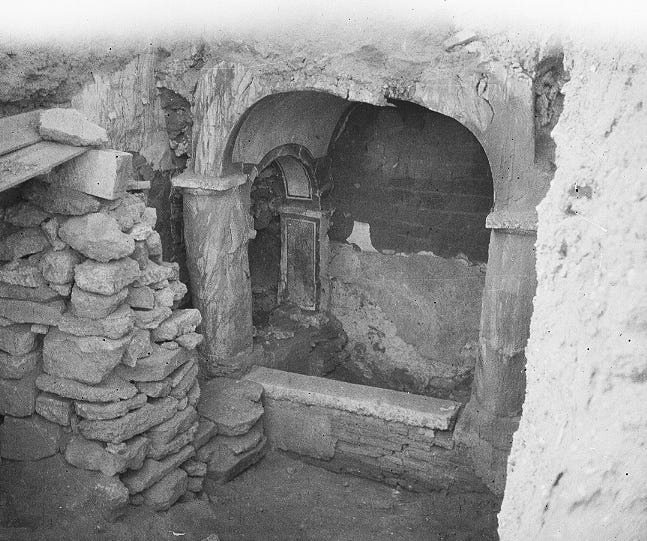
The earliest extant baptistery that we know of comes from a transformed house in Syria (c. 233–256). And it provides an example of how some early Christians created space to baptize. During a Persian siege against the city, the Roman city’s wall was reinforced, which in turn reinforced the building of the house church. This led to its preservation. In other words, despite the fact that this is our earliest extant baptistery, likely others existed. Communities would have renovated houses to make them into church buildings like this one.
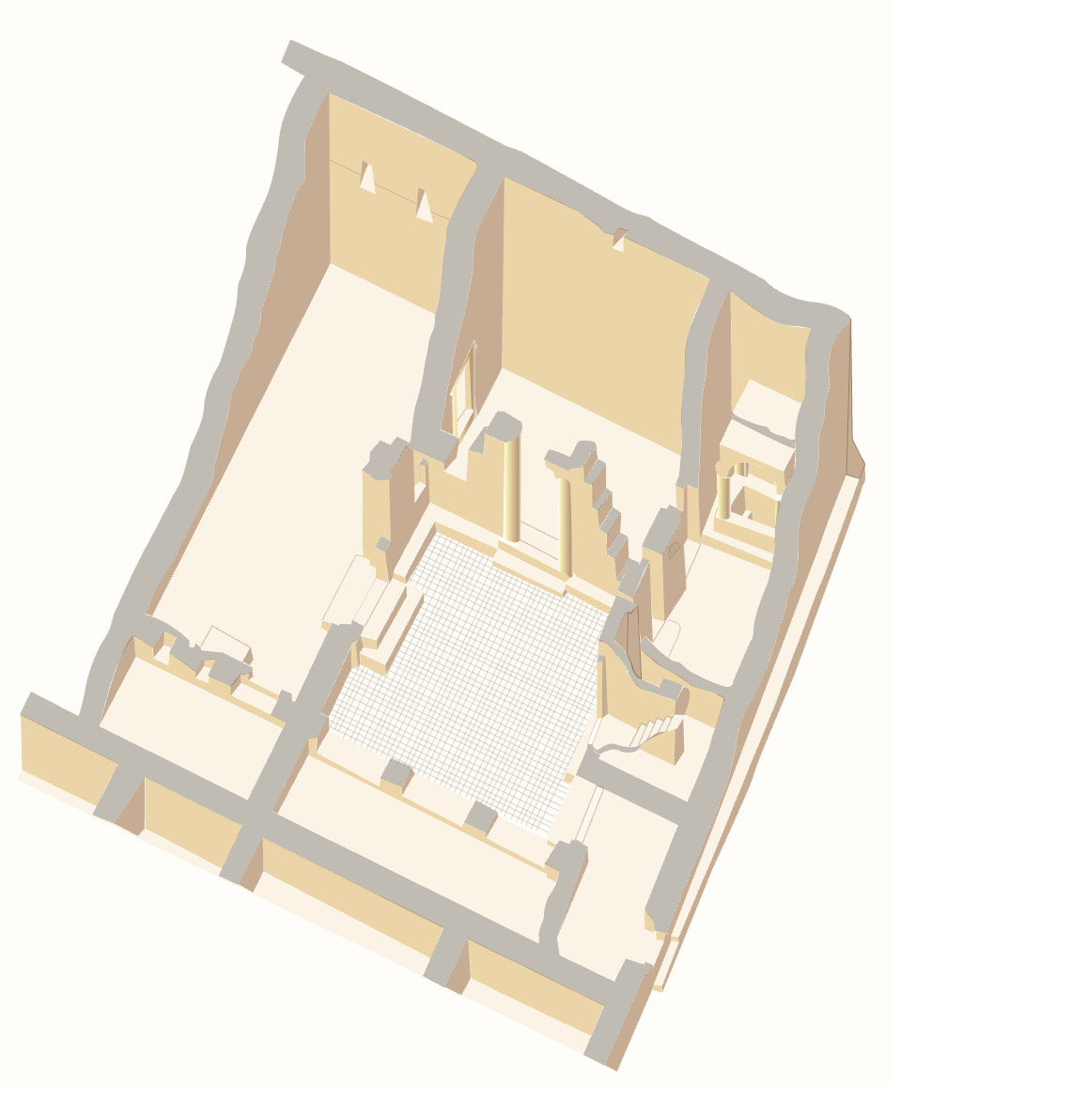
Within the baptistery area, there was a pool where candidates stood to be immersed into the waters. Behind them, was a wall with a door opening, where almost certainly the candidates would have stood.
Because candidates disrobed for anointing, this screen would have ensured that the male who baptized would not see the unclothed body of women. After the baptism, we might assume that the candidates walked into the large open area to join the rest of the congregation for worship, and likely the celebration of the Eucharist.
On the walls of the baptistery in Dura-Europos (c. 240) was this image: a procession of women, possibly tied to the story of the ten virgins awaiting the bridegroom.
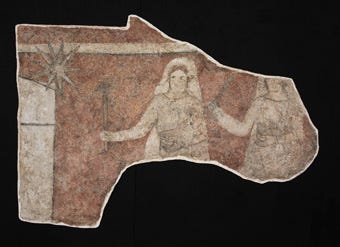
If the Didascalia describes the normal liturgical practice in Syria, then we can imagine women deacons would anoint women candidates for baptism in this space.
Given the Syrian location of Dura-Europos, we might imagine the Didascalia community using a renovated house for their worship as well. In other words, when Christians met in houses, they began to renovate them into worship spaces, creating art and liturgically appropriate structures within those spaces.
Rome: Apostolic Traditions of Hippolytus
Written around AD 235, but drawing on traditions much earlier, Hippolytus’s Apostolic Traditions give insight into baptismal practices in the second and third centuries. According to Hippolytus, catechumens should spend up to three years in preparation for baptism, although he notes that it depends on the person’s background (§17).
When they are ready for baptism, the bishop or perhaps other leaders examine the candidates. Given that they have had up to three years of training, this examination centred on “their lives” (§20). When examined so, the bishop would next lay a hand over the baptismal candidate to exorcize any unclean spirits.
Candidates would then bathe on the fifth day of the week to prepare for the sabbath baptism. Then they would come to the Bishop who lay his hand on them to exorcise them (this might be a second exorcism or the earlier description summarized it), blow on their faces to symbolize the spirit coming, and then seal “their forehead, their ears and their noses” (§20). This sealing after the exorcism would prevent unclean spirits from entering into the candidates and thus the waters of baptism. Presumably, bringing an unclean spirit into the waters of baptism would have created a problem.
The baptized enter into flowing or running water, although necessity would allow different kinds of water (§21). It is obvious that infants could be baptized in Rome at this time, since Hippolytus speaks of little ones who could not speak for themselves. Importantly, during baptism, one could not take a foreign vessel to, presumably, protect the waters from unclean spirits.
Within the waters, each person who could speak should confess their faith. Hippolytus explains it thus:
“And he takes them one by one asking them about their faith. He says “I renounce you, Satan, and all your service and all your works and all your filth.” And when he has made this profession he is anointed with the exorcized oil, praying that he be cleansed from every alien spirit. Then he is handed over to the bishop or the presbyter who is to baptize him, and stands naked in the water. And a deacon likewise goes down with him into the water.”
Further, baptisms were trinitarian in act (three dips) and confession. Hippolytus recounts:
“When the one being baptized goes down into the waters the one who baptizes, placing a hand on him, should say thus: “Do you believe in God the Father Almighty?”
And he who is being baptized should reply: “I believe.”
Let him baptize him once immediately, having his hand placed upon his head. And after this he should say: “Do you believe in Christ Jesus, the son of God, who was born of the Holy Spirit and Mary the virgin and was crucified under Pontius Pilate and was dead and buried and rose on the third day alive from the dead and ascended in the heavens and sits at the right hand of the Father and will come to judge the living and the dead?”
And when he has said, “I believe,” he is baptized again.
And again he should say: “Do you believe in the Holy Spirit and the holy church and the resurrection of the flesh?”
And he who is being baptized should say: “I believe.” And so he should be baptized a third time” (§21)
At this point, the presbyter anointed the baptized and said, “I anoint you with holy oil in the name of Jesus Christ.”
A little later, the bishop then would theologically interpret baptism by saying:
“Lord God, you have made these worthy to deserve the remission of sins through the washing of regeneration: grant that they may be filled with the Holy Spirit, sending your grace upon them so they may serve you in accordance with your will; for to you be glory, to the Father and the Son with the Holy Spirit in the holy church both now and to the ages of the ages. Amen.”
Then lastly, a few more trinitarian statements would happen with oil applied, a drink of milk and honey would be enjoyed, and triune drinking of the Eucharist would occur, with words of trinitarian affirmation given.
Alexandria/Caesarea: Origen
Origen of Alexandria served in both Alexandria and Caesarea, and so his writings testify to a diverse geography of Christian practice. Further, he is the only author in the list who provides a robust theological rationale for infant baptism because of inherited corruption.
Citing Psalm 51 and Job 14, Origen surmises that all people are born in sin and then infers:
“To these things can be added the reason why it is required, since the baptism of the Church is given for the forgiveness of sins, that, according to the observance of the Church, that baptism also be given to infants; since, certainly, if there were nothing in infants that ought to pertain to forgiveness and indulgence, then the grace of baptism would appear superfluous” (Leviticus, Homily 8.5).
Origen argues that infants are born in sin and since the Church baptizes for the forgiveness of sins, then, he maintains the Church should also baptize infants. In his fourteenth homily on Luke, Origen distinguishes, however, between sin and the stain of sin, noting that infants have the stain of sin: “‘Stain’ and ‘sins’ do not mean the same thing. ‘Stain’ is one thing, ‘sin’ another” (Homilies on Luke, 14.3).
So he will conclude:
“Little children are baptized “for the remission of sins.” Whose sins are they? When did they sin? Or how can this explanation of the baptismal washing be maintained in the case of small children, except according to the interpretation we spoke of a little earlier? “No man is clean of stain, not even if his life upon the earth had lasted but a single day.” Through the mystery of Baptism, the stains of birth are put aside. For this reason, even small children are baptized” (Homilies on Luke, 14.5).
Origen does not quite say what Western churches would argue some years later; that infant baptism washes away the stain of original sin. But his pattern of reasoning sounds similar to the fifth century baptismal theology of the West.
Elsewhere, Origen agrees with the testimony of other authors listed here. Baptism is for the forgiveness of sins (above) and involves the grace of the Spirit (Leviticus, Homily 6.3). Further, Origen affirms that “Among us, there is only one pardon of sins, which is given in the beginning through the grace of baptism” (Leviticus, Homily 2.4). Here, we note two things. First, baptism is a beginning, or an initiation. Second, Origen apparently takes a hard line when it comes to post-baptismal sins: “After this, no mercy nor any indulgence is granted to the sinner.”
Like others, Origen affirms that “there is no legitimate baptism except under the name of the Trinity” (Romans, 5.8.7). In other words, Origen follows the mainline of earlier baptismal theology but justifies infant baptism due to infants being born in sin and thus needing the forgiveness of sins.
Common Themes
Everyone surveyed above maintained that baptism was for the remission of sins through the Holy Spirit. This language parallels Peter’s words in Acts 2:38, when he commanded the first Christian baptism on the Day of Pentecost: “Repent and be baptized every one of you in the name of Jesus Christ for the forgiveness of your sins, and you will receive the gift of the Holy Spirit.”
Few found it necessary to parse out the precise relation of the water, the Spirit, and forgiveness, but all agreed that confession of the Faith was necessary. That confession involved an objective affirmation of the Father, Son, and Spirit. While there was some variation on exactly how to make that confession, all Christians and communities surveyed maintained a trinitarian baptism, following the command of the Lord in Matthew 28:19.
In the New Testament, baptizers probably immersed the baptized. The Christians surveyed above evidently followed this pattern, but when not enough water was available or someone was ill/sick, then other methods were allowed: namely, pouring and affusion.
As implied in the New Testament and made explicit in early Christian documents, named leaders baptized: bishops, elders, or deacons. And in all documents that I read, baptism preceded one’s formal entrance into the congregation of the faithful where the Eucharist was enjoyed to symbolize one’s unity with the Church, the body of Christ.
Exorcisms played a central role in baptism, although they were as simple as receiving an anointing and renouncing the devil and all his works. Nothing like modern movies occurred. Before or during baptism, believers were sealed by oil after their exorcism to prevent unclean spirits from returning and prepare them to receive the Holy Spirit. Baptisms, we might say, signaled the entrance of the Holy Spirit and the exit of all unclean spirits.
For the most part, early Christians were remarkably close in their practice. We can detect different orders of elements, and some congregations included a symbolic meal of milk and honey, a tradition that would become more common in later centuries. But over all, the meaning and practice were relatively uniform across the diverse geographies of Christianity.
What Does This Mean Today?
Nothing in these documents will ultimately resolve the differences among credo-baptists, paedo-baptists, Roman Catholics, anabaptists, or any other communion.
Consider, for example, how Eastern Orthodox priests generally baptize by full immersion as Baptists do. Yet these two groups differ greatly on what baptism is and does. Presbyterians will sprinkle water over the one being baptized, yet they baptize infants as Eastern Orthodox do. But again, these two communions differ in many other ways.
Or consider how Martin Luther believed that infants could have an infantile faith that saved, a view partially similar to modern credo-baptism. Yet that faith Luther spoke of would not satisfy many Baptists! With that said, all of the documents above affirmed credo-baptism, if that meant affirming a Creed, a confession of the Father, Son, and Spirit.
Or again, Roman Catholics believe that the grace of baptism removes the stain of original sin, a view that some Protestants maintained during the early modern period. That view, hinted at in Origen but later solidified in the fifth century, justified infant baptism for many. But the majority of Protestants then and now find that view unsatisfying, and so they either had to re-theologize a theology of infant baptism or baptize adults.
All these modern practices, and likely many others, have precedent in the early centuries of Christianity. The variations demonstrated above remain true among Christian communions today. From one vantage point, baptism is genuinely a gift of God, and so perhaps we should accept it as best we are able without overemphasizing the differences. But can we?
Baptism marks our entrance into the Church, the body of Christ. And with Cyprian, we might wonder: which church is that? A local church? The universal church? But how is that defined? Protestants would affirm that a true church is marked by Word and Spirit. And thus we are all baptized by one Spirit into Christ’s body (e.g., 1 Cor 12:13).
I find that satisfying, but then just which baptisms are valid? Does it depend on the baptizer? Shall a Baptist church reject a Roman Catholic adult baptism since the priest is Roman Catholic? But then we might just make the same mistake as Cyprian, thinking baptism relies on the person baptizing and the validity of the church’s connection to the right kind of pastors rather than on the individual faith of the baptized and the gift of God.
And what of the exorcisms that so many early Christians emphasized in baptism? Anglicans still practice them, and so do some other Protestants, but why have these fallen out of practice? One might say, well, because they are not explicitly commanded in Scripture. But neither does Scripture tell us to read testimonies before baptism, yet Baptists usually require this, believing it a right and necessary consequence of credo baptism. Might baptismal exorcisms be the necessary inference of our transfer from the kingdom of darkness under the principle of the power of air into the kingdom of light under the Lord Jesus Christ within the Empire of the Holy Spirit?
Further, Paul tells the Thessalonians, “So then, brothers, stand firm and hold to the traditions that you were taught by us, either by our spoken word or by our letter” (2 Thess 2:15). So could exorcism be one of those traditions “by our spoken word”? That, at least, seems to be the early church’s view. Yes, Scripture alone is our final authority, but tradition plays an important ministerial role in our churches. So we have to at least reckon with the possibility of baptismal exorcisms being an important part of baptism.
I could say much more, but I shall leave it here and let you judge on these matters for yourself. I hope that you have at least found yourself better informed about the meaning and practice of baptism in the first two centuries of the church.
The work of historical retrieval should evoke humility in us. Disagreements always existed, and yet Christians have not always held their disagreements with each other with venom. Part of this, I think, is because history tells us that the Church was never a monolith of practice; regions and leaders differed over many things. It is not so different today. And perhaps recognizing this, we might find ourselves more ready to listen, slower to speak, and avoid the anger of man that so ruins our fellowship in the body of Christ.
This was helpful and thorough. Thanks for writing it. We're moving to have our son baptized this spring at the age of 3. He can recite the Apostles' Creed, but I think the authenticity of the baptism would still be in doubt by our credo-baptist fellows.
This was a very well written article and well sourced. Do you have plans to continue to write another on further centuries? I know there was still differences at least until Augustine and I’ve never understood the deathbed baptism practice and specifically where that came from.