


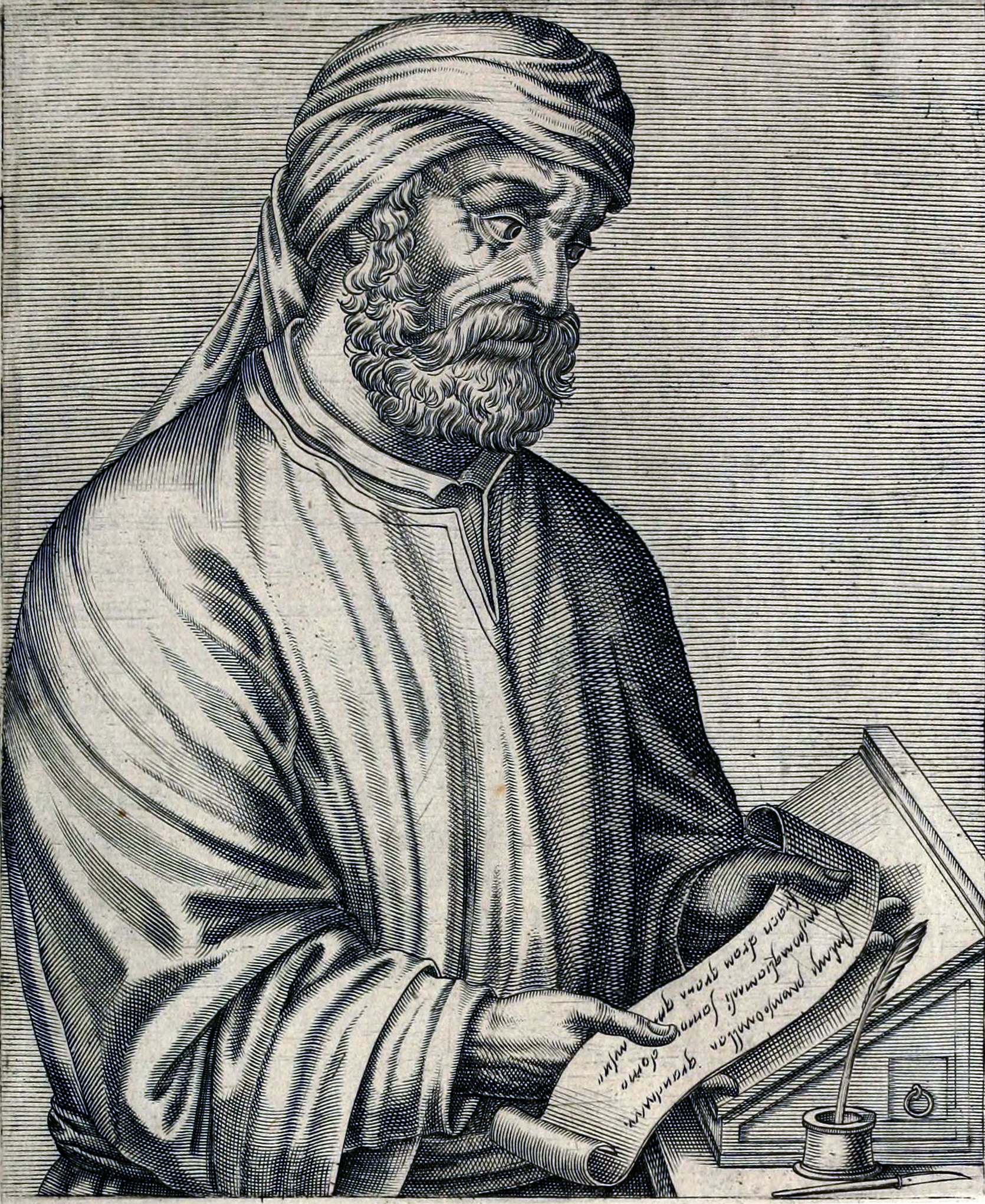
Sometime around the turn of the second century, Christians in Carthage debated whether or not virgins should veil their heads. It was customary for married women to do so, but not so for virgins. Apparently, one party in the church thought that all virgins should remain unveiled. And this started a conflict.
As Tertullian writes into this debate, he admits that Christians have various customs on this question, but he thinks it is best for virgins to also veil. To make this case, he proposes three categories: faith, custom, and discipline. The faith is based on Christ’s truthful teaching, summarized in the Rule of Faith, and thus is eternal. Custom emerges from human culture and carries with it no intrinsic authority. And lastly, the Spirit leads the church to apply the faith to various challenges and customs as a means of disciplining the church towards holiness.
Tertullian believes that veiling virgins best accords with discipline, which is rooted in the truth. But he remains cautious, because differing customs do not mean a different faith. He explains:
“We cannot contemptuously reject a custom which we cannot condemn, inasmuch as it is not “strange,” since it is not among “strangers” that we find it, but among those, to wit, with whom we share the law of peace and the name of brotherhood. They and we have one faith, one God, the same Christ, the same hope, the same baptismal sacraments; let me say it once for all, we are one Church. Thus, whatever belongs to our brethren is ours: only, the body divides us” (Veiling 2.3).
Notice here the implied distinction between faith and custom. Customs should not divide those united in the same faith. Yet because the question of veiling split the church’s unity, Tertullian proposes a solution: veiling virgins lies in truth as the Spirit leads the church in its discipline, not mere custom; and so the church in Carthage should adopt this position instead.
Following this distinction between custom and truth, he writes:
“it behoves our virgins to be veiled from the time that they have passed the turning-point of their age: that this observance is exacted by truth, on which no one can impose prescription----no space of times, no influence of persons, no privilege of regions. For these, for the most part, are the sources whence, from some ignorance or simplicity, custom finds its beginning; and then it is successionally confirmed into an usage, and thus is maintained in opposition to truth. [2] But our Lord Christ has surnamed Himself Truth, not Custom” (Veiling, 1.1–2).
Behind his claim lies a contrast between the truth of Christ, which is eternal, and the customs of the church, which are temporal. Yet it is worth pondering how Tertullian conceives of custom here, to understand why he feels veiling best accords with Spiritual discipline and thus truth.
First, Tertullian points out that custom becomes prescribed through time, personalities, or regional practices. But this is not a real prescription because only truth should bind us to action, whereas custom oftentimes occurs by mere happenstance or “ignorance or simplicity.” So he implies that those who advocate for unveiling are simply doing so due to a custom. Instead, they should argue according to truth.
Hence, he writes his famous line, “But our Lord Christ has surnamed Himself Truth, not Custom” (Dominus noster Christus veritatem se, non consuetudinem, cognominavit). The qualitative difference between truth, in Christ who is eternal, and custom, which is temporal and changeable, outlines the kind of authority an argument has. And it is in this context that Tertullian relays the Rule of Faith, something he assumes everyone in Carthage would know and consent to as eternal truth, found in Christ:
“The rule of faith, indeed, is altogether one, alone immoveable and irreformable; the rule, to wit, of believing in one only God omnipotent, the Creator of the universe, and His Son Jesus Christ, born of the Virgin Mary, crucified under Pontius Pilate, raised again the third day from the dead, received in the heavens, sitting now at the right (hand) of the Father, destined to come to judge quick and dead through the resurrection of the flesh as well (as of the spirit)” (Veiling 1.4).
This rule represents the truth of Christ, founded in his teaching or the teaching of his apostles. Yet at this stage in his argument, Tertullian cannot yet say that veiling equals truth because custom has no rational basis. That would be too facile, and it would, as he noted above, divide the church, which unites around the Rule of Faith.
He therefore proposes a third category beyond faith and custom, which he calls discipline. The latter is found in Scripture but can be changeable based on the needs of the moment. In other words, when new sins or situations arise, pastors can use wisdom to apply the faith to changing circumstances (Veiling, 1.6). In his own language, he contrasts it with the Rule of Faith in this way: “This law of faith being constant, the other succeeding points of discipline and conversation admit the ‘novelty’ of correction; the grace of God, to wit, operating and advancing even to the end” (Veiling 1.5). In other words, the church allows for novel discipline when it has new challenges to overcome.
Particularly, Tertullian ties this operation of discipline to the Holy Spirit, citing John 16:12–13 in evidence (Veiling, 1.5–6). Of the Spirit, he writes, “What, then, is the Paraclete’s administrative office but this: the direction of discipline, the revelation of the Scriptures, the reformation of the intellect, the advancement toward the ‘better things?’” (Veiling, 1.8).
As an historical aside, Tertullian likely draws on his experience with Montanism here, an early Christian prophetic movement. If so, that would place the date of On the Veiling of Virgins to around AD 210. In any case, the better things promised by the Spirit in this age of discipline involve moral action and countering the schemes of the devil. In the context of this treatise, it means for Tertullian that virgins should “be wholly covered” (Veiling 1.10).
In summary, Tertullian proposes three categories for Christian faith and practice. The first is custom, which is neutral but must not prescribe practices that only faith can. The second category is faith, as a body of teaching (e.g., The Rule of Faith), which derives directly from Christ who is Truth. It is thus as eternal as Christ. And third, due to the Spirit leading Christians in all truth, he proposes a category called discipline, which adapts the faith to changing ages or challenges.
Tertullian does not believe the Rule of Faith can be changed; he specifically means new disciplines to respond to unheard-of moral challenges. I imagine he would say the category of discipline applies to how Christians should think of the atom bomb, something not mentioned in Scripture but one that requires spiritual guidance to know how to grasp its significance.