


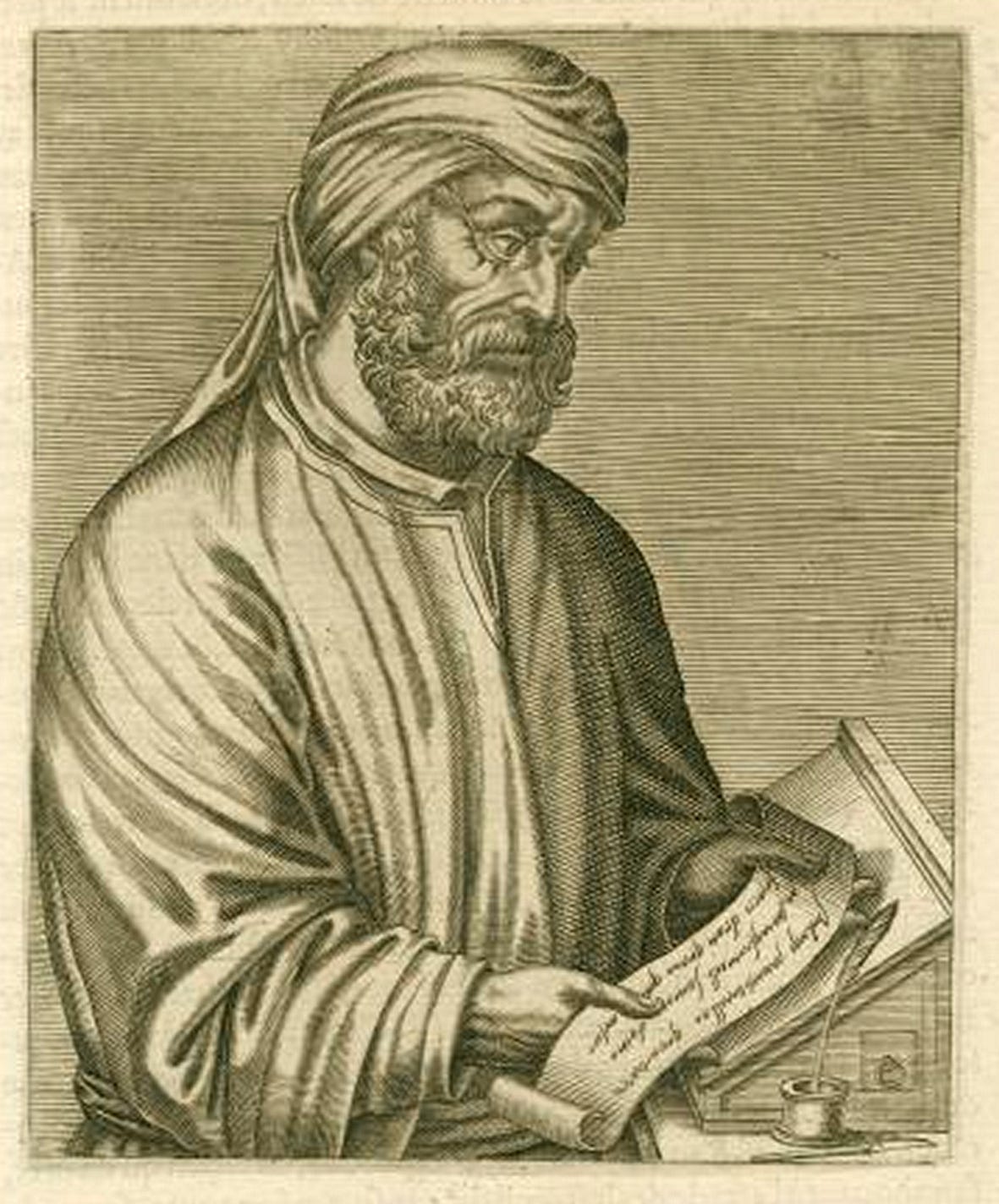
More than a century before Nicaea, Tertullian discovered words for what is one in God and what is three in God. Writing Against Praxeas early in the third century, he drew on wording from the Gospel of John to name the oneness of God without erasing the distinguishable marks of Father, Son, and Spirit—the very thing Praxeas had done.
Since Tertullian avoided theological language from outside Scripture, he turned to Jesus’s words in John 10:30 to find terms that accurately render Scripture’s judgment about God and Christ (and the Spirit).
In short, Tertullian believed that John 10:30 provides the linguistic terms to speak of what is one in God and what is trinitas. This article explains how he did so.
One God: Trinitas
In many places in Against Praxeas, Tertullian speaks of the Son and Spirit as sharing in the Father’s substance (tam consortibus substantiae patris; Prax. 3.5) or of the Son as being from the Father’s substance (de substantia patris; Prax. 4.1). The Spirit he places third in sequence (tertium gradum), noting his origin as “from the Father through the Son” (a patre per filium; Prax. 4.1).
So the unity of substance ensures that God remains one. But what language describes what is trinitas in God? For Tertullian, the answer involves the economy—the biblical story that shows Christ and the Father can be spoken of individually.
In the first place, Tertullian shows from the scriptural story the ways in which the Son presents himself as distinguishable from the Father. He will even speak of the unity of substance between the Father, Son, and Spirit, and use the word persona to describe what is trinitas in God (Prax. 7.9; 11.10; 12.3, 6; 31.2). It is fascinating to see this wording at play before Nicaea, but such language is only one expression of what is three in God.
In another place, he distinguishes between God as unum and the Father and Son as unus. In Latin both mean “one,” but the first is neuter and refers to the substance of God; the second is masculine and refers to the individuality of the Father and the Son.
So how does this work? Two passages help put the pieces together.
The Argument in Sum
Tertullian writes:
Here then they wish to make a stand, these fools, yea blind, who see not, first, that “I and the Father” is an indication of two; secondly, at the end <of the sentence>, that “are” is not from the person of one, because it is spoken in the plural; and then, that he says “are one <thing>”, not “are one <person>”. For if he had said “are one <person>” he would have been able to assist their case: for “one <person>” is apparently an indication of the singular number. Yet when he says that two, of the masculine gender, are one <thing>, in the neuter—which is not concerned with singularity but with unity, with similitude, with conjunction, with the love of the Father who loveth the Son, and with the obedience of the Son who obeys the Father’s will—when he says, One <thing> are I and the Father, he shows that those whom he equates and conjoins are two. (Prax. 22 [Evans, 164])
His argument has three steps, based on his reading of John 10:30:
Ego et pater names two subjects.
Sumus is plural.
Unum is neuter. The key Latin clause is duo masculini generis unum dicit neutrali verbo: “he calls two [subjects] of the masculine gender one with a neuter word.”
In Evans’s English, “one <thing>” is unum and “one <person>” is unus. So God is one thing (unum), but Father and Son are each unus.
The Argument Extended to All Three
Tertullian then applies the same grammar to Father, Son, and Spirit:
So the close series of the Father in the Son and the Son in the Paraclete makes three who cohere, the one attached to the other: And these three are one <thing>, not one <person>, in the sense in which it was said, I and the Father are one, in respect of unity of substance, not of singularity of number. (Prax. 25 [Evans, 169])
The Latin is the well-known line: qui tres unum sunt, non unus, quomodo dictum est, Ego et pater unum sumus, ad substantiae unitatem, non ad numeri singularitatem.
The terms can be understood this way:
Unum means unity of substance (substantiae unitas).
The three (tres) are (sunt) one (unum), not one (unus).
Jesus’s words in John 10:30, Ego et pater unum sumus, provide the biblical language for describing how God is one and yet trinitas. Note that Tertullian’s doctrine of God’s unity and distinguishability does not rest on John 10:30—only his terminology does. He wants biblical language to express judgments about Scripture’s total message (the Rule of Faith).
Unum sumus refers to unity of substance (ad substantiae unitatem), not to singularity of number (non ad numeri singularitatem).
The number is trinitas: Father, Son, and Spirit.
Trinitarian Syntax
More could be said, but here Tertullian aims to find biblical language to render judgments about God, Christ, and the Spirit in line with the Rule of Faith. Since he will not use unbiblical language, he looks to Jesus himself to provide the Trinitarian syntax for what is one in God and what is three in God.
A century later, Nicaea would confess the Son as homoousios with the Father. That word was new. The judgment was not. Tertullian had already made a similar judgment using the words of Jesus in John 10:30: Ego et pater unum sumus.
Are you arguing that Tertullian argued/believed that the one God is a tri-personal being?