


Gurwinder recently wrote, “Automate only the skills you’re willing to lose.” I cannot stop thinking about what that might mean.
Marshall McLuhan spoke of technological tools as both extending and amputating something about us. If I use a hammer, it makes my hand useless for the moment but extends my ability to drive nails into wood. If I wear a jacket, it mutes my skin’s ability to sense wind but keeps me warm.
Applied to digital technology, we need to ask what it extends and what it amputates. My answer: it extends our ability to organize and recall information, but does so by outsourcing our memory. Cell phones began storing phone numbers, and now I don’t know anyone’s number. Maybe that is acceptable, but applied everywhere, what have I lost? What have I gained?
Some losses are greater than others. Social media drives our concentration down by teaching us to love short, fast, entertaining bits of information. In exchange, we lose our ability to focus. We outsourced our concentration and gave it to a stream of reels and memes. That was not a good exchange.
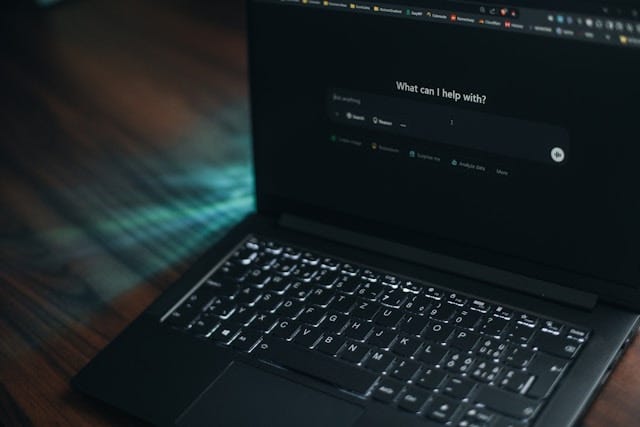
Now I find myself wondering what LLMs like ChatGPT or Claude give me, and what they make me lose. Hopefully, I can outsource busy work to LLMs. I recently organized a file structure on my computer using Claude. It was excellent. I didn’t want to do it myself. LLMs also catch typos, so you can read an article like this without misspellings everywhere.
But I don’t want AI to write for me. Even if it were ethical to claim AI-generated content as my own, I think the tradeoff would not be worth it. Likewise, I don’t want to learn through prompts instead of books. I love books, and they have done something to my mind that I delight in. They spark some deep imagination, some creative energy, that a screen cannot.
I am a bit mystical about it. So sue me.
“Automate only the skills you’re willing to lose.” I think that is what we must do. So what skills are less humane and what skills are more humane? Or maybe that’s a poor criterion. I really don’t know. All I know is that I want to pursue joy relentlessly through actualizing my human potential, but I need to remember what that potential is.
I am not made for computing things like a calculator, although I should use a calculator. I am not made for statistical analyses, although we need such analyses for the benefit of society. These tools extend my ability to make humane decisions, but they are not the skills that in themselves help me make those decisions. Prudence precedes data, and data is useful only through prudential use of it.
In my life, I am not sure what this means yet. But I think I will keep typing my own words, reading my own books, and outsourcing calculative tasks to AI so that I can make judgments based on the available and selected data—data that I have selected.