


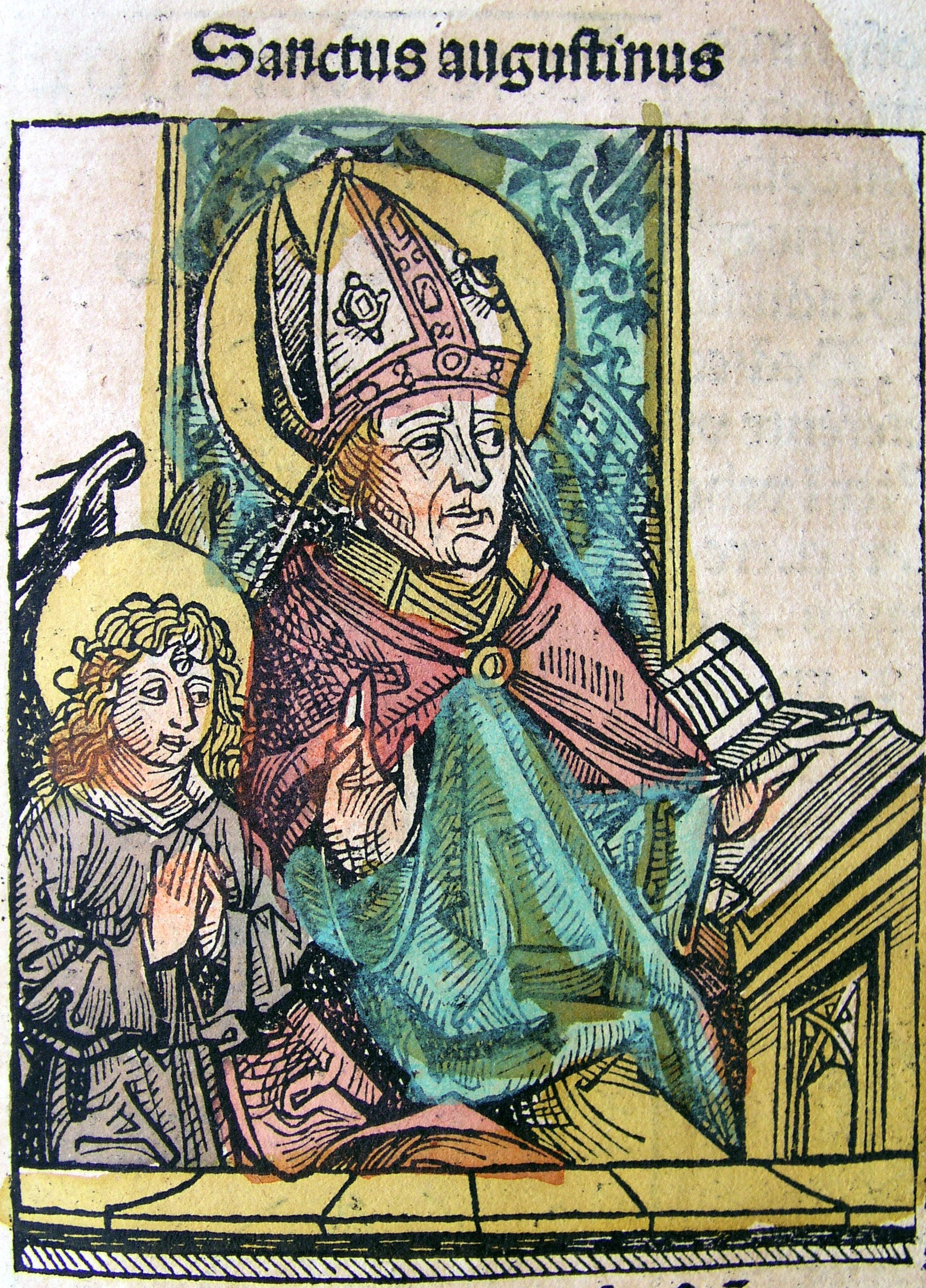
Every now and again, someone accuses Protestants of holding to a doctrine of atonement that is as recent as John Calvin. As the accusation goes, the language of penal substitution arises out of a medieval setting; the language of satisfying wrath or justice is foreign to the Bible and Church Fathers; and more besides.
Undoubtedly, the polemics of the Reformation led to certain aspects of the cross being emphasized more than others. The battle over the doctrine of justification ensured that grace, predestination, and the atonement as a satisfaction of justice rose to the top of the theological register.
But many church fathers did not shy away from justice-centred views of the cross and atonement. Nor did they retreat from substitutionary language. In doing so, they followed the logic of the New Testament. To illustrate the point, consider how Augustine speaks about justification, justice, and the cross in his On the Trinity.
The Problem: Death through Sin
Augustine recognizes that death prevents us from being ultimately happy. After all, if happiness consists in willing well and being able to do what we will, then death surely gets in the way (13.13.17). So Augustine asks: how can we be immortal? And the only answer is Jesus Christ, whose death forgives us of our sins and releases us from the temporal bondage to the devil.
Taking passages like Ephesians 2:2 as his authority (“following the prince of the power of the air”), Augustine argues that God justly handed humans over to the prince of the power of the air (the devil), the kingdom of darkness (Col 1:13), due to their sin:
“But as regards the manner, whereby man was delivered into the power of the devil: it ought not to be understood as though God had done this or ordered this to be done, but that He only permitted it, yet justly” (13.12.16).
In other words, God permitted humans to suffer their own sin under the influence of the devil. Now, this permission has limits: “He is permitted, in accordance with the condition of this mortality, to offer only so much opposition as God knows to be expedient for them” (13.16.20). In other words, “not even the devil himself is withdrawn from the power of the Omnipotent One” (13.12.16).
This handing over of humanity to the devil— “the whole world lies in the power of the evil one” (1 John 5:19)—was a just punishment, because the original couple unjustly ate from the tree at the devil’s temptation. God thus justly handed Adam and Eve over to the prince of the power of the air as an expression of his just wrath against sin. And now everyone suffers the penalty of death.
In Augustine’s own words: “By the justice of God the whole human race was delivered into the power of the devil, the sin of the first man passing originally into all of both sexes, who were born through conjugal union, and the debt of our first parents binding all their posterity” (13.12.16). The debt is death due to sin. The justice of God occurs in the punishment of humans by the devil.
Solution: Life through Christ
Augustine recognizes that our bondage to sin under the prince of the power of the air means no one can be happy forever. We die in our sins under the devil’s thumb. The major problem then is God’s wrath against our sin, whose wrath temporally looks like devilic oppression. The solution is Christ’s righteousness. Citing Romans 5, Augustine explains:
“Therefore, ‘God commends his charity towards us, because when as yet we were sinners, Christ died for us. Much more now that we are justified by his blood, shall we be saved through him from the wrath.’ ‘Justified,’ he said, ‘by his blood.’ Justified obviously in that we have been freed from all sins; but freed from all sins since the Son of God, who had no sins, was slain for us. ‘We shall be saved through him from the wrath,’ certainly from the wrath of God which is nothing else than just vengeance. The wrath of God is not a disturbance of the mind as it is in man, but is the wrath of Him, to whom Scripture says in another place: ‘But thou, O Lord of power, judgest with tranquillity.’ If, then, the just vengeance of God has received such a name, how else can the reconciliation with God be rightly understood, unless that then such wrath is ended?” (13.16.21).
Augustine defines wrath as God’s justice against sin. Wrath cannot be “a disturbance of the mind as it is in man” because God judges with tranquillity. As Michael Horton writes, the cross “was not a cathartic release of anger but a just satisfaction of God's cosmic and covenantal righteousness” (Justification 2:226).
With wrath properly understood as an anthropopathic effect that reveals God’s unchanging justice, we can further understand how Augustine sees God’s wrath temporally. Obviously, he believes in an eternal hell, but he here speaks about our current pursuit of happiness in life that cannot be achieved apart from Christ, who alone grants us forgiveness, immortality, and liberation from the devil.
In short, Augustine highlights God’s righteous permission of the devil to oppress humanity because they chose themselves to sin. That is the form of wrath that Augustine highlights here. Just as God “made a path for his anger” through “evil angels” in the Old Testament (Ps 78:50, 49), so he has always done so even up to the advent of Christ.
And Augustine views a certain symmetry of justice here: “If, therefore, the committing of sin, by the just anger of God, subjected man to the devil, then certainly the remission of sins, through the gracious reconciliation of God, has rescued man from the devil ” (13.12.16)
Christ’s righteousness and death offer us forgiveness, eternal life, and victory over the devil.
Explanation: Life by Justice and Payment of Debt
Now, how does this eternal life come to us? First, it comes through the act of the Just One dying an unjust death. Second, it involves forgiveness and salvation from wrath, as noted above. Third, it means the debt to death we owe is paid by Christ. (Augustine points to the power of the resurrection as key to the whole movement of salvation, but for this article, I am limiting my discussion to the cross.)
Augustine explains:
“Then the Apostle continues: ‘Therefore as through one man sin entered into this world, and through sin death, and so death has passed unto all men, in whom all have sinned,’ and the rest of the things in which he speaks at great length about the two men: the one and first Adam, through whose sin and death we, his descendants, are bound as it were by hereditary evils; but the other, the second Adam, who is not a man only but also God, and when He had paid for us what He did not owe, we were freed from the debts of our parents and our own” (13.16.21).
Sin bound us to a debt of death. Through Christ, our actual and original sin is forgiven because he paid our debt. “And He went from that place to His passion, in order that He might pay for us, the debtors, that which He Himself did not owe” (13.14.18).
Augustine explains the importance of justice (righteousness) as well:
“What is the justice, therefore, by which the devil was conquered? What, unless the justice of Jesus Christ? And how was he conquered? Because, although he found in Him nothing worthy of death, yet he slew Him. And it is certainly just that the debtors, whom he held, should be set free, since they believed in Him whom he slew without any debt. It is in this way, then, that we are said to be justified by his blood” (13.14.18)
It is worth noting that, according to Augustine, Christ offered what was due (death) to the devil who slew him. This is because God’s wrath occurs temporally through evil angels or the devil; it is a just punishment. Hence, like a hook to catch a fish, God the Son offered himself on the cross to the devil’s bite. But as Christ’s heel was bit, the head of the serpent was crushed: “the devil upon receiving it was not enriched but bound” (13.15.19).
So here we have Christ offering his righteous body to an unjust death to free us who justly suffer under the wrath of God through the devil’s oppression.
In longer form:
“For then that blood, since it was the blood of Him who had no sin at all, was shed for the remission of our sins, that because the devil deservedly held those whom he had bound by the condition of death as guilty of sin, he might deservedly loose them through Him who was guilty of no sin, and whom he had undeservedly struck with the punishment of death. The strong man was conquered by this justice and bound by this chain, that his vessels might be taken away, which with himself and his angels had been vessels of wrath while with Him they might be turned into vessels of mercy” (3.15.19).
Lawless hands put Jesus to death through devilic orchestration (Judas). But God only used such evil for salvific purposes. The righteous man died for the unrighteous, and the head of the serpent was crushed at the cross. Augustine thus views Christ paying what is due to the devil in a specific way: Augustine literally refers to death, which is the devil’s power; but Christ uses justice or righteousness to defeat the devil at his own game. Christ willingly allows the devil to strike him in the heel, so by his righteous death, he might crush the devil’s head.
In the language of Hebrews, “Since therefore the children share in flesh and blood, he himself likewise partook of the same things, that through death he might destroy the one who has the power of death, that is, the devil, and deliver all those who through fear of death were subject to lifelong slavery” (Heb 2:14–15).
Does Augustine’s View Resemble Penal Substitution?
Augustine speaks of wrath against sin as a just punishment. The form of punishment is to give humans over to the prince of the power of the air (Eph 2:2; 1 John 5:19; etc.). With this in mind, we can more clearly grasp how closely his views of justice, reconciliation, and atonement resemble what we often call penal substitutionary atonement.
Adam and Eve sinned against God and incurred his wrath. This wrath, among other things, means that “the whole world lies in the power of the evil one” (1 John 5:19). God the Omnipotent One uses the devil to make way for his anger.
God by justice (at the cross) and by power (at the resurrection) frees us from sin, death, and the devil.
Christ offers his body in death, and in this narrow sense pays a debt to the devil. But the devil’s oppression is the just form of God’s wrath. Hence, Christ paid the debt we owed even though he himself did not owe it. Christ the Just One thus dies an unjust death to avert God’s wrath by forgiveness, bestow eternal life, and crush the serpent’s head.
Augustine often speaks about the debt or penalty owed because of sin. That debt can only be paid by Christ, who satisfies its condition—death. Forgiveness means we only die the first death, not the second death; and resurrection means that immortality is our felicity.
Augustine frames the atonement from start to finish in terms of justice. It was a just punishment that made us debtors to death through sin; it was the Just One’s death that satisfied the debt and turned away God’s wrath.
Obviously, Augustine did not live in the 16th century, and so he does not sound like a Reformer on penal substitution. Nor does he sound precisely like Anselm. But on the whole, like many other fathers, Augustine follows the logic of the New Testament: the cross is about justice and justification, debt and payment, wrath and forgiveness.
We do not need Augustine to sound like John Calvin. They live over a millennium apart. But what we see when their views of the cross are compared is a family resemblance. Both read Paul’s Letter to the Romans in similar ways. They organize and tie together the apostle’s claims with differing emphases. Both basically see the cross as a matter of justice and justification.
Great article! I found Nathan Busenitz’s Book long before Luther really helpful on this
It’s time to throw out all theologians. God is the best communicator and does not need a theologian to explain back to Him what he said. Peter said that some of Pauls writings were hard to understand, but Peter never said they were impossible.
We are not saved by the Atonement. But it was NECESSARY. If I could make that not just capitalized but in italics, multicolored and flashing with trumpets sounding, I would. And there was only one lamb that could do that. Because He was sinless. He tasted death for everyman. “Look the lamb of God who takes away the sin of the world” said JTB. When he took the cup at Calvary (he did’t pass the cup), Jesus said not His will but the Father’s will. He nailed sin to the cross. All sin.
We are not saved by Repentance. But repentance is NECESSARY. If we don’t repent, what exactly are we being saved from?
We are saved by faith alone in Jesus alone according to Scripture alone. Not according to a theologian or some “ism”. Not ANY theologian or ANY ism. Going to eat at a Taco Bell doesn’t make us chalupas.
Reformed doctrine “sounds” right, but it isn’t Biblical. Thats the key. There is not one single passage, understood IN CONTEXT that supports Calvinism. (same key).
No person is predestined to heaven or hell. (Look at the four times predestination is mentioned in the Bible)
What exactly is a believer predestined to?
No person is elected to salvation. Election (or chosen) is to God’s purposes. For the believer it’s to live for God’s purposes for them. For those who reject God’s free offer (free gift), its for other purposes
That’s the correct definition of election. Nowhere in the Bible is it used for salvation. Now reread Romans 9 and Ephesians 1 and 2.
For the Reformed or Calvinist like Augustine and Calvin its…
No election, no salvation.
But for Paul and the Biblical definition its…
No salvation, no election (for God’s purposes)